Professor Joshua Shifrinson to Gulan: The Middle East Is Going to Become Less Important to American Strategy
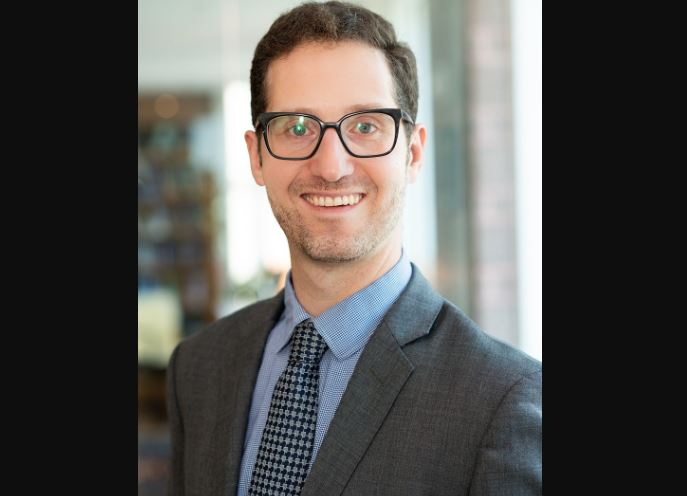
Professor Joshua R. Itzkowitz Shifrinson is Professor at the University of Maryland School of Public Policy and Senior Fellow at the Center for International and Security Studies at Maryland. An accomplished scholar of contemporary international security, his research spans great power politics, United States foreign policy, diplomatic history, American grand strategy, NATO enlargement, and relations with Russia and China. He is the author of Rising Titans, Falling Giants: How Great Powers Exploit Power Shifts, published by Cornell University Press. His scholarship has appeared in International Security, the Journal of Strategic Studies, International Politics, Foreign Affairs, and the Washington Quarterly. He earned his B.A. summa cum laude in History and Politics from Brandeis University and his PhD in Political Science from MIT. Before joining Maryland, he was an associate professor at Boston University's Frederick S. Pardee School of Global Studies and held fellowships at the Belfer Center, the Dickey Center, the Institute for Security and Conflict Studies, and the Woodrow Wilson International Center for Scholars.
EDITORIAL NOTE This interview has been lightly edited for clarity and length without altering the interviewee's views.
American Strategy in a Changing Middle East
GULAN: The ongoing war between the United States and Iran has once again placed the Middle East at the centre of American foreign policy, despite earlier efforts in Washington to reduce its military commitments in the region. Drawing on your research on American grand strategy, how do you expect this conflict to reshape the future direction of United States engagement in the Middle East? Will it lead to a sustained strategic presence, or will it eventually reinforce the case for a more limited and selective American role?
PROFESSOR JOSHUA SHIFRINSON: I think the war will reinforce the case for a more limited and selective American role. In some ways, we already see past U.S. mistakes and U.S. experiences in the Middle East, and, for me, even how the United States has conducted the current war. Obviously, when the United States went to war in Iraq back in 2003, it was a full scale military operation, with boots on the ground and a lengthy reconstruction process. Likewise, when the United States engaged in the region previously, such as in 1991, there was a very large ground force.
It is telling to me, therefore, that the Trump administration, in the most recent war with Iran, has chosen to conduct the war using air and sea power and has not put boots on the ground. There is a certain reluctance to commit the United States fully in the region. I think witnessing the limits of American success, or the limits of American power, in the war with Iran, and Iran's ability to impose significant costs and damage upon the United States, the global economy, and, obviously, many states in the region, some of them American allies, is going to cause the United States to reevaluate both what it does in the region and how it goes about pursuing what it does in the region. It will also cause the United States to think seriously about the opportunity costs of involvement.
So I think, coming out of this, there is going to be a growing sense of limitations, a sense that the United States may not be able to play as active a role in the region as in times past, and a keen awareness that there may be other parts of the world, even parts of the U.S. homeland, that require serious time and investment. We already know, for example, that the Pentagon is considering moving to a more offshore basing strategy. I think we are likely to see such conversations continue in the future.
GULAN: Which American interests should ultimately determine the scale of future United States involvement in the region?
PROFESSOR JOSHUA SHIFRINSON: I do not think it is a question of the region specifically. I think American interests need to be considered on a global scope. Strategy is not conducted region by region, but at a global level.
For the United States, obviously, the ability of the U.S. economy to survive and thrive and the ability to keep the American people safe are probably the two most vital American interests. Those are more or less covered by a combination of geography and some degree of economic openness in the world. I think the other traditional American priority is to prevent the rise of a regional hegemon in key geopolitical regions, not just generically, but in key geopolitical regions. I think that is going to pull American attention towards East Asia and reduce the importance of the Middle East in relative terms.
Although, historically, the United States has had a profound interest in the free flow of oil, which led it to pay significant attention to the Middle East, changes in production patterns and in the nature of energy itself are already pushing against the importance of the Middle East to the United States. I think that will continue going forward. So American interests, broadly speaking, are the economy at home, the security of the U.S. homeland, and preventing the rise of a regional hegemon, none of which requires or really pulls the United States towards the Middle East going forward.
GULAN: The conflict has expanded beyond the United States and Iran, affecting Saudi Arabia, the Gulf states, Iraq, and regional energy and maritime security. What would a coherent American strategy for ending the conflict and preventing further regional escalation look like, particularly when Washington must simultaneously defend its partners, deter further attacks, and preserve opportunities for diplomacy?
PROFESSOR JOSHUA SHIFRINSON: I think there are two, even three, different questions built into the question you just posed: what would it take to end the war, what do I think Washington wants to see coming out of the war, and what are the limits on pursuing whatever it wants?
In terms of ending the war, look, the United States could declare victory tomorrow morning and pull its forces back. That is within the realm of possibility. The Trump administration obviously does not want to do that because it has a sense that, if it did so, Iran would have some degree of control over the Gulf, and that is not what the United States wants to see.
So I think, instead, we are heading towards a situation in which there is going to be a fig leaf that allows the United States to claim that the Persian Gulf is open. Even if that is not the truth, if Iran has some degree of ability to impose quote unquote tolls, close the Strait, or influence the Strait, the United States is looking for a political deal that gives it a fig leaf of cover to winnow down its commitment.
You are right to say that one of the really bad consequences of this war is that it has escalated and pulled in American allies. American allies have been damaged, and so there is a sense in Washington, at least in some circles, that it has to have some way of making it seem worthwhile for American allies as well. However, this administration in particular is obviously focused primarily on American interests and is not very interested in allied interests. So I think, politically, the constraint is more about Trump's domestic image and less about the politics of making American allies feel protected or secure.
The Future of American Involvement in Iraq
GULAN: More than two decades after the 2003 invasion, what should the long term American role in Iraq become? As the relationship moves beyond direct military engagement, how can the two countries develop a more sustainable partnership encompassing security, diplomacy, economic development, energy, education, and institutional capacity?
PROFESSOR JOSHUA SHIFRINSON: Let me rephrase your question, because I think the first part is clear and the second part is maybe a little less clear. I think as the Iraq War fades into the background and as the United States thinks about its future engagement in the region, the United States is going to have a relationship with Iraq that is driven primarily by American interests in the Middle East and the specific role that Iraq plays in those interests.
If the points I made earlier are correct and the Middle East is going to become less important to American strategy in coming years and decades, then all countries in the Middle East, Iraq included, are going to be somewhat less important to the United States. But I think that creates space for the Iraqi U.S. relationship to become more of a normal, quote unquote, relationship. Iraq, and the Kurdistan Region in particular, obviously produces a significant amount of oil, and there are discussions about hosting other economic infrastructure, such as data centres. The economic relationship is naturally going to evolve, and the political and diplomatic relationship will be reflected in that.
I think, as part of the process, because the United States is unlikely simply to wash its hands of Iran, it is very likely that the U.S. Iraqi military relationship will continue, at least in some way, shape, or form. I would not be surprised if there were arms sales and training missions going forward.
But if the question you were driving at is what Iraq can do to become a key American partner going forward, I am not sure that is anything Iraq can totally control. At the end of the day, American policy is going to be driven by American interests. Iraq is certainly a plausible state to help the United States balance Iran going forward, if the United States still feels it has to balance Iran. But, of course, given U.S. relations with other states around the Persian Gulf, Iraq is going to be one of several states vying for American time and attention.
The bottom line is that I think the Iraqi U.S. relationship is going to become more and more normalised in the years ahead. But I am not sure there is much Iraq specifically can do to compete with Saudi Arabia or other states to become the key American partner going forward.
GULAN: As the international coalition's mission continues to evolve, what do you think is likely to happen in future American security cooperation with the Iraqi security forces and the Peshmerga, particularly in preserving the gains achieved against ISIS and preventing the organisation's reemergence?
PROFESSOR JOSHUA SHIFRINSON: In general, the United States has learned, through a somewhat hard bitten process, that many of the terrorist groups, including ISIS, that the United States cared deeply about for the twenty some odd years after the events of 9/11 are important, but they are primarily dealt with as intelligence or localised security issues.
Going forward, I think we are going to see the U.S. relationship with the Iraqi security forces and the Peshmerga involve a lot of deference to the security forces themselves. To the degree those forces, including the Peshmerga, can handle local security challenges such as ISIS, the United States is probably going to defer to them. It may provide some intelligence and training support, but broadly, I think the United States is going to defer quite a lot to these different security forces.
Does that preserve the gains of the last twenty years? To an extent, yes; to an extent, no. It is only going to be when these groups prove unable, when the Peshmerga and the security forces prove unable to handle security challenges such as ISIS, that American attention may be pulled back.
The Kurdish Question and the Kurdistan Region
GULAN: The Kurdish question remains one of the Middle East's most enduring unresolved issues, while Kurdish communities are directly affected by conflicts involving Iran, Iraq, Syria, and Türkiye. What constructive role can the United States play in encouraging peaceful and democratic approaches to Kurdish rights while maintaining regional stability and its relationships with the states concerned?
PROFESSOR JOSHUA SHIFRINSON: Obviously, the Kurdish question involves four, perhaps five, different Middle Eastern states, one of which the United States is at war with and two of which the United States was previously at war with, Iraq and Syria. We also have Türkiye involved, an American ally. So there is no one size fits all American policy for making progress on the Kurdish issue.
I think we are likely to see the United States continue to press states with which it has friendly, or at least warm, relations, such as Iraq and Türkiye, to reduce the level of centralised government control over the Kurdish population and encourage adherence to human rights standards, which rebounds to Kurdish advantage. But I do not think there is going to be a one size fits all approach. We have already seen in Syria that the United States is not willing to press the Kurdish issue to the extent that it might challenge the authority of the Syrian state.
So I think we are going to see mostly the United States engaging in quiet diplomacy and generic encouragement of adherence to human rights standards.
GULAN: Can the United States support Kurdish political and cultural rights without creating the perception that it is encouraging regional fragmentation?
PROFESSOR JOSHUA SHIFRINSON: I think that is a very big challenge. As you know, many of the countries in the region, Türkiye obviously, view the Kurdish issue as a national security problem. To encourage more autonomy for the Kurds is to create a sense that the United States is interfering in domestic politics and encouraging fragmentation.
So I think it is a very hard problem. It is a real challenge and a real tragedy, obviously, for the Kurdish people. It is going to require a lot of time and patience from all parties.
GULAN: The Kurdistan Region has long been an important United States partner. Looking ahead, what strategic importance does it hold for American policy?
PROFESSOR JOSHUA SHIFRINSON: I would just say that, right now, Iraqi Kurdistan is obviously physically located close to Iran, the country that the United States is at war with. The geography and connections between the different Kurdish populations in Iraq and Iran are a strategic asset for the United States as the war continues. Obviously, the United States is concerned with the free flow of oil from the greater Middle East region.
All of this suggests that the Kurdistan Region of Iraq will continue to be important to the United States as long as this war continues, and to the extent that Kurdistan Region oil can find a way of reaching international markets, perhaps not through the Persian Gulf going forward. The Kurdistan Region will obviously attract American time and attention. Whether that gives the Kurdistan Region cards to use to deepen its relationship with the United States is not something I can really comment on, because it is going to depend on the ability of the Kurdish leadership and the receptivity of the United States.
By Kobin Ferhad