Sir William Patey to GULAN: Iraq Is Still a Work in Progress
Iraq's political transition, Gulf security, relations with Iran, and the constitutional position of the Kurdistan Region
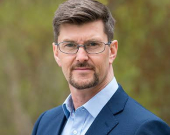
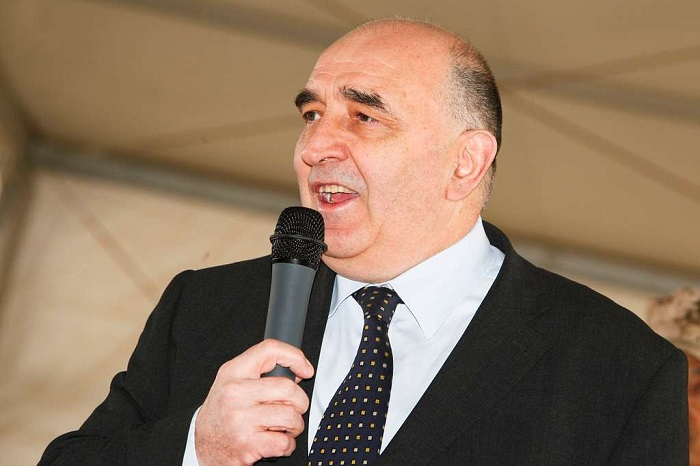
Sir William Patey KCMG, LLD is a distinguished former British diplomat and leading authority on Middle Eastern affairs. During his Foreign Office career, he served as British Ambassador to Sudan, Iraq, Saudi Arabia, and Afghanistan, including as Ambassador to Iraq during the drafting and referendum approval of the 2005 Iraqi Constitution. He also headed the Foreign Office’s Middle East Department and now serves as Government and International Affairs Adviser at Control Risks, offering widely respected insight on Iraq, the Gulf, regional security, and international diplomacy.
In this wide ranging interview with GULAN Weekly Magazine, former British ambassador Sir William Patey reflects on Iraq's transition after 2003, the lessons of the Iraq Inquiry, the regional consequences of the conflict between the United States and Iran, and the future of relations between Baghdad and the Kurdistan Region.
THE IRAQI STATE AND ITS RELATIONS WITH THE UNITED STATES AND THE UNITED KINGDOM
QUESTION 1 Iraq's Relations with the United States and the United Kingdom
Your period of service in Iraq from 2005 to 2006 coincided with an extremely sensitive and complex time. Nearly two decades later, how do you assess the evolution of Iraq's current relations with the United States and the United Kingdom?
SIR WILLIAM PATEY: Well, I remember my time fondly in Iraq. It was, as you say, a very difficult time. It was the period when the Iraqis were devising their new Constitution. It was a time when there were over 120,000 American and British troops in the country responsible for security. So it was a time of transition, when we were handing over to a democratically elected Iraqi government, based on their new Constitution, and handing over security to the Iraqis.
It was an interesting time to be there. It was very fraught because the drawing up of the Constitution was very difficult, given the often competing interests of different groups within Iraq. You had the Kurds, who wanted a high degree of autonomy; you had the Shia, who wanted to limit the amount of autonomy and have a more centralised state; and you had the Sunnis in their provinces, who were feeling excluded because they had been associated with the Saddam Hussein regime. It was quite a difficult time trying to marry all these interests together and come to a sensible Constitution and a government that could rule the whole of Iraq.
I can't say we've succeeded, because I think there are many flaws in the Constitution which are evident today. But on the plus side, since that time, Iraq has had seven general elections. So it remains a democracy; it continues to have elections which are free and fair. That is almost unique in the Middle East, so that is a very positive aspect.
Some of the other issues that were left unresolved in the Constitution remain unresolved. There is no hydrocarbons law. Erbil is still negotiating with Baghdad over many issues, such as the status of Nineveh, Kirkuk and Diyala, oil revenues and the division of oil revenues. These issues remain difficult, and the Iraqi state still does not have a monopoly on the use of force. There are many militias that continue to hold arms and exercise power and influence in Iraq, which makes it subject to regional interference.
So we say Iraq is still a work in progress. It is still evolving, still changing, still trying to address issues of corruption, still trying to get an effective governance system, and still trying to find a way in which it can be on good terms with all its neighbours, with the United States, Britain and European countries. It is a big task for any government and any prime minister.
FOLLOW UP: o you think there are still areas in which the United Kingdom can develop a stronger partnership with Iraq today?
SIR WILLIAM PATEY: Yes, Britain is trying to develop its trade and economic relationship with Iraq, because Iraq has fallen down the list of the UK's important trade partners. I know that was the focus of the visit of the previous Prime Minister, Mohammed Shia' al-Sudani, to Britain last year. The focus was on moving away from a defence and security relationship that was very strong. We still have a defence and security relationship, but towards more focus on the involvement of UK companies and investment by the UK in Iraq, in oil and gas, chemicals, water, and all the things Iraq needs and wants.
But of course, the British government doesn't control investment; that comes from private companies. For British investment to increase in Iraq, the conditions have to be right. The Iraqi government has to create the conditions. One of the constraints on international investment is the level of corruption within Iraq. I know the current government is trying to deal with that, but it is still a country where the spoils, if you like, or interests are shared out among the various factions and parties that make up the government. That is probably something that will need to change in Iraq if it is to have a more prosperous and secure future.
QUESTION 2 Lessons from the Iraq Inquiry and the Rebuilding of the State
You gave evidence before the Iraq Inquiry in 2009 and 2010. In your view, what were the most important lessons that the United Kingdom and the United States should have learned from the process of rebuilding the Iraqi state and its institutions?
SIR WILLIAM PATEY: Well, the biggest lesson we learned was that military intervention is not a good thing. That was the biggest lesson we learned: foreign governments and foreign countries can't rebuild a state. Only the Iraqis can do that.
One of the lessons I learned when I was in Iraq was that we were pushing Iraq along a timetable that was suited to the United Kingdom and the United States. We were anxious to get out of Iraq and hand over to the Iraqis. We were in a hurry, and that meant decisions were either postponed, left open, or inappropriate decisions were taken.
The lesson you learned was that you had to take longer and you had to have more faith in the local people to make their own choices. It is for Iraq to rebuild the state, obviously with international help, but unless the local people, the local government and the local politicians buy into whatever is being proposed, then it is unlikely to succeed.
FOLLOW UP: You mentioned that the United States and the United Kingdom were anxious to leave the country and hand responsibility over to the Iraqi people, and that some decisions were therefore rushed or mistaken. Could you clarify which decisions you believe were mistakes?
SIR WILLIAM PATEY: I think the timetable for the new Constitution was too short. In my view, we should have kept talking about the Constitution until the issues that remain unresolved to this day were resolved. The best time to resolve those issues was at the instigation of the Constitution. But we were anxious to get a Constitution and we accepted, at the height of our powers, if you like, compromises that Iraq is continuing to suffer from today.
We should have insisted on a hydrocarbons law. We should have insisted on the building up of a proper Iraqi army and Iraqi police force that was free of militias and free of armed political parties. But we didn't do any of that. To some extent, we left with the Sunnis feeling more marginalised than they should have been. To some extent, that led to Zarqawi and ISIS, and that terrible period when ISIS took over large swathes of Iraq and threatened the government. That then led to the reconstitution of the militias, from which Iraq continues to suffer to this day. So I think the constitutional process was too quick.
QUESTION 3 Balancing Sovereignty and Strategic Partnerships
In light of the current regional situation, how can the Iraqi government balance the protection of its sovereignty with its strategic partnerships with Western countries, particularly the United States and the United Kingdom, without becoming a party to regional rivalries?
SIR WILLIAM PATEY: Well, I think the only way Iraq is going to avoid continuing to be part of regional rivalries is that it must deal with the militias within the country that take orders from other countries. Iraq is getting sucked into this conflict with Iran because Iran has influence over Iraqi militias, which are attacking US facilities in Iraq and attacking Saudi Arabia and neighbouring countries on behalf of Iran.
Until such time as Iraq is sovereign and can take its own decisions, it will remain vulnerable. I don't think Iraq for one minute wants to attack Saudi Arabia or its regional neighbours. It wants to maintain good relations with Iran, which is understandable, but it also wants to maintain good relations with the United States, the United Kingdom and other Arab countries. It can't do that if the Iraqi government isn't sovereign in its own territory.
The reason Iraq is getting sucked into these regional crises is because there are Iraqi militias which don't take orders from the Iraqi government; they take them from the Iranian government. That is quite clear. Iraq wants to maximise its oil and gas revenues, invest in its own country and attract international investment from places like the United States and the UK. It can only do that if it is truly sovereign, and at the moment it is not sovereign.
FOLLOW UP: Can Western countries support Iraq without placing it in a position where it appears to be aligned against one of its neighbours?
SIR WILLIAM PATEY: I think so. Even the United States accepts that Iraq needs to be on friendly terms with Iran. It shares a huge border and, at the moment, it is dependent on Iran for gas and electricity. It is always going to be a trade relationship. In fact, I think the United States has made allowances for the fact that, even though it has imposed sanctions on Iran, there has been recognition that Iraq is a special case, and Iraq's relationships with Iran have not been sanctioned.
There is some understanding that Iraq can't be a US ally against Iran. They don't expect that. What they don't expect is that Iraq could be used against the United States or against US and British allies in the region. They want Iraq to be independent, to have a good relationship with Iran, but also a good relationship with Syria, Jordan and other Gulf countries.
That is in Iraq's interest because it will maximise the stability and security of Iraq and also increase the chances of greater prosperity. There is a balance to be struck. At the moment, Iraq is getting sucked in because of those militias.
THE UNITED STATES AND IRAN WAR AND SECURITY IN THE GULF
QUESTION 4 The Conflict between the United States and Iran and Gulf Security
As someone who served as Ambassador to both Iraq and Saudi Arabia, how has the continuing conflict between the United States and Iran affected the security and stability of the Gulf states?
SIR WILLIAM PATEY: It has been profound. I think the Israeli inspired attack on Iran by the United States was mistaken. It has led to a worse situation for Gulf countries and for Iraq. We have seen the closure of the Strait of Hormuz, which is particularly difficult for Iraq and other Gulf countries. Most of their oil flows through the Strait of Hormuz, so it is affecting all those countries profoundly.
Security hasn't increased. Iran continues to be run by, well, it is now run by the IRGC. In my opinion, it has become a much more security focused state run by the IRGC. The issues of nuclear proliferation haven't been addressed. Iran continues to have enriched uranium and continues to have aspirations to develop its nuclear programme and, in my view, nuclear weapons. None of those issues have been resolved.
Neighbouring countries are being attacked: Saudi Arabia, Bahrain, Kuwait, Jordan, the UAE and Qatar. Iraq is being sucked into the war because of the activities of Iranian backed militias. Iraq is suffering reprisals from the United States, which has attacked Iraqi territory where these Iranian backed militias are. It has affected Iraq's relationship with Saudi Arabia. So it has had a profound impact on both the security and economic prosperity of the Gulf, and the quicker the conflict is ended, the better.
But there is no sign that Israel wants to end the conflict. They want to use their window of opportunity to get American assistance to weaken Iran to the fullest extent possible. That is their strategic aim. I don't understand what the United States' strategic aim is. It appears now to be to reopen the Strait of Hormuz, which wasn't closed before the war. So they seem to have forgotten all about the nuclear issue.
In the end, what we need is a deal with Iran which reopens the Strait of Hormuz to oil traffic and addresses its nuclear ambitions. We need to get back to a deal on no nuclear weapons in Iran and the lifting of sanctions. We need a new security arrangement in the Gulf area, in which Iran is a peaceful neighbour and is not a threat to the Gulf countries, and in which we all deal with Iran as a normal country.
That is a long way off, but that is where we need to get to. That would be the best outcome for Iraq, in which we are no longer considered to be at war with Iran and no longer consider Iran an international pariah. It makes Iran's position and the whole region much more comfortable.
FOLLOW UP: Do the Gulf states still have sufficient diplomatic space to maintain relations with both Washington and Tehran?
SIR WILLIAM PATEY: They have opposed the war. They didn't want a war. At first, they placed restrictions on how the United States could conduct the war from their territory. They have obviously suffered attacks on their territory. They want to de escalate and they want the war to stop.
But they are a bit like Iraq. They want to maintain a strong relationship with the United States, but they don't want to be at war with Iran. They would prefer to de escalate the whole issue and get back to a situation where they were at peace and were addressing the nuclear issue. Their interest is in bringing an end to this.
QUESTION 5 Drone and Missile Attacks and the Gulf Security Equation
How have the repeated drone and missile attacks across the Gulf region changed the region's security equation? In your view, what kind of new defence and diplomatic strategy should the Gulf states pursue?
SIR WILLIAM PATEY: It has not just changed the region's security equation; it has changed Europe's security equation because we are now seeing the impact of Iran's ability to produce drones and our inability to shoot them down. You can't use a $2 million Patriot missile, to shoot down a £10,000 drone all the time. It just doesn't work.
It has changed the nature of warfare, and it has made it much more important to have agreements on ballistic missiles and broader security agreements. We really need a Gulf security architecture in which the countries no longer threaten each other. Drones can easily hit cities in the Gulf.
We have seen the air war against Iran. It hasn't defeated Iran. You can't defeat a country from the air, as we discovered in Iraq and Afghanistan. But you can inflict a lot of damage, and the war can go on for a long, long time and have an impact on civilians. We are seeing that in Ukraine, in Russia and in the Gulf. Wars can go on for a long time without either side conceding.
What it does lead to is a lack of confidence, a lack of investment and economic costs, even though neither side feels willing to reach an agreement. Iran will be able to continue to produce drones for quite a long time. Because they have a dictatorship in the country, they can stand a lot of pain, they can take a lot of pain, and they won't give in. So the only way out is through diplomacy.
QUESTION 6 Evolutionary Change and Reassuring Gulf Allies
When you spoke about the Arab Spring in 2012, you emphasised the importance of evolutionary change in the Gulf region. To what extent do you believe that the policies of the United States and the United Kingdom towards Iran have succeeded in reassuring their Gulf allies that their security will be protected?
SIR WILLIAM PATEY: Well, I think we have gone a long way to reassure our Gulf allies, because I know that Britain in particular has maintained its relationships with Bahrain, the UAE and Saudi Arabia, and we have been helping them to defend themselves. But as you say, drone warfare has shown that there are limits to what you can do. There are limits to how you can provide absolute protection from air strikes. So these alliances remain strong.
When I was talking about evolutionary change, I was talking about evolutionary change in the politics and societies of the Gulf. We have seen that evolutionary change. We have seen it in Saudi Arabia, where, although the political system remains very tightly controlled and centralised, social and economic change has led to new freedoms for women, the ability to work, changes to religious restrictions on social gatherings and mixing, and women driving. That evolutionary change has happened in Gulf countries, and we are continuing to see evolutionary change in Iraq.
What Gulf countries don't want is the sort of chaos they saw in Syria, Yemen and Libya, and that they saw for a little while in Egypt. What they want is change to come from within those countries and within those societies, and not according to a Western plan or a Western timetable.
That was basically a message to my own countrymen. Don't think that you can impose change on these countries to adopt your system of government, your moral codes and your system. They have to find their own way. It was something I said after the so called Arab Spring, and I continue to believe that. I continue to believe it for Iraq. It is for Iraq and Iraqis themselves to find their own way through evolutionary change.
It is probably taking longer in Iraq than the Iraqis want. The Iraqis I talk to are frustrated at some of the things that haven't changed in that country. They are not seeing the benefits of the oil wealth. Most of Iraq's oil wealth is going on supporting a bloated bureaucracy and corruption, whereas it should be going into developing hospitals, schools and infrastructure, and investment in water.
Iraq still burns associated gas at massive rates, and it imports gas and electricity from Iran. It should be producing its own electricity from its own gas fields. But that hasn't happened in 20 years and it needs to happen. Funnily enough, the Iraqis continue to elect the same group of people. At some point, the Iraqis are going to elect a different group of people who are going to effect change. But only the Iraqis can do it. Nobody from outside will do that.
When they were under attack from Iran, Britain and the United States were supplying missile systems and aircraft to help our allies. There is a limit to that help, but I think we remain credible allies, and I think the Gulf countries want to maintain that alliance. What the Gulf countries are recognising is that they can't rely on it entirely. Donald Trump does not seem like a particularly reliable ally, so they are having to, as we call it in Britain, hedge their bets.
They are making sure they have good relationships with China, good relationships with India and good relationships with each other. You see Saudi Arabia strengthening its relationship with Turkey, Pakistan and Egypt. Regional countries are coming to their own arrangements. They are not totally reliant, as they were when I was in Saudi Arabia, on the United States, the United Kingdom and European countries. They are diversifying their relationships, which makes a lot of sense to me.
THE KURDISTAN REGION WITHIN FEDERAL IRAQ
QUESTION 7 The Kurdistan Region's Political and Constitutional Position
Since 2003, the Kurdistan Region has been recognised as a stable region and a close partner of the West. How do you view its current political and constitutional position within Iraq's federal framework?
SIR WILLIAM PATEY: It has a relatively stable position within Iraq's federal framework. The Constitution recognises Kurdistan as an autonomous region with its own system of government. But what has not been resolved is the arrangement and the relationship between Kurdistan and Baghdad, the central government.
It has improved. Ironically, that is one of the things that has improved as a result of the Gulf crisis, because now the oil is flowing through the Ceyhan pipeline into Turkey, through Kurdistan and through northern Iraq. That oil is flowing again, and that has improved relationships.
But Erbil and Baghdad continue to argue over the money being paid to the Kurdistan Region for its public service, and the oil revenues that supposedly have to go to Baghdad. All of that has been argued about for the last 20 years and continues to be argued about. Getting to a stable relationship, in which both sides agree on the arrangements and those arrangements are implemented, remains a big problem for the Kurdistan Region and its relationship with Baghdad.
Then you have other areas, including the status of Kirkuk. These all have to be resolved through negotiation. Kurdistan will thrive better in an Iraq which is economically thriving. They have a mutual interest in ensuring that Iraq works as a state, and that Kurdistan works as an autonomous region within that state, cooperates with that state and maximises the opportunities.
International investors will not invest if there is a high degree of instability in the relationship between Erbil and Baghdad. These are important things to resolve.
QUESTION 8 Internal Cohesion and Negotiating Strength
To ensure that the Kurdistan Region remains strong, how can it balance addressing its internal challenges with strengthening its negotiating position with the federal government in Baghdad?
SIR WILLIAM PATEY: I don't even want to get into the internal politics of Kurdistan, but never mind Erbil and Baghdad: Erbil and Sulaymaniyah need to improve their relationship because there are different factions between the KDP and the PUK. There are internal issues within the Kurdistan Region, and they need to be resolved as well.
They are both related. The stronger the internal agreement and the stronger the power sharing works within the Kurdistan Region, the stronger the hand that Kurdistan will be able to play in Baghdad. If there are internal differences within the Kurdistan Region, Baghdad will be able to exploit that.
There is no way you are going to reach an agreement over Diyala and Nineveh without an agreement within Kurdistan, because Diyala affects the Sulaymaniyah area and Nineveh affects the Duhok area in the north. You have to get strong internal cohesion within the Kurdistan Region. The last thing you want, when you are an autonomous region, is for that autonomous region to be divided.
QUESTION 9 Western Support for the Kurdistan Region
How do the United Kingdom and other Western countries view the importance of preserving the Kurdistan Region as an established federal entity in maintaining the balance of power and countering extremism in Iraq and the wider region?
SIR WILLIAM PATEY: The Kurds have historically been a big part of this. For the United Kingdom, going way back to Saddam's time, when Saddam was bombing the Kurdish Region and using chemical weapons, there were the no fly zones after the first Gulf War. We have a strong historical connection and a strong commitment to Kurdish security. That was reflected in the Constitution, where the autonomy of the Kurdish Region was recognised.
We have always had a good relationship with Kurdistan. It has always been a relatively stable part of Iraq, even when other areas were insecure. It managed to resist ISIS, even though it was threatened by ISIS, and it played a big part in the defeat of ISIS. That history is recognised by most people.
The one issue we have with Kurdistan in Britain is the ability to return Kurds to Kurdistan and Iraqis to Iraq who are illegal migrants in the United Kingdom. That is the biggest issue, I think, between the two, and it is a longstanding issue. Even when Kurdistan was a very stable part of Iraq, it was still difficult to return Kurds who migrated illegally to the United Kingdom without the agreement of the government. That remains a big issue.
We also want to be in a position to return prisoners who have served their sentences. Not all Britons are law abiding, and not all Iraqis are law abiding. We have some Iraqis in Britain who have served prison sentences and need to be returned to Iraq. We need the cooperation of both the Erbil and Baghdad governments in that.
QUESTION 10 Joint Protection and Economic Development
Given the intense conflict between the United States and Iran on the one hand, and tensions within Iraq on the other, how can Iraq and the Kurdistan Region work together to protect themselves from the negative consequences of these conflicts and achieve economic development?
SIR WILLIAM PATEY: There are a number of things they could do immediately. They could resolve some of their own internal differences, reach an agreement on the Peshmerga being integrated into the Iraqi defence forces, and reach an agreement that the militias will be disbanded or integrated into Iraq's security forces, so that the governments in Erbil and Baghdad have a monopoly of force within the country.
The difference with the Peshmerga in Erbil is that they answer to the Government of Kurdistan. That is not true in the south. But they need to be part of a recognised Iraqi security structure. Getting those internal problems sorted would help Iraq avoid being sucked in.
Obviously, it is dependent on resolving the regional war that we are currently in, and I don't think that is in the hands of the Iraqis; it is in the hands of others. But in the meantime, there are things they should be doing. They should be expanding the pipeline through Turkey, developing better relations with Syria and getting an Iraqi Syrian pipeline through to the Mediterranean. That reduces Iraq's dependence on the Strait of Hormuz.
They should participate in regional transport networks through Saudi Arabia and Jordan. These are all investments that can be made that will benefit Iraq and benefit the region. Iraq should start reducing its dependency on Iranian gas and Iranian electricity and do what it can to contribute to resolving the war. It has a role in doing that.
It needs to stay on good terms with the United States and the Gulf Arabs, and it needs to stay on good terms with Iran if it is going to become more secure and more prosperous. When the Strait of Hormuz is opened, it needs to look internally to ensure that its oil wealth is spent on investment, infrastructure, housing, helping businesses and attracting foreign investment. It needs to do all of those things at once.
It is a big task. The Iraqi prime minister probably has one of the toughest jobs in the world. That is probably why they don't last so long. They get burnt out.
FOLLOW UP: Article 121(5) of the Iraqi Constitution states that the regional government is responsible for establishing and organising the internal security forces of the region, including the police, security forces and guards of the region. In that constitutional context, would you agree that the Peshmerga should not be treated as an ordinary militia, but rather as a constitutionally recognised security force of the Kurdistan Region?
SIR WILLIAM PATEY: Yes, I think the Peshmerga forces will be part of the Iraqi security structure. They are different from other militias in the sense that they helped us defend Kurdistan in the past. They are also recognised in the Constitution, as I believe, as guards of the region. It doesn't mean to say they can't also be part of the Iraqi defence forces within a separate structure.
I am not suggesting that the treatment of the Peshmerga would be exactly the same as militias in the south, because the militias in the south are answerable to individual politicians, whereas the Peshmerga are answerable to the Government of Kurdistan. That is a big difference.
The Peshmerga would have to be integrated in a way that would allow them to defend the northern and eastern borders of Iraq, because the Kurdish borders in the north and the east are the borders of Iraq as well. They would have a role in defending Iraq's territorial integrity as a whole, as well as Kurdistan. That is what I mean by that.
I don't want to give the impression that I regard the Peshmerga as some other militia. I am not saying that. But they do need to be part of Iraq's defence infrastructure as a whole. It doesn't mean to say they are integrated directly into the Iraqi army. I am not saying that. I would say that about the militias in the south.
A FINAL MESSAGE TO THE PEOPLE OF THE KURDISTAN REGION
Before we conclude, is there anything else you would like to add, particularly any message you would like to share with our readers in the Kurdistan Region?
SIR WILLIAM PATEY: I remember my time visiting the Kurdistan Region with great fondness. I have a soft spot in my heart for the Kurdish Region. I have visited a few times since I retired as ambassador, in my role as an adviser to Control Risks, and I have seen the progress and development that is going on in Kurdistan.
I wish the people of Kurdistan all the best for the future, and I hope that they can achieve the highest levels of security and prosperity that we benefit from here in the United Kingdom.
By Kobin Ferhad