Abdi Calls for New Kurdish Political Path as SDF Military Era Ends
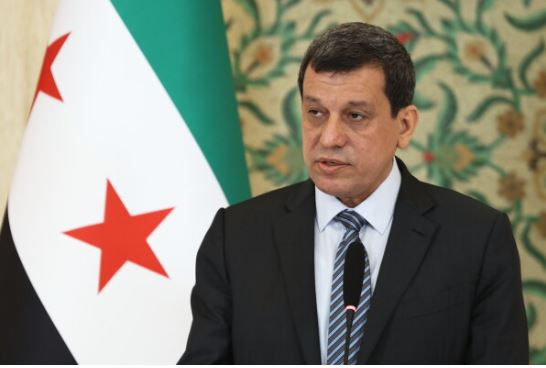
Former Syrian Democratic Forces commander Mazloum Abdi says the end of the SDF’s independent military role should mark the beginning of a new political phase for Syria’s Kurds, centered on constitutional guarantees, diplomacy and civilian political organization.
In interviews with Turkish journalists published and broadcast by Ilke TV and Yeni Yaşam, Abdi said communication channels with Türkiye remain open and should develop into a “normal and constructive” relationship.
The remarks come after the integration of SDF forces into Syrian state institutions, bringing to an end the Kurdish-led force’s 15-year existence as an independent military organization.
Abdi rejected characterizing the integration as a surrender, saying SDF fighters entered the Syrian military structure alongside their commanders and organized units. He described the transition as both “an ending” and “a beginning.”
The end, he said, concerns the SDF’s period as an independent armed force. The new phase will instead focus on securing Kurdish political, cultural, linguistic and administrative rights within Syria.
Abdi said the drafting of Syria’s next constitution could become one of the most important political battles for the country’s Kurdish population.
He said Kurdish representatives want a direct role in the constitutional process and argued that rights currently recognized through administrative decisions or presidential decrees need stronger legal protection.
Among the issues he highlighted are recognition of Kurdish identity, mother-tongue education and administrative rights.
According to Abdi, constitutional guarantees are particularly important because decisions made by governments can later be reversed, while rights incorporated into the constitution would have greater permanence.
He acknowledged, however, that the arrangements secured so far remain below the full range of Kurdish demands.
Language education is one of the areas where Abdi sees a significant gap between Kurdish expectations and current arrangements.
During the period of autonomous administration in northeastern Syria, Kurdish-language education expanded from primary schooling through university. Abdi said the current framework recognized by Damascus does not yet match what Kurdish communities had developed over the previous decade.
He argued that Kurdish families and communities also have a role to play in preserving the language by continuing to support Kurdish-language education.
Abdi linked the issue to his own childhood, recalling that he was detained at the age of 13 or 14 after Kurdish-language books were discovered at his school.
For him, the limited recognition of Kurdish education today represents a major change from the past, but he said it should be regarded as a starting point rather than a final settlement.
The disappearance of the SDF as an independent military force also raises a major political question: who will represent the communities and political constituency that developed around it?
Abdi said discussions are underway over the creation of a new political organization, although its name, leadership and structure have yet to be determined.
Such an organization, he argued, would allow the social and political influence accumulated during the SDF era to continue through civilian institutions.
The transition therefore goes beyond dismantling military structures. It will require political mechanisms capable of participating in elections, negotiating with Damascus and campaigning for constitutional rights.
Abdi has not said that he will personally lead the proposed organization.
The relationship with Türkiye is another major element of Abdi’s new political outlook.
For years, Ankara viewed the SDF through the lens of its alleged links to the Kurdistan Workers’ Party, or PKK, while the SDF and Turkish forces remained on opposing sides of the conflict in northern Syria.
Abdi now argues that the relationship should be fundamentally reassessed.
He pointed to Türkiye’s geographic position, economic strength and potential role in Syria’s reconstruction, saying cooperation could develop around economic recovery and regional stability.
He also connected developments in Syria with the Kurdish political situation in Türkiye, arguing that changes in one country have historically affected the other.
A reduction in Turkish-Kurdish tensions, he suggested, could create greater political space for addressing Kurdish issues in Syria without returning to military confrontation.
Abdi’s changing relationship with Ankara has attracted further attention following reports that Türkiye had removed him from its terrorist list after his appointment as an adviser to the Syrian presidency.
Kurdistan24 reported, citing Manşet Haber and other unofficial Turkish media outlets, that Abdi was reportedly no longer on the list.
However, Turkish authorities have not publicly confirmed the reported change.
A similar development was reportedly reported concerning Sipan Hamo after he received a position in Syria’s Defense Ministry.
Until Ankara issues an official statement, the reported changes cannot be considered confirmed government policy.
Abdi’s own transformation reflects the broader shift he is describing.
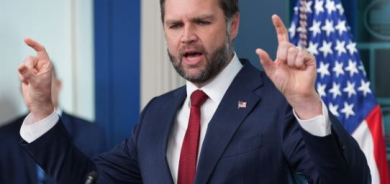
After years as the commander of the U.S.-backed SDF, he has now appeared publicly in civilian clothing and in his new role as an adviser to the Syrian presidency.
He said he had not yet fully begun his new duties because he was completing work related to the SDF’s integration into Syrian state institutions.
His future agenda could include relations with Damascus and Ankara, economic reconstruction, regional stability and Kurdish political rights.
Yet Abdi emphasized one objective above all others: avoiding another war.
After 15 years of armed struggle, he said he does not want Kurdish society to return to the conditions that defined the previous era.
The SDF’s integration may therefore have closed one military chapter, but the political questions surrounding Kurdish identity, language, governance and representation remain unresolved.
For Abdi, the next struggle will not be fought primarily through weapons. It will be fought through Syria’s constitution, political institutions and negotiations with Damascus and Türkiye.