Iraqi Iran-Backed Faction Threatens Confrontation if US Troops Remain After September 30
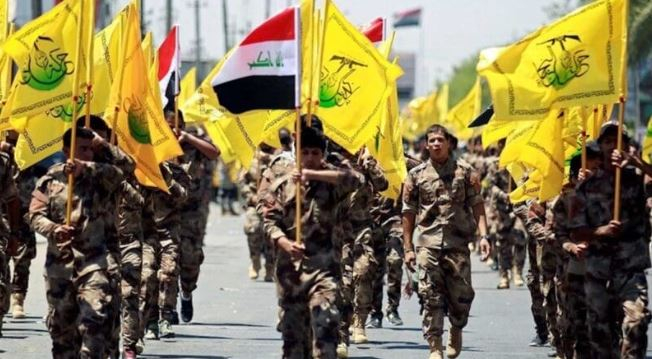
An Iran-backed armed group in Iraq has threatened direct confrontation with any US troops remaining in the country after September 30, as questions grow over whether Baghdad can meet a separate deadline to bring armed factions under state control.
Akram al-Kaabi, secretary-general of Harakat Hezbollah al-Nujaba, warned on Wednesday that his group was prepared for a “decisive battle” if the United States failed to complete the withdrawal of its forces from Iraq by the September 30 deadline.
Kaabi said that even a single US soldier remaining after the deadline would face attacks, escalating tensions between Iran-aligned factions and Washington.
The warning came as senior figures from other Iran-backed groups reiterated their opposition to surrendering their weapons. Sheikh Abu Talib al-Saaidi, a senior leader of Kata’ib Hezbollah, questioned whether the Iraqi government had the capacity to impose restrictions on weapons while struggling with other domestic challenges.
Kata’ib Hezbollah, al-Nujaba and Kata’ib Sayyid al-Shuhada are among the prominent factions operating under the broader umbrella of the Islamic Resistance in Iraq. The groups have resisted calls for disarmament and have increasingly attached conditions to any agreement with Baghdad, including demands for the withdrawal of foreign forces and, in some cases, the dissolution of the Kurdish Peshmerga forces in the Kurdistan Region.
The growing resistance has raised doubts over whether September 30 will serve as a firm deadline for the disarmament process.
Former Prime Minister Nouri al-Maliki, a prominent figure within Iraq’s ruling Coordination Framework, said the date should instead mark the beginning of a broader process aimed at organizing and bringing weapons under state control.
Maliki argued that the government should avoid using the term “disarmament,” saying the language could create political and psychological resistance among the factions. Instead, he proposed terms such as “organization” and “containment of arms.”
He also distinguished between the Popular Mobilization Forces (PMF), a formal government institution, and armed factions operating outside direct state control. According to Maliki, the PMF’s weapons, funding and operations are formally subject to government authority.
Maliki acknowledged that the process could not be completed by September 30. He said political leaders should instead focus on establishing an agreement and avoiding a confrontation that could expose Iraq to further threats or sanctions.
Qasim al-Araji, Iraq’s security adviser and a former national security adviser, also rejected the idea that September 30 should be treated as the final deadline for weapons restrictions.
Araji said September 30 relates primarily to the withdrawal of international Coalition forces and does not represent a deadline for completing the organization or removal of weapons held by armed factions.
He said negotiations would continue until an agreement was reached on transferring weapons under state control, adding that the government remained serious about restricting arms.
Araji suggested that the PMF would likely be the institution to receive weapons surrendered by factions because of its formal status under the authority of Iraq’s commander-in-chief.