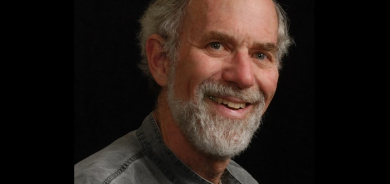
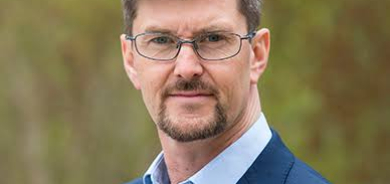
Professor Paul T Levin to Gulan: The Peaceful Relationship With the Kurdish Regional Government Is One of the Successes of Turkish Foreign Policy
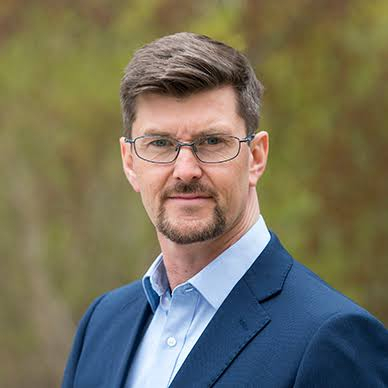
Dr. Paul T. Levin is an Associate Research Fellow at the Swedish Institute of International Affairs and Docent in International Relations at Stockholm University. He is the founding Director of the Stockholm University Institute for Turkish Studies (SUITS). He holds a Ph.D. and an M.A. in Political Science from the University of Southern California. His research focuses on Turkey’s foreign policy, Turkey-EU relations, international relations, Turkish politics, and diaspora studies. He has published widely on Turkey’s relations with Europe, migration, democracy, and foreign policy, and has contributed to academic and policy discussions through research, teaching, and media interviews.
Gulan: In your recent research, you describe Turkey as simultaneously a partner, competitor, rival, and even a threat to parts of Europe. Is Ankara pursuing strategic autonomy within NATO, or seeking to establish a more independent regional security role?
Professor Paul T Levin: My reading of Ankara’s policy is that it pursues multi-alignment as a response to multipolarity. NATO remains important to Ankara, and much of Turkey’s defense exports go to other NATO allies. However, Turkey’s security interests do not always align with those of the US or its European partners, and the border disputes with Greece and Cyprus remain an obstacle to closer Turkish participation in European structures. There are underlying value divergences between the ruling party in Turkey and its European allies as well. Moreover, the EU is broadly absent from the Middle East and the United States is increasingly unwilling and unable to play its traditional role there.
For these reasons, Ankara simultaneously—in addition to its NATO membership—seeks a more independent regional role that includes new security arrangements like the Mecca Joint Defense Agreement, and it is arguably not a coincidence that it is an alliance of Sunni Muslim states.
Gulan: President Erdoğan and Prime Minister Masrour Barzani recently reaffirmed their commitment to stronger cooperation. However, Prime Minister Barzani has also stated that around 800 villages remain unreconstructed because of continuing border conflict. How can Turkey and the Kurdistan Region reconcile their close partnership with the civilian and developmental costs of Turkey’s security operations?
Professor Paul T Levin: I am not familiar with the details of the situation, but this is an area where I could imagine that there might be progress in the future if the process of disarming and disbanding the PKK is successful and fighters in the northern KRG can return to Turkey under the new partial amnesty law. If the Turkish process is successful, there may also be a peace dividend in terms of investments and growth in Eastern Turkey that could indirectly benefit the border region in Iraqi Kurdistan via growing trade.
The peaceful relationship with the Kurdish Regional Government in northern Iraq is, in my opinion, one of the successes of Turkish foreign policy, and President Erdoğan would be wise to nurture it, not the least because Iraq is (perhaps increasingly) also of interest to Turkey’s regional rivals.
Gulan: Your research found that the NATO accession disputes damaged Swedish and Finnish trust in Turkey while also confirming its military importance. Can NATO build lasting cooperation with Ankara despite continuing differences over Russia, European security, and democratic standards?
Professor Paul T Levin: You are right that our research found that the NATO accession process left a bitter taste in both Helsinki and Stockholm, and there is a broader underlying lack of trust between Ankara and many EU capitals. Not just Greece and Cyprus but also countries like Austria will continue to block Turkish participation in EU programs like the EU’s PESCO project for structured defense cooperation, or the SAFE mechanism for joint financing of defense procurement.
On the other hand, there are geopolitical realities and complementary interests that mitigate the lack of trust. For Sweden’s part, we need Turkish cooperation on combatting organized crime, for example.
More importantly, Europe does not have the luxury of being too selective when it comes to which partners it works with when the US is increasingly erratic, unreliable, and at times hostile. Europe is in the process of rapidly ratcheting up its arms production, and the dynamic Turkish defense industry can play a role here, as recent partnerships with and Turkish purchases of Italian and Spanish companies illustrate. Turkey has NATO’s second largest armed forces and more combat experience than most European NATO members. It is an important ally. Concerns over democratic backsliding and human rights abuses played a key role in hindering Turkish EU accession. It plays less of a role in security cooperation.
For Ankara’s part, NATO membership means that it is part of the world’s most successful military alliance, and for all the benefits of the Mecca pact, Pakistan and Saudi Arabia cannot offer what NATO countries can. It was NATO-operated (US and Spanish) interceptors that shot down each of the four Iranian missiles that are known to have been fired at Turkey during the war.
Gulan: In your recent analysis, you distinguish between ending the armed conflict and resolving the wider Kurdish question. Following Turkey’s August 2026 peace law, what must change in the political, linguistic, and cultural lives of Kurdish citizens before this process can be considered a genuine peace?
Professor Paul T Levin: That’s right. The Turkish government calls this process simply a transition to “a terror-free Turkey,” which suggests that it views it more or less as the terms for the PKK’s surrender. Regardless of how you feel about the PKK, which is a terrorist organization also according to Sweden and the EU, the insurgency that it has led for 42 years was a response to a set of real underlying grievances, which this process does not address.
There are concrete things that can change, such as the release of political prisoners and an immediate end to the kayyum practice by which Ankara has appointed governors and mayors to many majority Kurdish areas in the southeast. The government has already declared an investment program for the region. Not just going through with that promise but including local stakeholders in planning such investments would alleviate concerns that they are merely Ankara’s tools to strengthen central control.
More philosophically, what is needed is a grand bargain that resolves the underlying contradiction between many Kurds’ desires for expressions of their cultural distinctiveness and the Turkish state’s (and many ordinary Turks’) fear that any such demands are thinly veiled steps toward secession. Ideally, Kurdish nationalists in Turkey would embrace the idea that they are Turkish in addition to being Kurdish, and Turks would reimagine Turkishness as allowing for diversity in language and culture. The latter is partly a matter of a change in mindset.
However, I also suspect that there will be a negotiation over a constitutional amendment now, in which Erdogan will need support from Kurdish MPs. They are likely to ask for certain cultural/language rights to be enshrined as official and accepted by the Turkish state. That would be an important step for Kurds.
At the same time, a revised constitution will further consolidate Erdogan’s control over power in Turkey, allowing him to run for office again and maybe change the election laws to make it easier for him to win a Presidential election without having to face a single opposition candidate in a run-off. No one should have any illusions that the current peace/disarmament process is a democratization process. To the contrary, it allows the President to divide the opposition and can help him to consolidate his power.
With the end of the armed struggle, Kurds will now have to pursue their struggle for cultural rights through the political process. The further consolidation of autocracy in Turkey will not make that struggle easy. The DEM party gathers around 10-15% of the votes. That means that it will have to enter into alliances and bargain to gain the support of other parties for their ideas about how Kurds can feel fully at home in Turkey. This is not the end of that process, but an entirely new chapter.
Gulan: In your work on migration from Turkey to Sweden, you examine belonging and transnational political identity. How do Turkish and Kurdish diaspora communities influence one another, and can they support reconciliation rather than reproduce Turkey’s political divisions in Europe?
Professor Paul T Levin: In these processes, it is not uncommon for the diaspora to have to be dragged along and convinced of the need to make compromises to achieve progress in peace negotiations, and it is arguably no different in the Kurdish case. I sense a high degree of skepticism in at least the Swedish diaspora regarding the ongoing process in Turkey, as many feel that it has so far been very one-sided, with the PKK making concessions without getting much in return. (That is why the recent framework law for reintegration of PKK members is so important, and why it must now be implemented speedily.)
It is often up to prominent members of the home region's communities to make the case for compromise to the diaspora. In the past, I have seen indications that directives from the groups in the region sometimes instead fuel tensions between Turkish and Kurdish diaspora communities. This time, the messages from Qandil and Brussels appear to be designed to explain the process and garner support for it among members of the diaspora. That is good and important.
In the past, we at Stockholm University have worked with members of the Turkish and Kurdish communities in Stockholm with the support of the Swedish Dialogue Police and the Olof Palme International Center to mitigate tension through dialogue, and we stand ready to do so again if a need arises.
Gulan: President Nechirvan Barzani has welcomed Turkey’s new peace law and reaffirmed the Kurdistan Region’s support for the process. What constructive role can the Kurdistan Region play, and how could a successful peace reshape its security, border communities, and relations with Ankara and Baghdad?
Professor Paul T Levin: The KRG can work constructively with both sides to facilitate the orderly and peaceful return of PKK fighters from the Qandil mountains to Turkey, if and when that date comes. There will need to be arrangements for those who are not included in the limited amnesty, and there may be a role for the KRG there as well. However, the course of the disarmament/peace process is ultimately determined in Turkey by the parties directly involved.
This four-decades-long conflict has created instability beyond Turkey; in Iraq, Syria, and Iran. The Kurdistan Regional Government and its people could therefore stand to benefit substantially from a permanent end to hostilities between the PKK and the Turkish state, and from the successful conclusion of the parallel Syrian process. The return of PKK fighters from Northern Iraq and departure of Turkish forces (which, according to news reports, has already begun at scale) would enable the KRG to reestablish control over its territory.
Border areas could be transformed from conflict zones where smuggling is endemic to areas of legitimate trade, growth, and investment. The desecuritization of the “Kurdish issue” could only contribute to improved relations with Ankara, perhaps increasing the chances of the KRG being included in or benefiting from regional connectivity investment projects down the line.
The end of this conflict could also allow the KRG to focus on managing tensions with Baghdad and address sources of instability in the region. These include the US and Israeli war with Iran and repeated strikes by Iran-aligned militias on targets in Iraqi Kurdistan, as well as increasing Shia-Sunni tensions and a deepening Turkish-Israeli rivalry that now has generated new security alliances in the region. President Nechirvan Barzani will have to use all of his diplomatic skills to navigate this difficult and shifting geopolitical terrain, but some of these changes could be for the benefit of Kurds in Iraq. At the very least, the end of the armed conflict between Turkey and the PKK is one less thing to worry about.
By Kobin Ferhad