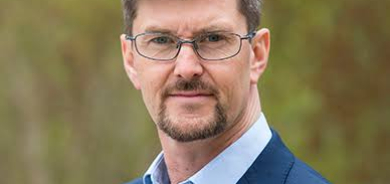
Professor. Dr. David D. Laitin to Gulan: Ethnic identities are one dimension of broader identity repertoires
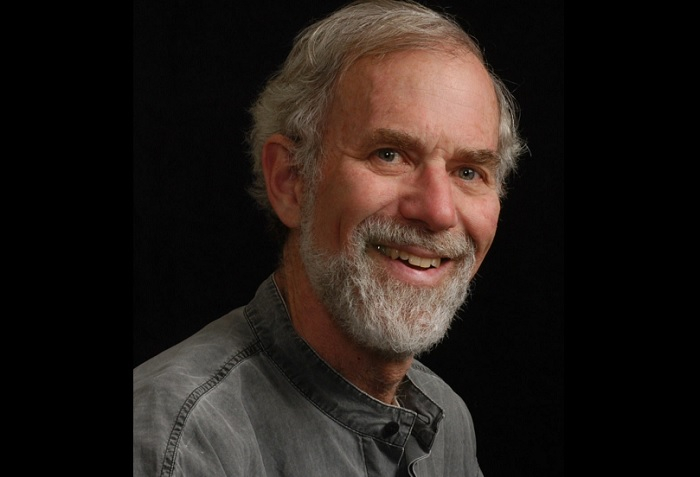
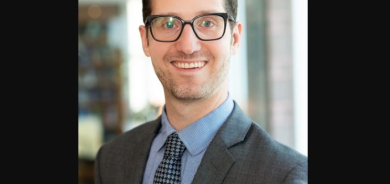
David D. Laitin is the James T. Watkins IV and Elise V. Watkins Professor of Political Science at Stanford University. He received his BA from Swarthmore College, and then served as a Peace Corps Volunteer in Somalia and Grenada, where he became national tennis champion in 1970. Back in the US, he received his Ph.D. in political science from UC Berkeley, working under the direction of Ernst Haas and Hanna Pitkin. He has taught at three great universities: UCSD (1975-87), the University of Chicago (1987-1999) and now at Stanford. Over his career, as a student of comparative politics, he has conducted field research in Somalia, Yorubaland (Nigeria), Catalonia (Spain), Estonia, and France, all the time focusing on issues of language and religion, and how these cultural phenomena link nation to state. His books include Politics, Language and Thought: The Somali Experience (1977), Hegemony and Culture: Politics and Religious Change among the Yoruba (1986), Language Repertoires and State Construction in Africa (1992), Identity in Formation: The Russian-Speaking Populations in the Near Abroad (1998); Nations, States and Violence (2007); Why Muslim Integration Fails in Christian-Heritage Societies (2016); and African Politics Since Independence (2019). In an exclusive interview, he answered our questions as follows:
Gulan: You have argued that ethnic identities are frequently more malleable and deliberately formed than is generally believed. However, identity-based conflicts are on the rise in many areas today. Has the essence of ethnic identity evolved, or have political leaders just gotten more adept at strategically mobilizing various identities?
Professor. Dr. David D. Laitin: In work I have done with Kanchan Chandra, we have identified three zones of malleability. First there is the level of dimensions. Ethnic identities are one element of identity repertoires which have several dimensions. People have ethnic, religious, linguistic, and territorial identities. In different situations and times, which of these most powerfully condition political behavior is malleable. In recent decades, religious identities have motivated political action, perhaps more so than ethnic.
Second there is the level of categories. For example, someone with a Protestant identity can see him/herself as a Christian, which includes Protestant. Similarly with Shi’a and Sunni, which can be combined for a Muslim identity. Or the reverse – Muslims divided by Shi’a and Sunni identities. My work has noted the malleability of clan identities in Somalia with a Somali identity which includes all clans.
Third, there is the level of traits. Across a generation, families can change their linguistic identities, or even their national identities by investing in their traits. In the literature, this is called assimilation. For some categories such as race, assimilation is difficult; for others, such as language, assimilation is feasible.
Gulan: You questioned numerous accepted theories of internal conflict in your seminal work on civil war. Do the conventional theories of civil war still sufficiently describe modern wars, or do they need to be significantly revised in light of the rise of hybrid warfare, foreign intervention, and digital propaganda?
Professor. Dr. David D. Laitin: In the era that Fearon and I studied (1945-2000) the United Nations Security Council facilitated a form of neo-trusteeship. This allowed rebels to achieve some of their goals while peace was monitored by Chapter 5 military oversight in what is called Peace Keeping Operations (PKO’s). In recent years, with a divided Security Council, that system has atrophied. This means that internal wars can continue with no pressure for democratic resolution.
Gulan: Your study has focused heavily on language, especially as it relates to political integration and nation-building. How do you envision language influencing political unity and national identity in the coming decades in a time when social media, artificial intelligence, and digital communication are becoming more and more cross-linguistic?
Professor. Dr. David D. Laitin: Instant translation, though liberating for any individual especially in a minority language community, will undermine what I have called, relying on Max Weber, state rationalization. The maintenance of what Habermas has called the public sphere where all people in a political community focus on a common conversation is no longer possible. This will make it harder to support consensus politics.
Gulan: Your work frequently blends historical and cultural analysis with rational-choice viewpoints. How can academics weigh the impact of emotions, historical memory, and political narratives against structural factors like power and institutions when examining today's geopolitical crises?
Professor. Dr. David D. Laitin: Politics is Janus-faced. Rational choice allows us to see the implications of structure and preferences on strategic behavior. Cultural analysis allows us to factor in those preferences into game theoretic models of conflict and cooperation. The parameters of power and choice have changed, but not the tools for understanding that these models help illuminate.
Gulan: The balance between unity and self-government remains a challenge for federal and multinational states. What can nations with sharply divided communities learn about accommodating national minorities while maintaining political stability and averting conflict escalation based on your comparative research?
Professor. Dr. David D. Laitin: This is the question that has dominated my research for decades, and I remain without a clear answer, leaving this for the next generation.
Gulan: Having studied nationalism, ethnic strife, and comparative politics for decades, what new developments about the future of the international order worry you the most? On the other hand, what advancements offer you hope that varied communities may coexist peacefully in a world that is becoming more and more divided?
Professor. Dr. David D. Laitin: I worry about the innovations in warfare introduced by Ukraine, substantially lowering the cost of armed rebellion. I have hope that the lower cost of conflict will motivate states and rebels to accommodate each other’s interests.