Professor Lorenzo Kamel to Gulan: The Anfal Genocide Is and Will Remain a Major Unforgivable Stain
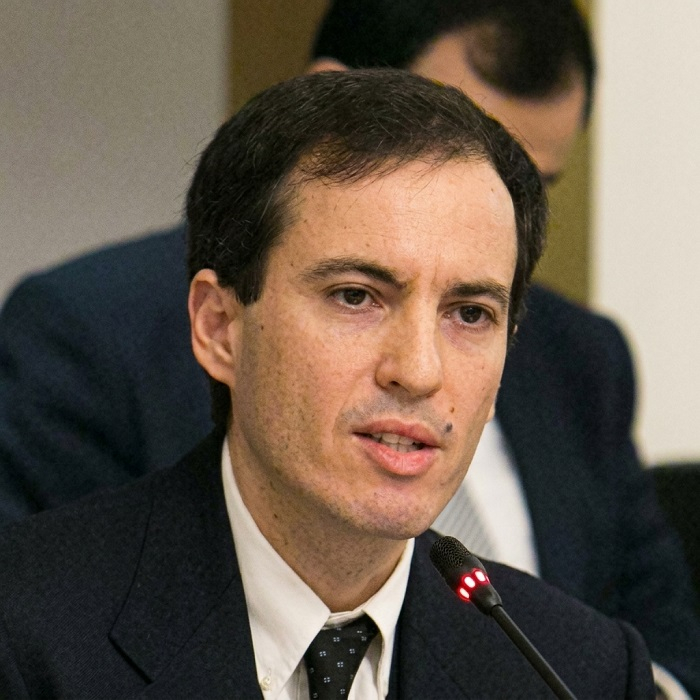
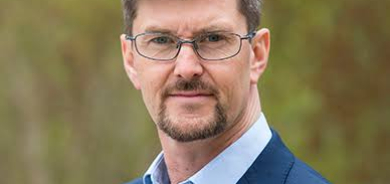
Lorenzo Kamel is Professor of History at the University of Turin and Adjunct Professor of Mediterranean History at LUISS School of Government in Rome. He has taught and conducted research at universities including Harvard, Ain Shams and Bilkent. His research focuses on the history of the Middle East, colonialism and postcolonialism. He has lived and conducted research in Israel and Palestine and is the author of several books, including The Middle East from Empire to Sealed Identities (2020), History below the Global (2024), and Israele-Palestina (2025).
Gulan: In History Below the Global, you challenge historical accounts that place the West at the centre of modern history. How would our understanding of the Middle East change if its history were examined primarily through the experiences and agency of its own peoples?
Professor Lorenzo Kamel: The book is largely focused on the formation of universal ideas and on figures such as Zera Ya’icob, Zumbi dos Palmares, and Lourenço da Silva Mendonça—the Angolan prince who started the legal debate for the abolition of slavery well before any European figure, to name just a few. To answer your question on the specific context of the Middle East, I believe that “outsiders” did indeed succeed in effecting profound change in the region. For instance, Great Britain and France defined local realities and dissent as expressions of primitive religious cleavages. In other words, communal and judicial structures envisioned and implemented in the first part of the last century succeeded in legally enshrining religious differences.
And yet, I agree that there is much more than this and your question calls to my mind Hamid Dabashi’s words regarding the fact that the “post-colonial did not overcome the colonial; it exacerbated it by negation.” This statement fits very well the history of large parts of the Middle East and the role of imperialism and neoimperialism in it. In order to overcome colonialism, imperialism, or neoimperialism, or all three, we need to bring back the region and its proactive inhabitants—including their protests—to center stage and show how the Middle East shaped the history of Western countries. And history, ancient and contemporary alike, is indeed a good starting point for this. To cite Ellen Meiksins Wood’s words, “[I]t is even more artificial to detach ancient Greece from, say, Egypt or Persia, as if the Greeks were always ‘European,’ living a separate history, and not part of a larger Mediterranean and ‘Eastern’ world.”
Gulan: The creation of the modern Middle East is often reduced to European intervention and the Sykes Picot Agreement. How much of the present regional order was shaped by outside powers, and how much emerged from Ottoman legacies and local political forces?
Professor Lorenzo Kamel: In the last few years, many scholars have focused on the thesis of the “end of the Sykes-Picot order”, alluding to the secret deal between British diplomat Mark Sykes and his French counterpart François Georges-Picot in 1915-16. In truth, by the end of World War I the Sykes-Picot Agreement was already a dead letter and virtually all the issues, including the internationalisation of Jerusalem, discussed in 1915-16 had not being implemented, or were no longer relevant. If the claim of the “end of the Sykes-Picot order” has any significance it is because the Sykes-Picot system postponed the rising of a new order shaped from within the region. Rather than linking some of the events which occurred in the Middle East and North Africa to the end of the Sykes-Picot order it would, therefore, be more accurate to refer to it as the final stage of a historical impasse that lasted for more than a century.
That said, every popular movement in the Middle East that has called for parliamentary democracy from 1876 to the present has been opposed by some of the major Western countries: from Egypt during the time of Ahmad Urabi to Iran under Mohammad Mossadeq, through Algeria in 1991, and dozens of other contexts and historical periods. When, at the beginning of the last decade, millions of people in the region rebelled against the regimes holding them hostage, several countries on both sides of the Atlantic and their allies – starting with the Saudi regime, which ranks third in capital punishment worldwide – managed to prevent an alternative from emerging. Why so? Because regimes are “useful”, in as much as they guarantee “stability,” that is, control. This was also the case in the 1970s, when Iran was the world’s leading buyer of US weapons.
Gulan: In The Middle East from Empire to Sealed Identities, you examine how plural identities became more standardized and territorially defined. How has this transformation shaped present conflicts over identity, borders, and political sovereignty?
Professor Lorenzo Kamel: Take the case of Asenath Barzani (1590–1670), a Kurdish woman and the first known female rabbi: her ‘Jewishness’ did not prevent her from experiencing and living other identitary dimensions. I also like to mention that Baghdad, Jerusalem, Kirkuk, İzmir and a number of other cities in the region hosted ‘mixed’ neighbourhoods and quarters for centuries. For instance, there were about 50,000 Jews in Baghdad in the 1920s and many of them lived in mixed areas. Still in the early 1930s, just before the rising of Rashid ʿAli al-Kaylani to power, about 1,500 Jews lived in a relatively ‘mixed’ Kirkuk. There were by then about 15,000 Jews in Iraqi Kurdistan. Both the drastic decreasing of mixed neighborhoods and the ‘hardening’ of hybrid identities and experiences that once flourished in Mediterranean spaces are largely the results of events occurred in the last century. Jews, in that sense, are just one relevant example among a number of others.
Gulan: Your recent article in the Journal of Genocide Research examines erasure, unequal power, and the idea of a "peace of the stronger." For the Kurdish people, the Anfal genocide remains a central historical trauma. How should Anfal be understood within the broader history of state violence, nationalism, and identity formation in the Middle East, and how should its legacy shape relations between the Kurdistan Region and the Iraqi state today?
Professor Lorenzo Kamel: Anfal was a systematic attempt by a centralized state to permanently alter the demographic, cultural, and geographic reality of its borders. Let’s also remember that the Reagan administration tactically supported Saddam Hussein’s Iraq: the U.S. provided critical satellite and battlefield intelligence to the Iraqi military. The Anfal genocide is and will remain a major unforgivable stain, and hardly the only one suffered by Kurds. And yet, this should not prevent or hinder relations between the Kurdistan Region and the Iraqi state today. It is also fair to mention here that, for instance, various Kurdish groups played a central role in the massacres of Armenians occurred just last century, and that Kurds played an active role during Iran’s attack at Haj Omran, the Iraqi town conquered by Tehran’s forces on July 23, 1983. More recently, voter fraud, land theft, and the deposing of democratically elected Assyrian officials and their replacement with unelected party-appointed KDP personnel[1]. Turkmens – who formed the majority group within Kirkuk city until the 1940s[2], before demographic shifts occurred as Kurds migrated from the surrounding villages to work in the city[3] – reported intimidation and attacks on their party both before and after the 2017 Iraqi Kurdistan independence referendum[4]. Christians, Yazidis and other ethnic or religious groups, particularly in Sinjar and the Nineveh Plan, experienced similar treatment and fates[5]. I have great respect for Kurdish people, their proud history and their deep scars, and think that, throughout history, Kurds have been much more “victims” than “perpetrators.” At the same time, I appreciate those who are open and willing to acknowledge also their own mistakes. And this applies to Kurds, Palestinians, Israelis, Iranians, Italians, Americans and everyone else.
Gulan: You have written specifically about the historical development of Iraqi Kurdish identity. How do you understand that identity today, particularly the relationship between Kurdish national belonging, Iraqi citizenship, and the political, cultural, and religious diversity within the Kurdistan Region?
Professor Lorenzo Kamel: As for Iraqi Kurdish identity, there is now a more pragmatic recognition that survival requires navigating, rather than completely severing, the institutional framework of the Iraqi state. On the other hand, global and regional powers have always used Kurdish aspirations for their own tactical advantages, only to abandon them when their strategic interests shifted. That said, Kurds have the right and the duty to fight for their rights and to preserve their history. At the same time, I dislike blind nationalism. The Palestinian filmmaker Elia Suleiman once said: “I will fight to raise the Palestinian flag, and then I will fight to have it lowered”. His attitude on this is also mine.
Gulan: Kurdish nationalism has developed from a movement seeking recognition and national rights into a political force responsible for governing a federal region. How has the experience of government changed Kurdish nationalism, and is it becoming a more civic and institutional project?
Professor Lorenzo Kamel: I think so, but Iraqi Kurdish identity remains a sophisticated balancing act. For younger generations, Iraq is often experienced predominantly as a legal and bureaucratic entity rather than mainly an emotional homeland.
Gulan: You have often discussed regional efforts to reduce tensions involving Iran and restore freedom of navigation through the Strait of Hormuz. Do these diplomatic efforts show that Middle Eastern states are gaining greater control over regional affairs, or do outside powers still determine the regional order?
Professor Lorenzo Kamel: In these last few months, we have witnessed the eroding influence of a number of countries in the Persian Gulf that are fully dependent for their security on the US. Outsourcing security will never bring a formal, lasting peace in Persian Gulf and in the broader region, but, at best, a heavily enforced “armed stability”, or “militarised stabilisation”. It will take more time, but “gaining greater control” is the only way out.
Gulan: Axios recently reported that President Nechirvan Barzani served as a confidential channel between the United States and the leadership of Iran's Revolutionary Guard. As an expert in the history of international relations, what do you think this means for the Kurdistan Region's diplomatic position? Could it strengthen the Region's role as a trusted bridge between competing regional and international powers?
Professor Lorenzo Kamel: I would not take Axios seriously. Their “scoops” usually break during the week while stock markets are open, whereas aggressive rhetoric tends to resurface over the weekend. Barak Ravid, the most prominent, high-profile face of Axios, is a former Israeli military intelligence officer who predicted seven past peace deals between the U.S. and Iran that never materialized. Axios aside, the KRG has actively maintained a policy of “active neutrality,” explicitly refusing to let Iraqi Kurdistan be used as a staging ground or a proxy weapon against Iran. Iraqi Kurdish leaders have historically woven cross-cutting networks of relations to ensure the survival and autonomy of their region. Erbil’s ability to transform this into a permanent diplomatic bridge will depend on how well it navigates the immediate security risks of being caught directly in the crosshairs of Washington, Tehran, and their respective allies. Again, in these last few months, we have seen that Barzani and other key Kurdish figures resisted becoming a frontline tool for a military or intelligence escalation against Iran. This decision stems also from the scars of history, and from knowing that the local fallout of a regional war would be borne largely by the Kurdistan Region.
Gulan: In the last few weeks, many have discussed the very harsh review that the Israeli historian Benny Morris has written on Omer Bartov’s book “Israel, what went wrong?” You wrote many books on Israel and Palestine: what’s your take on Morris’ words?
Professor Lorenzo Kamel: Morris is a prominent Israeli historian and wrote some meaningful books in the 90s and the early 2000s. He doesn’t know Arabic, nor Ottoman Turkish, and has a superficial knowledge of Palestinian history. His review focuses largely on the narrative of Palestinian rejectionism. The latter is a key element that has contributed, and was used, to shape a widespread state of mind among large sectors of the Israeli society which fostered the idea that “we are dealing with enemies who seek to destroy us and are not interested in any compromise”. In this sense, the notion of persistent Palestinian rejectionism prepared the ground for the erasure of Gaza, with 7 October “proving” to many Israelis the extent of Palestinian “irrational” hatred towards their enemies and brought the Israelis authorities straight to the logic of “destroy them to save us”. My most recent academic work on the Journal of Genocide Research, entitled “Erasing Palestine. The Weaponization of the Narrative of Rejectionism and the Peace of the Stronger”, provides all the details omitted by Morris and those supporting his claims.
By Kobin Ferhad
[1] R. hanna and M. barber, Erasing Assyrians: How the KRG Abuses Human Rights, Undermines Democracy, and Conquers Minority Homelands, Brussels, Assyrian Confederation of Europe, 25 September 2017, p. 27-43, http://www.assyrianconfederation.com/ace-reports.
[2] K. shanks, Education and Ethno-Politics. Defending Identity in Iraq, London and New York, Routledge, 2016, p. 9.
[3] G. hann, K. dabrowska and T. townsend greaves, Iraq. The Ancient Sites and Iraqi Kurdistan, 2nd ed., Guilford, Globe Pequot Press, 2015, p. 200.
[4] H. malik, Turkmens Unite against Kurdish Designs on Kirkuk, in «Al-Monitor», 18 October 2017, http://almon.co/2xmu.
[5] L. morris, Yazidis Who Suffered Genocide Are Fleeing Again, but this Time Not from the Islamic State, in «The Washington Post», 21 March 2017, http://wapo.st/2mq0pjp.