Professor Andrew Leber to Gulan: The United States Has Neither the Capacity Nor the Commitment to Redraw the Political Map of the Middle East
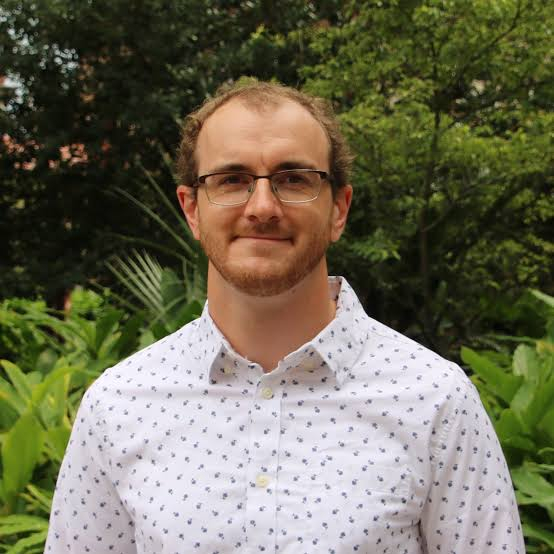
Professor Andrew Leber is an Assistant Professor of Political Science and Middle East and North African Studies at Tulane University, as well as a non-resident fellow at the Carnegie Endowment for International Peace. His research examines political decision making, media ecosystems, authoritarian governance, and security policy in the Middle East and North Africa, with particular attention to the United States’ relationships with regional partners, including Saudi Arabia. A Harvard-trained political scientist, his research and analysis have appeared in leading academic journals and outlets including Foreign Affairs, The Washington Post, and War on the Rocks.
Gulan: As of August 17, the conflict between the United States and Iran continues, negotiations have failed to produce a peace agreement, and shipping through the Strait of Hormuz remains severely disrupted. Successive American administrations have sought to reduce their military commitments in the Middle East, yet regional crises continue to draw Washington back. What would a coherent long term United States strategy for the Middle East look like? Has the current conflict demonstrated that a more limited and selective American role is no longer realistic?
Professor Andrew Leber: It's a little hard to say, What this war has demonstrated is that the United States has neither the capacity nor the commitment to redraw the political map of the Middle East. At this point, it's probably forcing itself into a more limited role in the future, given that countries in the region, whether that's Saudi Arabia, the UAE, Kuwait, or others, are going to be seeking any way to minimize the role of the United States in regional politics. There's little confidence that U.S. military power can engineer a more stable or favorable outcome, so efforts will shift to quietly easing the United States out so that countries in the region can better manage their own affairs.
Gulan: In your April 2026 article, Trump and Saudi Arabia: More Transactional Than Ever, you argued that investment, commercial partnerships, and major American exports had become central to the relationship. Since then, Washington and Riyadh have expanded their cooperation through a civilian nuclear agreement, building on earlier agreements covering defence, investment, and artificial intelligence. Does this increasingly broad relationship represent a durable strategic partnership, or does it remain fundamentally transactional and vulnerable to disagreements between the two governments?
Professor Andrew Leber: There have been growing concerns about the durability of the U.S.-Saudi security partnership since the end of the Cold War. It's probably not wise to count it out, given that it has survived the aftermath of the 9/11 terrorist attacks and U.S. outrage over the Saudi-led role in the Yemeni civil war, and frequent moments in which the United States has failed to intervene on behalf of Saudi security, at least in the view of Saudi officials. But what Saudi officials have really discovered in this war is that the transactionalism only runs one way, at least with this president, and that they have sought to make large amounts of favorable economic deals. They have sought to make it clear that they're willing to invest in the U.S. economy, buy U.S. weapons, coordinate with the United States, invest in the U.S. AI stack, and what they get for it is an open-ended war that has severely constrained their future economic options. And as a result, they're closely bound to the United States. They're not going to be openly breaking with the United States anytime soon, but that's a major driver behind these different alliances, partnerships, diplomatic initiatives we've seen from Saudi Arabia since the start of the conflict.
Gulan: Saudi Arabia has recently joined the United States in conducting strikes against Iran aligned armed groups in Iraq, announced a defence agreement with Türkiye and Pakistan, and begun organising a multinational maritime coalition in the Red Sea. At the same time, Riyadh continues to emphasise diplomacy and its desire to avoid a wider war. Does this mark Saudi Arabia’s transformation from a country primarily protected by the United States into a regional security actor in its own right? Can the kingdom successfully combine deterrence, regional coalition building, and dialogue with Iran without becoming more deeply involved in the conflict?
Professor Andrew Leber: For some time now we've seen Saudi Arabia try to assert itself as a more independent security actor in the region. I mean, going back decades, Saudi Arabia has at least tried to position itself as an important diplomatic broker, as distinct from the United States. We've seen it undertake independent security actions, like its police operation that led in Bahrain during the Arab Spring. But we are seeing it more and more trying to champion formal alternatives or complements to its security relationship with the United States, such as the recent MECA alignment, I think that's what it's called, with Pakistan and Turkey. Before that, there was the Saudi-Pakistan defense treaty. The complication for Saudi Arabia is that they're still trying to balance different roles. So on the one hand, they want to build up these alternative security alliances. On the other hand, they want to demonstrate that they are willing to take military action under some circumstances, that they're not going to pursue only diplomacy at all costs. And while they certainly want to develop alternatives to the close alignment with the United States, they don't want to come across as openly challenging U.S. policies, openly breaking with the United States for fear of backlash from President Trump. We already saw, for example, in the aftermath of the nuclear agreement that was signed between Saudi Arabia and the United States, how quickly President Trump could turn on Saudi Arabia out of a perceived need to score some domestic political points by saying he was still going to prioritize Saudi Arabia joining the Abraham Accords.
Gulan: Drone attacks attributed to Iran aligned groups operating from Iraqi territory led the United States and Saudi Arabia to conduct joint strikes inside Iraq on July 28. What does this escalation reveal about the Iraqi state’s ability to control armed groups operating within its borders? Can American and Saudi pressure help Baghdad strengthen state authority, or does foreign military action risk weakening Iraqi sovereignty and turning the country into the principal arena of confrontation among the United States, Saudi Arabia, and Iran?
Professor Andrew Leber: I'm less of an expert in Iraqi politics, but my general sense is that Saudi Arabia faces a difficult balancing act here as well, and that they've made a concerted effort for several years now to indicate that they have no desire to intervene in Iraq's internal affairs, but that they want to build up a stable relationship with the Iraqi government and to build up economic ties with the Iraqi government in the hopes that this further incentivizes the central Iraqi state—sorry—to clamp down on these militias, assert control over them, and prioritize the potential economic gains to be made by investing in the relationship with the Gulf and with the broader region.
Gulan: During 2026, the Kurdistan Region has experienced repeated missile and drone attacks targeting Peshmerga positions, political leaders, and locations in and around Erbil. What should the United States prioritise to make its partnership with the Kurdistan Region more comprehensive and durable? How can Washington support air defence, Peshmerga reform, economic stability, and the implementation of Iraq’s federal constitution while preventing the Kurdistan Region from being drawn further into a confrontation among much larger regional powers.
Professor Andrew Leber: I'm not really qualified to talk about U.S. policy towards Kurdistan in any sense. But my general sense is that, unfortunately, the president's grasp of strategic priorities—the U.S. president does not have a strong grasp of strategic priorities. Even countries like Saudi Arabia are so far down his list of priorities in terms of overall politics, including both domestic U.S. politics and international relations. Certainly, I think there are probably people in the Department of Defense, in the State Department, who are continuing to invest in U.S. policy towards Kurdistan, towards backing up, like the training, the Peshmerga, and so on. So existing forms of cooperation will continue, but there's no plan to significantly increase or significantly invest in that relationship.
By Kobin Ferhad
Verification Sources
These references support the time sensitive premises in the questions and were checked through 17 August 2026. This section is not part of the interview questionnaire.
• Reuters, 17 August 2026: United States and Iran peace talks and Strait of Hormuz shipping
• Andrew Leber, Georgetown Journal of International Affairs, 26 April 2026
• United States Department of Energy, 22 July 2026: Civil nuclear cooperation agreement
• Reuters, 12 August 2026: Saudi regional defence initiatives
• Reuters, 29 July 2026: Joint United States and Saudi strikes in Iraq
• United States Department of Defense: Transition of Operation Inherent Resolve
• Reuters, 24 March 2026: Attack on a Peshmerga base north of Erbil
• Reuters, 28 March 2026: Drone attack targeting the Kurdistan Region president’s home