Glacial Collapse Triggers Deadly Floods in Nepal and Tibet
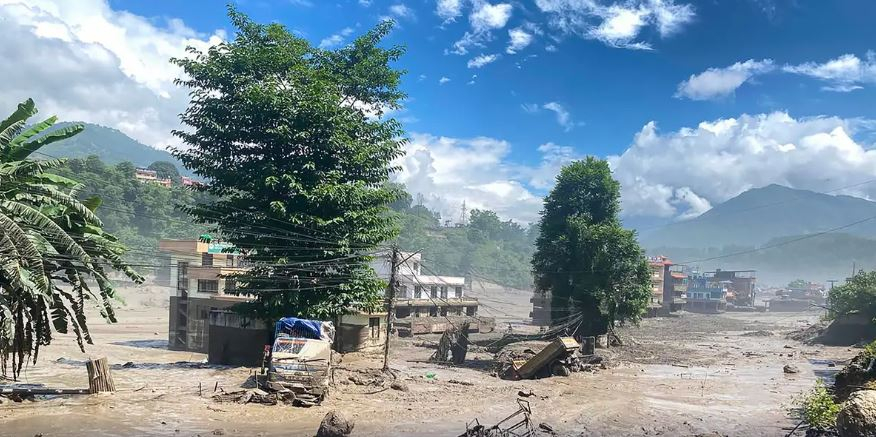
Rescue teams are searching for survivors after a glacial collapse triggered catastrophic flash floods along the Nepal-Tibet border, killing at least 270 people and leaving more than 1,300 missing.
The disaster struck on Wednesday when an ice-and-rock avalanche caused the Lhende Khola River to surge suddenly, sending huge amounts of mud and debris through Himalayan communities. Entire villages, hotels and roads were reportedly swept away.
In Nepal, more than 800 people are missing, including hundreds of foreign nationals. Indian nationals make up the largest group of missing foreigners, with Indian officials saying 288 people remain unaccounted for. Hundreds more tourists and pilgrims from the United States, Australia, Britain, Canada and Germany are also missing.
In Tibet, Chinese state broadcaster CCTV reported 558 people missing in Gyirong County, including 260 foreigners. Three deaths had been confirmed there, while two villagers had been rescued.
The affected area is located along a popular route connecting Kathmandu with Lhasa and is used by tourists and religious pilgrims traveling toward Mount Kailash, a sacred site for Hindus.
Survivors described scenes of devastation as torrents of mud and water swept through their communities. One 68-year-old Nepalese survivor, Keshav Prasad Baral, said his wife was swept away when the flood entered their home. He was later rescued by helicopter, but his wife remained missing.
More than 5,000 Nepalese army and police personnel have been mobilized to search for survivors and deliver emergency supplies to isolated communities. Helicopters are being used to transport food, tents and other essential supplies to areas cut off by the floods.
The disaster was initially detected by the US Geological Survey as a magnitude-4.4 earthquake. However, the agency later clarified that the seismic energy had been produced by the collapse of glacial rock and ice rather than by an earthquake.
Scientists say the disaster highlights the growing risks posed by climate change in the Himalayas. Experts from the International Centre for Integrated Mountain Development said the avalanche likely blocked the river before releasing a sudden surge of water downstream.
They also warned that glaciers across the Hindu Kush Himalayas are melting rapidly as temperatures rise. A similar flood in the same river system killed nine people last year after a glacial lake overflowed.
International organizations and governments have offered emergency assistance. The International Federation of Red Cross and Red Crescent Societies released $1.4 million in emergency funding and sent supplies including blankets, sleeping mats, first-aid kits and stretchers.
Australia, the United Kingdom and the United States have also announced support. The UK offered £5 million in assistance, while the US State Department said it would provide $500,000 and send a disaster-response adviser to Nepal.