French Flamenco Singer Cécile Evrot to Gulan: Kurdish and Flamenco Art Share the Same Energy of Resilience and Freedom
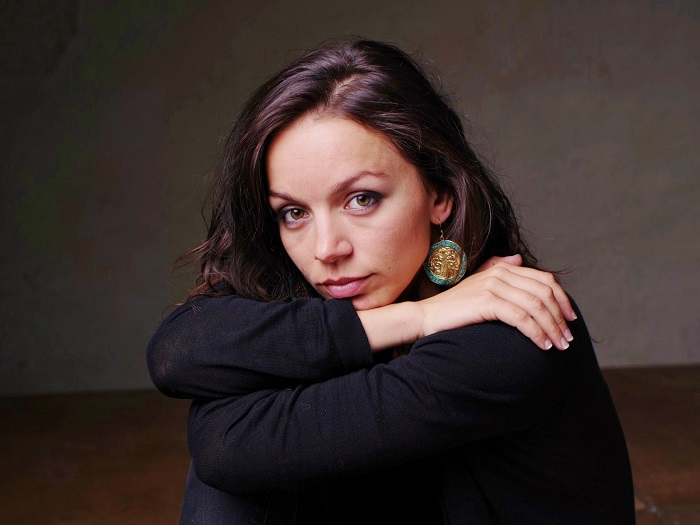
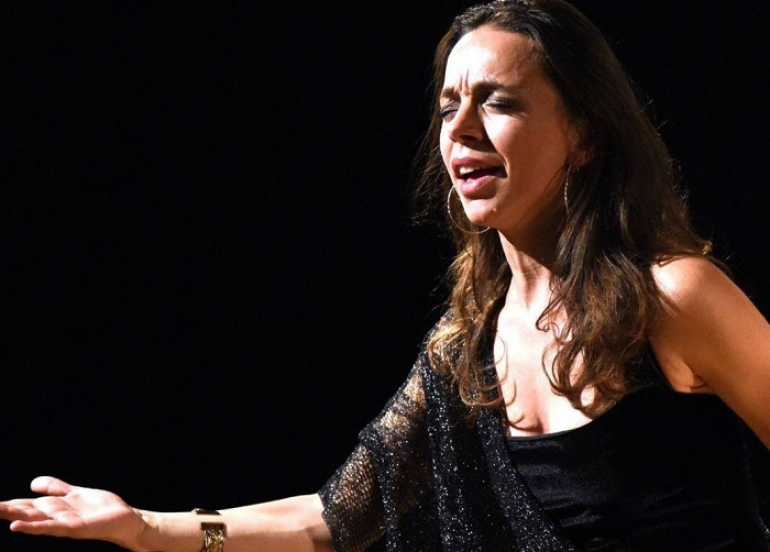
Cécile Evrot discovered flamenco at the age of fifteen, and it was a revelation. She instinctively turned to singing, which she initially studied as a self-taught musician for several years. She later trained in Spain with the singers José Mendez (Jerez) and Juan José Amador (Seville), and gained experience accompanying dancers through her work with Carmen Ledesma and Pilar Montoya, “La Faraona.”
During a stay in Seville in 2014, she had a decisive encounter with the legendary singer Juan Peña “El Lebrijano,” who became her mentor. They developed a very strong relationship that continues to influence and enrich her approach to singing today. Back in Paris, she was quickly embraced by the French flamenco scene, moving effortlessly between the most traditional styles and more adventurous projects.
She has notably collaborated with Madrid-based composer Diego Farnie as part of the electro-flamenco project Cecile y El Kinki, whose album El Jardín de las Delicias was released in 2017. In 2021, she was invited by filmmaker Toni Gatlif to sing at the presentation of his film Tom Medina at the Cannes Film Festival, alongside dancer Karine Gonzalez.
An intuitive and highly personal cantaora (flamenco singer), Cécile Evrot regularly performs in France and abroad. She is also invited to teach flamenco singing at workshops and masterclasses. In addition, she is developing her own composition project in French, drawing on flamenco influences and accompanying herself on the piano.
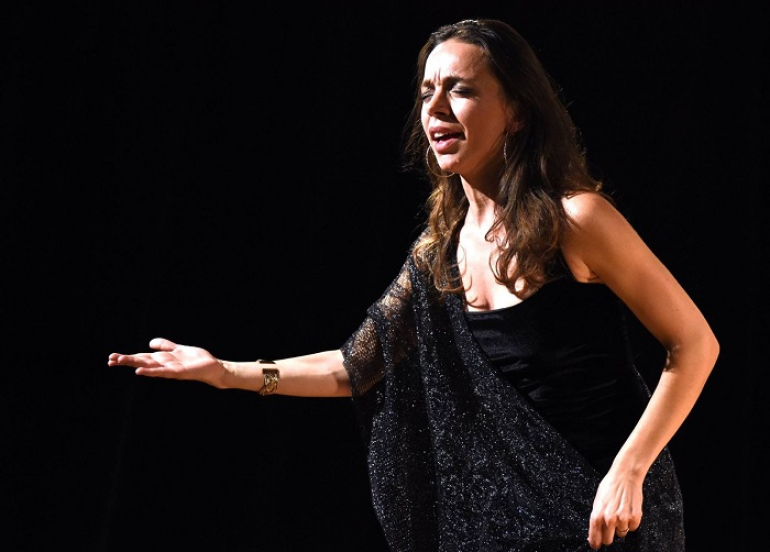
Gulan: You discovered Flamenco at the age of fifteen, which marked a turning point in your artistic life. How did this discovery change the course of your life, and what initially drew you to this art form?
Cécile Evrot: I first fell in love with the Spanish language, that I started studying at school at the age of thirteen. I wanted to learn a little bit more about this language so I started searching on the internet about Spanish movies and songs… and I discovered my first flamenco piece without knowing anything about flamenco. I was instantly mesmerized. So I tried to download everything that had « flamenco » in its title, and I began to grab information’s. It was my secret place.
At this age I already knew that I wanted to be an artist but I would never have imagined that I would become a professional flamenco singer.
Gulan: You were trained by some of the greatest Flamenco artists in Spain, and the late singer Juan Peña “El Lebrija no” had a profound influence on your career. How did these masters contribute to shaping your artistic identity and vocal style?
Cécile Evrot: I had the chance to learn from great singers and artists: Juan José Amador, José Mendez, Mari Peña, Antonio Villar… and my beloved maestro Juan Peña El Lebrijano. They were all very creative and never teached me flamenco as something fixed/frozen in time, even though of course there are a lot of codes and rules.
I also learned a lot by attending to « juergas » which are traditional parties that take place usually after the flamenco shows, late at night. All the artists gather in a place and play music just for the pleasure of sharing a moment together. I used to go to sleep at night and then put an alarm at 1 or 2 am to join those places and listen to these artists until the morning.
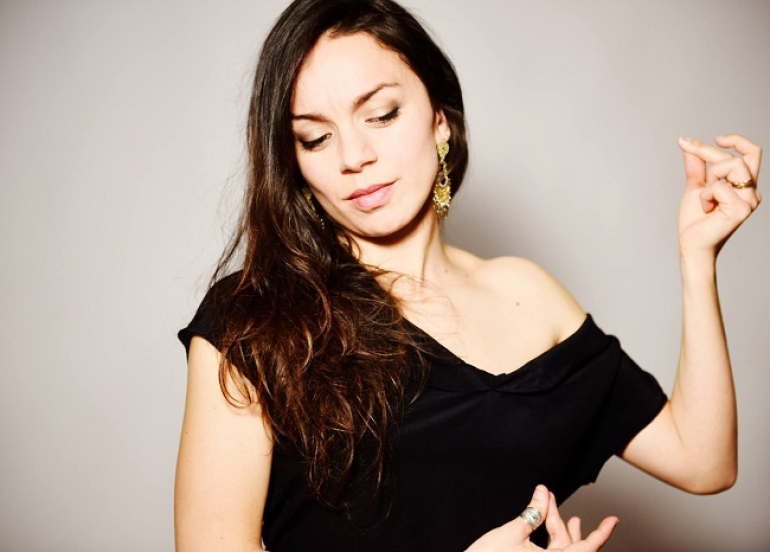
Gulan: Your work combines traditional Flamenco with modern musical projects, such as “Electronic Flamenco.” How do you strike a balance between preserving the authenticity of Flamenco and embracing innovation and contemporary musical experimentation?
Cécile Evrot: I think there is a time for everything. A time to learn the tradition first, to understand, to listen and try to reproduce the sounds perfectly. And a time to just create music with all the material that you have in your possession. I love flamenco, but beyond flamenco I love music. So when something seems musically attractive to me, whether it’s traditional or experimental, I go for it and try to express it the best I can.
Gulan: You have participated in numerous international festivals and events, including the Cannes Film Festival. What are the most significant milestones in your career that you take pride in, and what have they added to your experience on both artistic and personal levels?
Cécile Evrot: I think every step is really important, from the little venue or the bar you play in to the big stage you cross for the first time. I remember being very impressed and grateful when I sang El Amor Brujo from Manuel de Falla with a symphonic orchestra in Ekaterinburg (Russia) for the great classical festival La Folle Journée. Before going on stage, I paused for a second and remembered myself learning flamenco alone in my room as a teenager and trying to figure out how it was working… Singing in the Cannes Festival was also an epic memory. But to be honest, flamenco sounds better to me in small places where you can really feel the people in the audience. Eventhough it’s exciting to play in big venues, of course.
Gulan: In addition to singing, you teach Flamenco and are developing your own project involving composing and singing in French. What is the artistic message you aim to convey through these diverse experiences?
Cécile Evrot: Teaching flamenco singing is a great pleasure for me. The voice is giving you an access to people in a very authentic way. You can’t really lie with your voice, and I like it.
Regarding to my personal project, I’ve always been writing songs and composing (I’m also a pianist) since I was very young and this is where I maybe feel closer to my deepest identity. I am releasing my first album in December with this project that mixes french « chanson » and flamenco, and it makes me really happy.
Many researchers and artists see intersections between Flamenco and Oriental music, whether in terms of maqams (modes), rhythms, or emotional expression. How do you view this relationship, and what are the most notable similarities and differences from your perspective?
Flamenco is a mixed culture with lots of different origins. It connects really well with the oriental music in the harmonics and in the vocal ornementation. But it has also Gypsy, Indian, Sefardi, Subsaharian and spanish folkloric roots. That is what makes it so specific and so hard to compare with another music style.
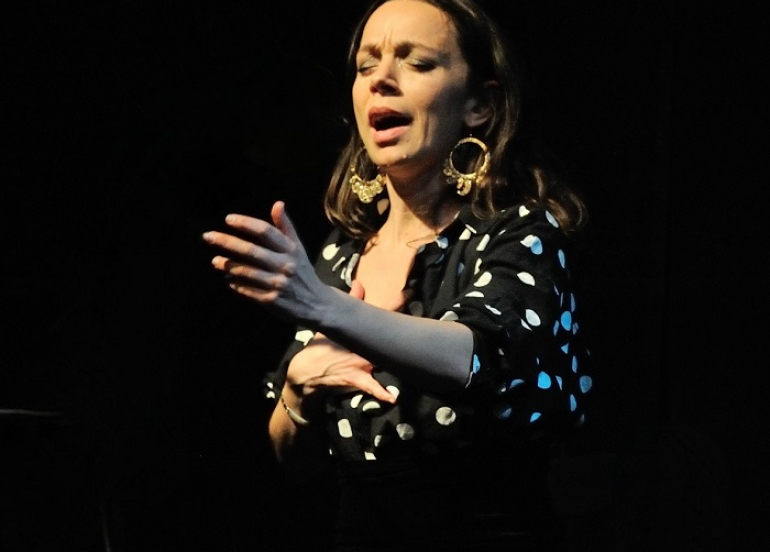
Gulan: Do you believe it is possible to merge Flamenco with Oriental music without either losing its original identity? What elements do you consider essential for the success of such collaborative artistic ventures?
Cécile Evrot: I think it is possible but it takes a lot of work to create something that doesn’t betray any of the culture involved. But above cultures, what is more important to me is music. If the artists are great and sincerely connecting and creating something beautiful together, then there are no questions left about « Is it flamenco? Is it Kurdish music? ». It’s just beautiful music and no one cares.
Gulan: Do you have any prior knowledge of Kurdish music or artistic heritage? Have you ever listened to Kurdish artists or musicians? If so, what was your impression of this art?
Cécile Evrot: I don’t have a lot of knowledge about Kurdish music but I feel close to it, artistically. I have worked with Kurdish singer and saz player Rusan Filiztek (based in Paris). He invited me to sing on his album Exil, with flamenco guitarist François Aria. It was a beautiful experience to connect with his voice and music. We recorded to songs : Solea del Encuentro (Solea is a traditional flamenco style in 12 beats, and « encuentro » means « meeting » in spanish) and La Travesia, based on another flamenco style which is called Buleria. In La Travesia, I sing a spanish translation of a poem from Persian writer Saadi (12th century). I have also listened to Kurdish music by a French artist that you may know : Eleonore Fourniau. She is a very important representant of Kurdish culture and music in France. I love her voice.
Gulan: Kurdish music possesses a rich legacy of maqams, rhythms, and traditional instruments. In your opinion, what does Kurdish art need to achieve wider global recognition and reach an international audience, similar to the global reach of Flamenco?
Cécile Evrot: It’s hard to answer this question… I don’t know Kurdish music enough to share my opinion about it. What I can say is that, to me, what makes flamenco so special is the fact that it is the result of the cohabitation of different cultures in one place. The gipsies are the great alchemists of this cultural mix and they largely contribute to make it unique. What also led flamenco to become more international are the artists who reinvented the old forms to create their own sound. I think about Paco de Lucia, Cameron de la Isla, Lole y Manuel, Enrique Morente or my master Juan Peña El Lebrijano… to give you just some examples.
Gulan: If given the opportunity to collaborate with Kurdish artists, do you see the possibility of producing an artistic work that bridges Flamenco and Kurdish music? What common musical elements could serve as a foundation for this project, and what cultural message could such a collaboration deliver to a global audience?
Cécile Evrot: I’m sure this could be an awesome project! I think both Kurdish music and flamenco are very rooted, popular and sophisticated musics. But above all, they carry the same energy of resistance and freedom because they are the expression of peoples who were once marginalized and persecuted.