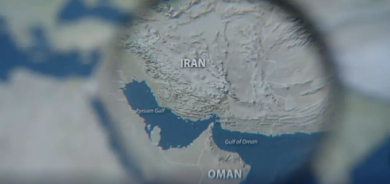
Oil Prices Slide as US Prepares New Economic Pressure on Iran
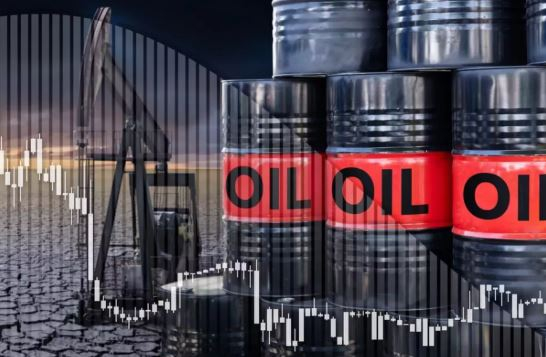
Oil prices fell nearly 2 percent on Monday as investors awaited details of a new US campaign aimed at intensifying economic pressure on Iran, while Asian markets also traded mostly lower.
Brent crude fell 1.8 percent to $92.68 a barrel, while US West Texas Intermediate crude declined 1.9 percent to $85.39 in early trading.
The decline came as investors assessed the potential impact of a renewed US effort to isolate Iran’s economy. US President Donald Trump described the initiative as the “most crushing” financial operation ever directed against Tehran.
US Treasury Secretary Scott Bessent was expected to outline further details of the measures during a news conference on Monday. Washington has also urged its allies and China to support the campaign as tensions in the Middle East continue to threaten regional stability and global trade.
US Vice President JD Vance described the strategy as a “delicate dance,” warning that Iran could respond by imposing economic pressure on the United States.
Bessent also called on China to support Washington’s efforts, saying Beijing should “get with the program” while acknowledging that some discussions would be better conducted privately.
Asian stock markets were broadly lower on Monday.
South Korea’s Kospi fell 1.4 percent, weighed down by declines in major technology companies. Samsung Electronics said it had spent about $80 billion buying back its own shares following weeks of volatile trading.
Hong Kong’s Hang Seng Index dropped 2.1 percent, despite news that fast-fashion company Shein plans to list in the city on September 1. The company is expected to receive a valuation of roughly $27 billion.
Markets in Tokyo, Shanghai, Taipei and Wellington also declined, while Sydney, Jakarta and Bangkok recorded gains. Manila and Kuala Lumpur were largely unchanged.
Investors are also preparing for Nvidia’s earnings report later this week, with the results expected to provide important clues about the strength of the global artificial intelligence investment boom.
Nvidia has become a key indicator of investor confidence in the AI sector, but concerns are growing over whether the enormous spending on AI infrastructure will generate sufficient returns.
“The spending machine is still running, but the bill is getting heavier,” said Stephen Innes of SPI Asset Management.
Meanwhile, Chinese technology giant Alibaba announced plans to raise $10.2 billion through a new share issue in Hong Kong to fund its global AI expansion.
Investors are also watching the annual gathering of central bankers, economists and financial officials in Jackson Hole, Wyoming, later this week.
Markets will closely follow comments from US policymakers for indications about the future direction of monetary policy, particularly as inflation remains a concern and US borrowing costs have risen.
US federal debt has now exceeded $40 trillion, adding to concerns about the country’s fiscal position.
At around 0215 GMT, the Nikkei 225 was down 0.3 percent at 65,799.25, while the Hang Seng fell 2.1 percent to 25,455.95. Shanghai’s Composite Index declined 0.5 percent to 3,887.81.
In currency markets, the dollar traded at 158.82 yen, compared with 159.03 yen on Friday. The euro stood at $1.1684, while the pound was at $1.3651.