Iraq Pushes to Expand Oil Exports Through Türkiye, Syria and Jordan
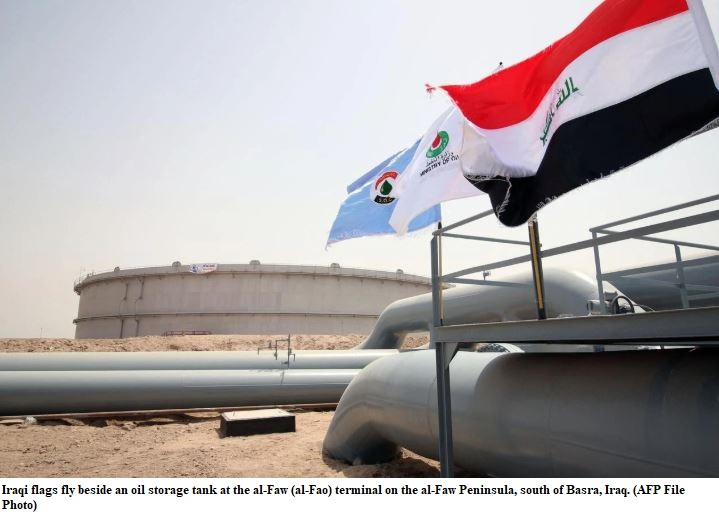
Iraq is seeking to significantly expand its crude oil export capacity by developing alternative routes through Türkiye, Syria and Jordan, as disruptions to the Strait of Hormuz highlight the country’s dependence on its traditional southern export terminals.
Prime Minister Ali al-Zaidi said Iraq is working to increase oil exports through Türkiye’s Ceyhan Port while pursuing routes through Syria’s Baniyas Port and Jordan’s Aqaba Port. Speaking at the 8th Baghdad Dialogue Conference, Zaidi said Baghdad was determined to expand its export capacity and secure alternative routes to international markets.
Iraq is also seeking a larger crude export allocation within the Organization of the Petroleum Exporting Countries (OPEC). Zaidi said the country aims to increase production to between 8 million and 10 million barrels per day within six years.
He argued that Iraq deserves an oil export share reflecting its population and substantial reserves, noting the country’s role in fighting Daesh on behalf of the region and the international community.
Ceyhan emerges as key alternative route
The Iraq-Türkiye pipeline is becoming increasingly important to Baghdad’s efforts to diversify its export routes. Türkiye and Iraq signed a one-year agreement on Aug. 1 to transport and load at least 750,000 barrels of Iraqi crude per day at Ceyhan.
The pipeline has a technical capacity of about 1.5 million barrels per day, although the amount of crude available to be directed toward Ceyhan remains the main constraint.
Zaidi said Iraq could eventually supply Türkiye with as much as 1 million barrels per day, a target that would substantially increase the volume of Iraqi crude reaching global markets through the Mediterranean.
Energy experts say the target is technically achievable if supplies from northern Iraq are combined with additional crude from central and southern producing regions.
The expansion would strengthen Ceyhan’s role as an important outlet for Iraqi oil while reducing Baghdad’s dependence on the Strait of Hormuz.
Hormuz disruption exposes Iraq’s vulnerability
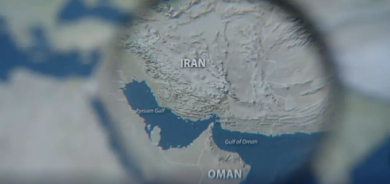
The push for alternative export routes has gained urgency following disruptions to shipping through the Strait of Hormuz, through which most of Iraq’s crude exports traditionally pass.
Oil sales account for nearly 90% of Iraq’s government revenue, making uninterrupted exports crucial to the country’s economy.
Before the disruption, Iraq produced around 4 million barrels per day, with an average of about 105 million barrels exported each month, mainly through the Basra oil terminal and the Strait of Hormuz.
Iraq subsequently expanded the use of tanker trucks to move crude through Syria and increased exports through the Ceyhan pipeline.
Zaidi described the closure of the Strait of Hormuz as a major challenge for Iraq. Although exports initially fell sharply, shipments later recovered, reaching about 2 million barrels per day during the first two weeks of August, the highest level since the beginning of the regional conflict.
Baghdad seeks broader regional energy network
Iraq’s plans extend beyond Ceyhan. Baghdad is also exploring export routes through Syria’s Baniyas Port and Jordan’s Aqaba Port as part of a broader strategy to create multiple outlets for its crude.
The diversification could give Iraq greater flexibility during regional crises and reduce the risks associated with relying heavily on a single export corridor.
The growing cooperation with Türkiye is also expanding into oil production. Turkish Petroleum Corporation (TPAO) recently acquired a 15% stake in bp Energy Company of Kirkuk Limited, joining the development of several fields in the Kirkuk region.
The partnership involving TPAO, BP and ConocoPhillips is expected to support efforts to increase production from the Baba and Avanah domes and the Bai Hassan, Jambur and Khabbaz fields.
For Baghdad, expanding production while developing additional export routes could help Iraq increase both its production capacity and its influence within regional energy markets.
Iraq seeks stronger position in global oil markets
Experts say increasing Iraqi crude flows through Ceyhan would also serve Türkiye’s ambition to become a regional energy hub.
Sercan Caliskan, an Iraqi studies researcher at the Center for Middle Eastern Studies, said the immediate feasibility of supplying 1 million barrels per day could be challenging, but the political commitment between Baghdad and Ankara to expand capacity was significant.
Energy analyst Oguzhan Akyener said the Iraq-Türkiye pipeline itself has sufficient technical capacity, with the main issue being the amount of crude Iraq can allocate to the northern export route.
With additional supplies from Basra and the Baghdad area, Akyener said Iraq could potentially reach the 1-million-barrel-per-day target in a relatively short period.
For Iraq, however, the broader objective is not simply to increase exports to Türkiye. By developing routes through Ceyhan, Baniyas and Aqaba, Baghdad is seeking to build a more resilient export network capable of keeping Iraqi oil flowing to international markets even when regional waterways face disruption.
The strategy could ultimately strengthen Iraq’s role as one of the region’s major oil producers while giving Baghdad greater flexibility over where and how its crude reaches global markets.