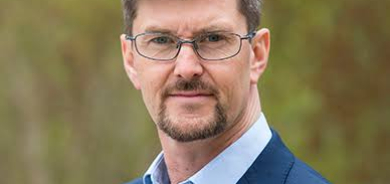
Professor. Dr. Roger Petersen to Gulan: changes at the international system affect the conduct of civil war inside states
Professor. Dr. Roger Petersen to Gulan: changes at the international system affect the conduct of civil war inside states
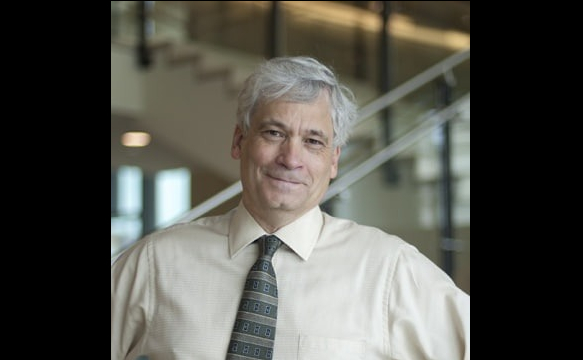
Roger Petersen is a renowned expert on civil strife, political violence, and how identity and emotions influence political conduct. He graduated from the University of Chicago with a BA, MA, and PhD. He began teaching at MIT in 2001 and was named the Arthur and Ruth Sloan Professor of Political Science in 2010. Some of the most challenging issues pertaining to ethnic violence, resistance, civil war, military intervention, and conflict in divided communities have been the subject of his research.
His seminal writings, such as “Western Intervention in the Balkans”, and “Understanding Ethnic Violence”, and “Death, Domination, and State-Building: The US in Iraq and the Future of American Military Intervention”, Petersen has shown how strong motivators of political mobilization and violence can be feelings like fear, rage, humiliation, and resentment. His work also emphasizes the significance of comprehending conflicts through the experiences, identities, perceptions, and motives of individuals and groups in addition to the acts and strategies of states.
In this interview, we talk about how the dynamics of political violence in the Middle East have changed since the Gaza War, as tensions between Iran and Israel have increased and the role of non-state armed actors has grown. We examine how identity and emotions influence escalation and de-escalation, how regional and international actors' involvement is changing civil wars, and what institutional arrangements might help sharply divided societies like Syria, Iraq, and Lebanon break free from cycles of violence and retaliation.
We also look at how social media, AI, and digital propaganda affect modern warfare and if current theories of political violence and civil war are still adequate to explain today's more complex forms of conflict. Lastly, Petersen considers the dangers and new developments that may influence Middle East peace and war in the upcoming ten years.
Gulan: In your research, you contend that feelings like anger, fear, and resentment are significant causes of political violence rather than just byproducts of conflict. Which feelings, in your opinion, are most influencing political conduct in the wake of the Gaza War, rising Israel-Iran tensions, and the increasing participation of non-state armed organizations throughout the region? How might these feelings affect the likelihood of either escalation or de-escalation?
Dr. Roger Petersen: Emotions can be conceptualized as the “residue of lived experience.” The sources of these emotion-producing experiences are diverse and differ by region and history. In Eastern Europe, I found that the broad structural changes of modernization during the early Twentieth Century created the emotion of resentment throughout the region. Forces of urbanization, growing literacy, state penetration of economy and bureaucracy produced experiences and perceptions of group subordination. Members of ethno-linguistic majority groups resented speaking others’ languages in state business, being under the thumb of ethnically different police and security forces, and living under the cultural symbols that were not their own. The perception of undeserved lower status created powerful resentments that fueled a drive, sometimes violent, to reorder group status relations. One cannot tell such a clear and linear story about group experiences and emotions in the Middle East. The relevant ethnic marker in Eastern Europe was language. When modernizing states needed to conduct their business in one dominant language, it was bound to breed status based resentments in the excluded ethno-linguistic groups. In the Middle East, the key identity markers are religion at the broad level and tribe at narrower levels. These identities are less likely to create consistent and sweeping experiences of subordination and resentment. Secondly, unlike Eastern Europe, the nature of states and state development is highly diverse. In the most obvious case, Israel is a Western creation imposed on the Arab world. In this case, Israeli-Jewish emotion of contempt for Palestinian life has helped fuel decades of violence, culminating in the mass killing in Gaza and an apartheid state in the West Bank. Israel is not the only artificial state in the region. The United Arab Emirates is not a normal nation-state. The number of residents and workers from India, Pakistan, Bangladesh, and the Philippines dwarf the number of Arabs. The unnatural nature, and unnatural wealth of this state cannot be expected to produce the same emotions as seen in surrounding Arab states. Unsurprisingly, the UAE leaders and Arab population do not seem to feel the same level of anger at mistreatment of Palestinians, or resentment against US-Israel primacy in the region. Unsurprisingly, the UAE is most ready to enter the Abraham Accords, leave OPEC, and unconditionally seek US protection. In short, the UAE does not operate under the same emotional constraints as most regional states. Furthermore, there are few states in the world with the modern history of Iran, fighting what is often termed by its US opponents as a forty-seven year constant war against the world’s superpower producing a seemingly unending cauldron of anger, resentment, and contempt. Meanwhile, one very large ethno-linguistic group—the Kurds—do not have their own independent state. Some Middle Eastern states do share features with the Eastern European experience. In Iraq, the US-led invasion and occupation of the country naturally led to the dominance of the majority Shia. The current status hierarchy in Iraq sees a Shia coalition, marshalled by the coordination framework, atop the ordering. Likewise, Kurds avoid subordination within that hierarchy through a highly autonomous KRG. In the rest of the Middle East, however, the more specific nature of the conflict triggers a wider range of conflict related emotions—anger, fear, contempt, humiliation. Anger produces a desire for vengeance (see Iranian reactions to US-Israeli assassinations) and the acceptance of violent escalation. Fear can promote a search for violence mitigation (see the Gulf states’ reaction to Iranian escalation). Contempt can underlie the acceptance of killing (see Israeli actions in Gaza and West Bank). Humiliation can trigger either withdrawal from political life or a desire to lash out and the acceptance of terrorist tactics.
Gulan: Instead of viewing wars as merely strategic contests between governments, your study focuses on the motivations of individuals and the micro-foundations of violence. How effectively can conventional strategic explanations explain the dynamics of violence in the Middle East today, and where do emotional, social, and identity-based motivations offer a more compelling explanation?
Dr. Roger Petersen: The Realist school of international relations generally sees war outcomes as a straightforward matter of the balance of forces and largely ignores aspects of emotion and identity. Correspondingly, many Realists have called for Ukraine to essentially capitulate to Russian’s superior numbers in manpower and ammunition. In my opinion, the Ukrainian-Russian war shows the deficiencies of view based solely on force capabilities. Ukrainian identity, and long-term resentment of Russian dominance, drives their actions as much as numbers of weapons. Likewise, those seeing balance of force as determinative often seem to underestimate Iran. Trump’s negotiator Steve Witkoff has stated that Trump wonders why Iran does not capitulate after the decimation of their air defense and tens of thousands of strikes. Here, again, forces of identity and motivation would seem to underlie Iranian behavior.
Gulan: You have written a great deal about the internal factors that lead to civil wars. Overlapping local, regional, and international actors are becoming more prevalent in many Middle Eastern crises. Does this globalization make negotiated settlements much more challenging than they were in earlier decades, and how has it altered the essence of civil wars?
Dr. Roger Petersen: No doubt that changes at the international system affect the conduct of civil war inside states. One force is globalization—the increased movement of information and goods across borders. Another feature is the number of great powers in the system, what political scientists call polarity. In my view, polarity has affected the quantity and quality of civil wars more than globalization. During the bipolar Cold War, the United States and the Soviet Union intervened in civil wars across the world, each side supporting their proxies. Given the balancing dynamics of bipolarity, each of the superpowers had a bigger incentive to “not lose” rather than to “win” in the civil war. Accordingly, the US would prop up its proxy if it started to fail, the Soviets acting the same way. The result was funding levels that maintained, but did not end, civil wars. As the data clearly shows, civil wars during the bipolar Cold War tended to last a long time. With the collapse of the USSR, the end of the bipolar system, and the introduction of a unipolar system dominated by the US, this dynamic largely ceased. Russia lost the ability and the need to support proxies. The US came to a position where it could force negotiations onto the competing sides. The length of civil wars, and their number, declined precipitously. It is an open question whether the emerging multipolar system will produce a similar proxy support system as seen in the Cold War. My own opinion is that China lacks the ability and desire to engage in a global proxy war in any way similar to that seen in the Cold War. The Russian actions in Africa are another question.
Gulan: Your ability to illustrate how emotions interact with institutions and political structures has been one of your main accomplishments. What institutional structures, especially in severely divided nations like Iraq, Syria, and Lebanon, are most effective in preventing cycles of retaliation, humiliation, and bloodshed in societies emerging from protracted conflict?
Dr. Roger Petersen: Perhaps the main political science question in trying to structure peace-producing institutions is how much ethnic identities should be formally recognized. In the United States, the question of affirmative action raises the issue of formal recognition of race. Recent Supreme Court rulings have made race-based policies increasingly difficult, even in informal practice. In an opposite fashion, in consociational systems are explicitly designed to recognize and support group rights and power. In these systems, ethnic groups form a pillar within the overall structure; elites bargain for their group’s benefits; official rules prevent the dominance of any one group/pillar within the system; in some systems, federalism provides a sure way to provide ethnic groups rights and representation. For many decades, Lebanon’s system was seen as a successful exemplar of consociationalism. In Lebanon, demographic change drove the system to civil war and required changes seen in the Taif Accord. Today, Lebanon, and to a large extent, Iraq, operate on a consociational path. There are many critics, especially in Iraq. Those critics believe that this system prevents the emergence of an inclusive “Iraqi” identity. My own view is that ethnic identity cannot easily be dismissed. In my treatment of Eastern Europe, I see the formation of largely homogenous states based on one clearly dominant ethnic group as the foundation for peace in a formerly violent region. In many cases, once majority groups became secure in their status, they could afford to make concessions to minorities. Along these lines, I believe that political systems often need to include some consociational practices. In Syria, a Kurdish federal region should be created. In Iraq, the KRG should retain its autonomous practices. The Kirkuk dilemma must also find a way to formally protect its various communities. But there is no magic institutional solution. Theory offers little clear advice on how to address Turkey’s obsessions with Kurds even outside its own borders.
Gulan: Identity politics continues to be a defining characteristic of many Middle Eastern conflicts. In your opinion, are new political and socioeconomic grievances starting to take the place of historic identity-based conflicts as the main sources of mobilization, or are sectarian, ethnic, and national identities solidifying as a result of previous wars?
Dr. Roger Petersen: As seen above, I don’t believe that identity is as malleable as most Western political scientists believe. Individuals need a sense of belonging, they naturally identify as a member of group, they naturally judge the status position of that group. Most of the time history imposes group identity on the individual. I don’t think African-Americans in the United States can just say “I don’t wish to identify as Black anymore.” The system and history have imposed that identity. Likewise, demography and structural change powerfully influence identity creation above and beyond individual choice. The Trump phenomenon is inextricably connected to the declining relative number of whites in the US. Predictions of the rapid decline of racial identification in the US have been wrong for a long time. That said, some identities do have more ambiguity and possibility of change. In Iraq, Shia Arabs have both important religious and linguistic identifications. As their grievances as Shia decline, an overarching Arab identity may emerge possibly changing political relations with Sunnis. Iraqi Shia identification with Iran will undoubtedly change. I doubt that Kurdish identity, given Kurdish history, has the same level of malleability. It seems that even identities based on political party, KDP vs. PUK, lack that fluidity.
Gulan: According to your studies, once violence starts, it frequently follows its own internal logic. In comparison to the examples you studied earlier in your career, how have contemporary information technologies changed the emotional dynamics of conflict escalation, recruitment, and collective action given the quick spread of social media, artificial intelligence, and digital propaganda?
Dr. Roger Petersen: As opposed to current thinking, I am not so certain that information technology will be so powerful in shaping the fundamental nature of violent. conflict. Despite new images emerging from Gaza and the West Bank, Israel continues its violence in both regions. Outsiders gain a more accurate picture of the crimes committed in both territories through these images, and they do change their opinions (see opinion poll numbers on Israel-Palestine, especially among American Youth). But these are still outsiders and their opinion will have a difficult time actually changing realities on the ground. In the Arab spring, new communication technologies helped coordinate mass gatherings. Revolution, however, requires much more than short-term mass spectacle. It requires organization and low-level constant action. I don’t see Facebook or Tik Tok producing the bonds and commitment necessary for sustaining change, especially in the face of possible violent state actions.
Gulan: The Middle East is experiencing concurrent crises including armed non-state entities, unstable nations, interstate competition, and proxy warfare. Do you think current theories of political violence and civil war are still adequate to explain these interrelated conflicts, or do you think the field needs a new theoretical framework that more accurately describes the hybrid forms of warfare that exist today?
Dr. Roger Petersen: US political science needs to rethink its conception of the state. Most states in the world did not form from the same forces seen in Europe. In Western Europe, many of the threats to the state came from outside states. In Charles Tilly’s famous dictum, “war made the state, and the state made war.” The state had to consolidate a strong internal structure in order to fend off attacks on its borders. In the Middle East, and much of the world for that matter, threats are mainly internal. As I have argued about Iraq, major actors are satisfied with a weak state. While inefficient, a weak state both allows for a division of spoils and prevents the capture of strong state by an aspiring new Saddam type. In effect, there is no natural movement toward a Western type of strong and pervasive state. In such a weak state, hybrid actors can easily emerge as part of the balancing of power.
Gulan: What do you think will be the Middle East's biggest underestimated risk in the coming ten years? Beyond military advancements, are there institutional, political, demographic, or emotional trends that academics and decision-makers are overlooking but that have the potential to drastically alter patterns of conflict and peace in the area?
Dr. Roger Petersen: On the whole, I tend to see more continuity rather than change occurring in the medium term in Middle East conflict dynamics. For the past decade, many analysts expected the United States to pull out of the region and finally “pivot” to China. This is not happening. For better (and I think largely for worse), the US will still be seeking primacy in the region and powerful actors in the region (the UAE) will help sustain it. Despite changing opinion on Israel, I doubt that even the end of Netanyahu’s reign would change the overall trajectory of that conflict. Israeli power and prejudice is too well established. The US will still be confronting its essential enemy—Iran. This conflict is too central to the identity of many of the neoconservative and hardline actors in the US to be given a new direction. There is a dangerous “youth bulge” in the Middle East, but I’m not sure what opportunities those youth have to change their world. Going back to polarity issue above, China will enter the Middle East to a greater degree, but I doubt that the Chinese have either the soft power (in terms of an attractive ideology or culture) or desire for hard core security competition to really change basic contours. In short, I see the Middle East as “muddling along”. I am certainly willing to be convinced otherwise.