Kurdistan Region Seeks to Stay Out of Regional Conflict, PM Masrour Barzani Says
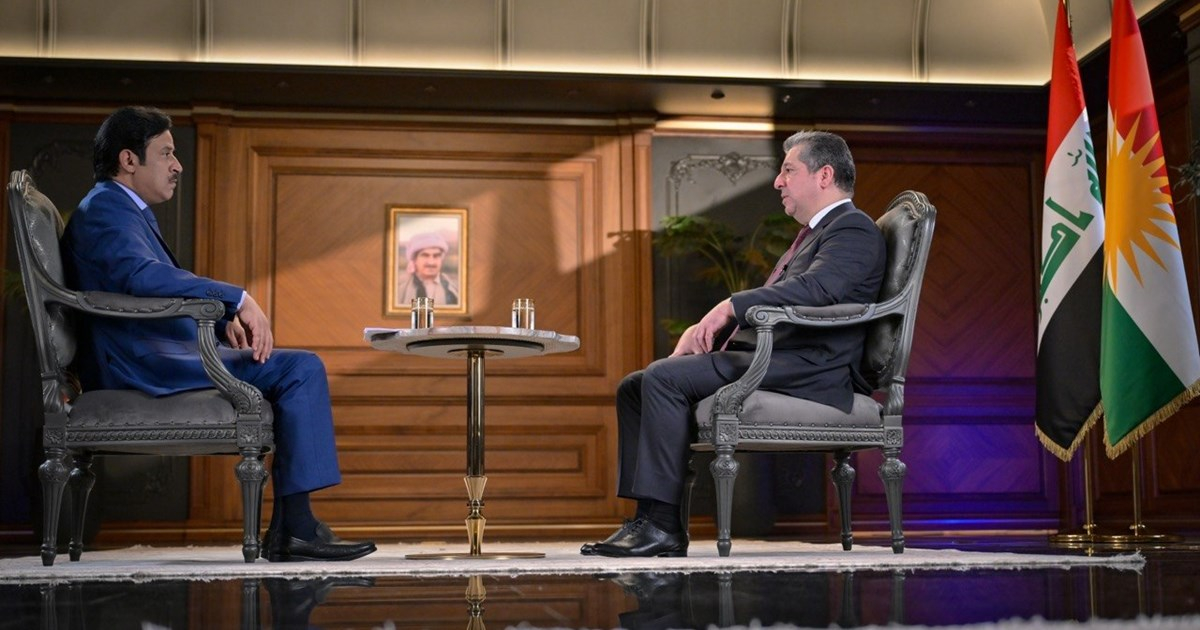
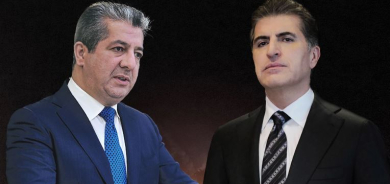
Kurdistan Region Prime Minister Masrour Barzani has said the Kurdistan Region rejects being drawn into the region’s wars and conflicts, stressing that Erbil’s priority is to protect its territory, population and economic interests while pursuing peaceful solutions to regional disputes.
In a wide-ranging interview, Barzani addressed the regional conflict, relations with Baghdad and neighbouring countries, armed groups, oil exports, federalism and the future of the Kurdish question across the region.
Barzani said the Kurdistan Region had made its position clear from the beginning: it does not want to become a party to any war. He argued that conflicts ultimately end through negotiation and that dialogue should therefore be pursued before more lives and resources are lost.
More than 1,000 attacks
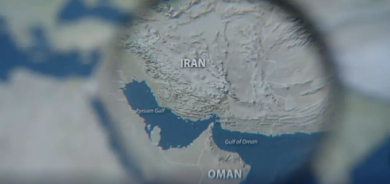
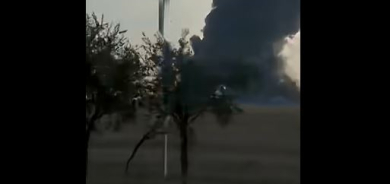
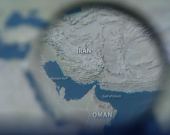
The prime minister said the Kurdistan Region had been subjected to more than 1,000 missile and drone attacks, which he said came either directly from Iran or from armed groups operating inside Iraq.
He described the attacks as unjustified, saying the Kurdistan Region posed no threat to its neighbours and had worked to prevent its territory from being used against other countries.
The attacks, he said, had resulted in casualties and significant damage to economic and civilian infrastructure.
“Federal Iraq is still governed with a centralist mentality”
Turning to relations with Baghdad, Barzani identified the incomplete implementation of Iraq’s federal system as the central problem between the Kurdistan Region and the federal government.
“Iraq has moved from a centralized state to a federal state, but the laws have remained the same.”
He argued that many constitutional provisions have not been implemented since the adoption of the Iraqi Constitution in 2005, including issues related to Article 140, disputed territories, oil and gas, taxation and the distribution of powers.
According to Barzani, the problem is not federalism itself but what he described as a continuing centralist mentality in parts of the Iraqi political system.
He pointed to countries such as Germany, the United States, Switzerland and the United Arab Emirates as examples of strong federal states.
Armed groups must be brought under state authority
Barzani also addressed attacks carried out by armed groups operating outside the authority of the Iraqi state.
He said such groups harm Iraq's national interests and can provoke responses that affect the Kurdistan Region and other parts of the country.
The prime minister supported efforts to ensure that no armed group outside the official institutions of the state has the ability to threaten Iraq or its neighbours.
He argued, however, that the preferred solution should be the peaceful disarmament or integration of such groups into Iraq's official security institutions.
Economic diversification and reform
Barzani presented the Kurdistan Region's economic strategy as an attempt to reduce dependence on oil.
He said the regional government has focused on digitalization, agriculture, industry, tourism, education, health and the development of the private sector.
The prime minister argued that economic decisions should increasingly be based on data and scientific analysis rather than individual judgment.
He also stressed that Iraq as a whole needs to diversify its economy and reduce its dependence on public-sector employment and oil revenues.
Oil exports cannot replace Iraq's southern production
While saying the Kurdistan Region is prepared to help Baghdad address Iraq's economic difficulties, Barzani acknowledged that Kurdish oil production cannot compensate for the country's much larger southern exports.
He said the Region could contribute to exports but stressed that its production capacity remains limited compared with Iraq's overall needs.
Barzani also called for the adoption of a long-delayed oil and gas law that would clearly define the powers and rights of the Kurdistan Region and the federal government.
Turkey remains Kurdistan's main economic partner
On foreign relations, Barzani said Turkey is the Kurdistan Region's largest economic and trade partner, with the greatest number of foreign investors and the largest volume of trade.
He described relations with Ankara as good but acknowledged that the conflict involving the PKK has caused serious problems along the border, leaving hundreds of villages affected or destroyed.
Barzani said the Kurdistan Region supports efforts toward a peaceful resolution of the Kurdish issue in Turkey.
Dialogue on the Kurdish question
The prime minister said the Kurdistan Region supports the rights of Kurds throughout the region but believes their problems should be resolved through dialogue and peaceful agreements.
He expressed support for negotiations between Kurdish groups and governments in Turkey, Syria and Iran, arguing that Kurds should enjoy equal citizenship and should not be treated as second-class citizens.
Regarding Syria, Barzani welcomed dialogue between Damascus and Kurdish representatives and said the Kurdistan Region supports any political settlement that would strengthen stability and protect Kurdish rights.
Optimism about the younger generation
Despite the political and security challenges facing the region, Barzani expressed optimism about Kurdistan's younger generation.
He said young people in the Kurdistan Region have grown up with greater access to freedom, education, technology and the wider world, creating higher expectations for governance and development.
“We have a young generation full of energy and life,” he said, describing the future generation as educated, ambitious and capable of contributing to Kurdistan's future.