Hormuz Crisis Exposes Iraq’s Oil Export Vulnerability as Baghdad Seeks Alternative Routes
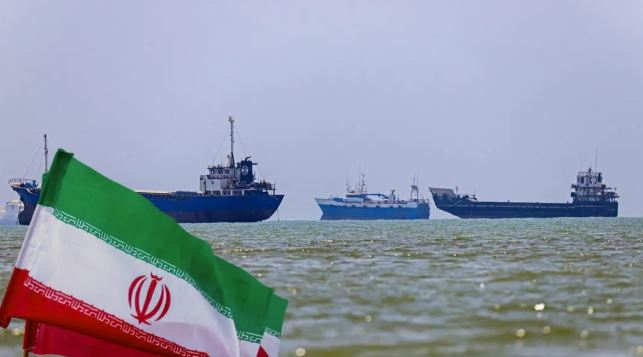
The crisis in the Strait of Hormuz has exposed Iraq’s heavy dependence on vulnerable maritime oil-export routes, prompting Baghdad to accelerate efforts to secure alternative pathways for crude shipments amid continuing regional disruptions linked to the US-Iran war.
Iraqi Oil Minister Basim Mohammed Khudair said Saturday that the disruption had significantly affected the country’s crude exports and underscored the need for alternative routes to prevent similar crises in the future.
“The Strait of Hormuz crisis has impacted crude exports; we must find solutions to prevent a recurrence,” Khudair told the state-run Iraqi News Agency (INA), adding that Iraq’s oil fields are ready to restore production and exports to their pre-war levels.
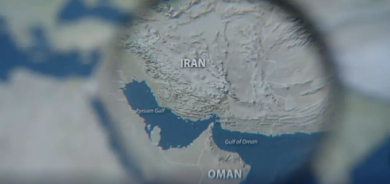
The Strait of Hormuz, one of the world’s most strategically important waterways, carries roughly one-fifth of global energy supplies. The waterway has become a major flashpoint between the United States and Iran since the six-week conflict began in late February.
Tehran has asserted sovereignty over the strait and required vessels to obtain authorization to pass, while Washington has imposed a naval blockade on Iranian ports.
The disruption has dealt a severe blow to Iraq’s oil industry and wider economy. Iraqi crude production fell from approximately 4.14 million barrels per day (bpd) before the crisis to around 1.49 million bpd at the height of the blockade.
According to Khudair, Iraq is currently producing around 2.7 million bpd and exporting between 1.5 million and 1.7 million bpd.
Before the disruption, Iraq exported approximately 106 million barrels of crude per month, with a substantial share of those exports passing through the Strait of Hormuz.
The impact was particularly severe in March, when Iraqi oil exports dropped to 18.6 million barrels, generating approximately $1.96 billion in revenue. That compares with more than 99 million barrels and $6.81 billion in revenue in February, according to figures from Iraq’s Oil Ministry.
The sharp decline highlights the risks posed by Iraq’s reliance on a single strategic maritime corridor for a large portion of its oil exports.
In response to the crisis, the Iraqi government is exploring alternative mechanisms for moving its crude to international markets.
Khudair said Baghdad is engaged in discussions with Iran over the possibility of allowing Iraqi oil exports through alternative arrangements, although no agreement has yet been implemented.
“There is an ongoing dialogue with Iran to allow the export of Iraqi oil, but it has not been implemented yet,” he said.
The government is also seeking to expand Iraq’s pipeline network in an effort to reduce its dependence on maritime exports through the Gulf.
One of the most ambitious proposals is the construction of a Basra-Haditha oil pipeline, estimated to cost approximately $15 billion. The project could eventually be extended toward Turkey’s Ceyhan port and Syria’s Baniyas port, potentially giving Iraq additional access to export markets outside the Gulf.
Iraq has already taken steps to increase the capacity of its northern export routes.
Last week, Baghdad and Ankara signed an agreement to transport up to 750,000 bpd of Iraqi crude through the Iraq-Turkey Pipeline (ITP) to the Mediterranean port of Ceyhan.
During Iraqi Prime Minister Ali al-Zaidi’s visit to Ankara earlier this month, Turkish President Recep Tayyip Erdogan said the two countries were working toward a broader energy partnership.
“Our goal is to sign a comprehensive energy cooperation agreement as soon as possible,” Erdogan said at a joint press conference with Zaidi on Tuesday.
Erdogan also said that Zaidi had told him Iraq could eventually supply Turkey with as much as 1 million bpd of oil.