KRG Board Defends Article 140, Rejects Kirkuk Governor's Criticism
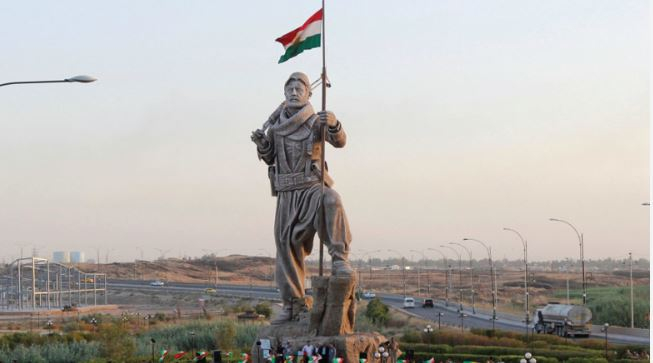
The Kurdistan Region's General Board for Kurdistani Areas Outside the Region on Thursday strongly rejected recent remarks by Kirkuk Governor Mohammed Samaan criticizing Article 140 of the Iraqi Constitution, reaffirming that the constitutional provision remains the legitimate framework for resolving the status of Kirkuk and other disputed Kurdistani territories.
In a statement released Thursday, the Board described the governor's comments as incompatible with Iraq's constitutional principles, stressing that the Constitution continues to serve as the foundation of governance, federalism, and coexistence in post-2003 Iraq.
The response came after Governor Mohammed Samaan reportedly described Article 140 during a televised interview as one of the Iraqi state's "greatest strategic mistakes" following the fall of the former regime, arguing that its inclusion discouraged some Kirkuk residents from supporting the Constitution.
Rejecting that assessment, the Board emphasized that Iraq's Constitution is a national agreement reached through years of political struggle and represents the collective will of the Iraqi people. It added that respecting the Constitution is both a legal obligation and a safeguard for the country's democratic institutions.
The Board reaffirmed that Article 140 remains the constitutional mechanism agreed upon to address the long-standing dispute over Kirkuk and other Kurdistani areas outside the Kurdistan Region's administration. It described the article as the definitive roadmap for resolving one of Iraq's most sensitive political and territorial issues, insisting that constitutional implementation—not political rhetoric—should guide efforts to settle the dispute.
The statement further stressed that the Kurdish people remain committed to Iraq's constitutional framework and view the implementation of Article 140 as essential to achieving a lasting and lawful resolution to the issue.
At the same time, the Board called on Kirkuk's governor to prioritize strengthening coexistence among the province's diverse communities and improving public services instead of engaging in political disputes over constitutional provisions.
According to the statement, Kirkuk's residents would benefit more from efforts to enhance infrastructure, expand essential services, and promote cooperation among all communities than from rhetoric that could deepen political divisions.
Article 140 remains one of the most significant unresolved constitutional issues between the federal government in Baghdad and the Kurdistan Region. The Board concluded that implementing the Constitution through dialogue and cooperation offers the most effective path toward lasting stability, peaceful coexistence, and a durable political settlement for Kirkuk and other disputed territories.