Iraq Says Oil Exports Continue Through Strait of Hormuz as Buyers Assume Shipping Responsibility
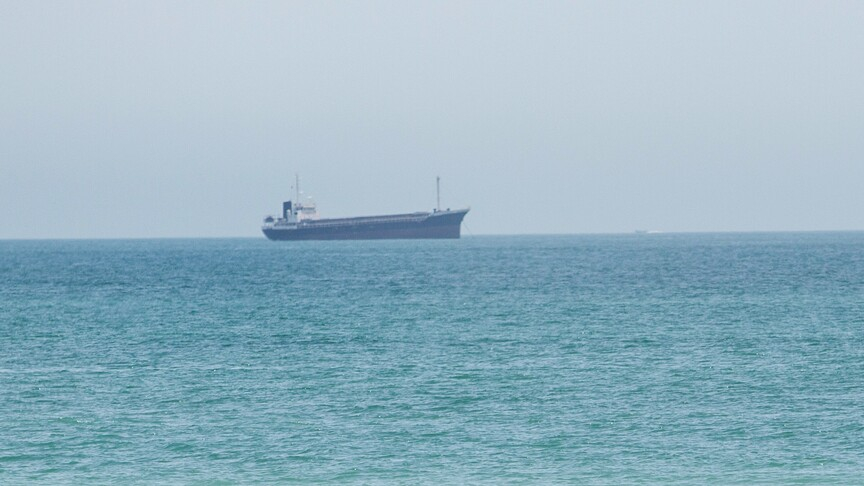
Iraq's Oil Ministry said on Tuesday that crude oil exports continue to transit the Strait of Hormuz, emphasizing that responsibility for transporting cargoes rests with buyers once shipments leave Iraqi export terminals under the country's free-on-board (FOB) sales mechanism.
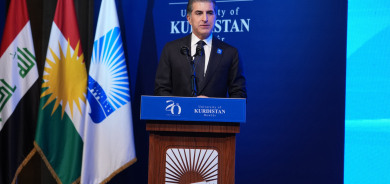
Oil Ministry spokesperson Salim Al-Rikabi said ownership and responsibility for crude cargoes are transferred to buyers at the port of loading, meaning the ministry has no role in determining tanker routes or securing approvals after vessels depart.
"After the tankers leave the port and pass through the Strait of Hormuz, the ministry bears no responsibility for their routes or for obtaining the necessary approvals," Al-Rikabi told the Iraqi News Agency (INA).
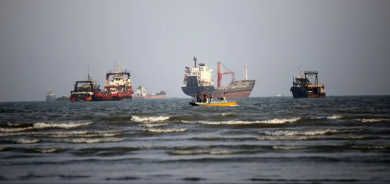
He stressed that while tankers carrying Iraqi crude routinely transit the Strait of Hormuz, the ministry neither owns the vessels nor manages their operations after they leave export facilities. Some tankers transport cargoes of up to two million barrels of crude oil, he added.
Despite the transfer of responsibility, Al-Rikabi said the ministry continues to monitor tanker movements through global vessel-tracking systems, while Iraq's State Organization for Marketing of Oil (SOMO) follows shipments until they reach destination refineries.
On export performance, Al-Rikabi said Iraq's oil sales have gradually improved in recent months.
"Last month was better than the one before it, and the previous month was better than the one preceding it," he said, describing the trend as a steady recovery following disruptions linked to heightened tensions around the Strait of Hormuz.
The remarks come amid increased concerns over maritime security in the Gulf following a series of reported incidents involving commercial vessels in the Strait of Hormuz, one of the world's most strategically important energy chokepoints.
Separately, Reuters reported on Monday that SOMO has offered substantial discounts on August-loading Basrah crude to encourage buyers to continue lifting cargoes from export facilities located inside the Strait of Hormuz despite elevated security risks.
According to a document reviewed by Reuters, SOMO invited term buyers to nominate contractual volumes of Basrah Medium and Basrah Heavy crude on an FOB basis from the Basrah Oil Terminal and offshore loading facilities.
The state oil marketer reportedly offered discounts ranging from $25 to $27 per barrel for Basrah Medium crude, depending on the loading window, while Basrah Heavy crude was discounted by $27.80 to $29.80 per barrel relative to destination benchmarks.
Shipping data cited by Reuters showed a decline in visible tanker traffic through the Strait of Hormuz over the weekend as security concerns intensified.
However, some shipments have continued uninterrupted. The very large crude carrier (VLCC) Noble, which loaded Basrah crude on July 25, exited the Strait of Hormuz on Friday and is currently en route to China. Shipping fixtures also indicated that PetroChina has provisionally chartered the VLCC Jamaica Prosperity to transport Iraqi crude from Basrah to China.
Iraq, the second-largest oil producer in OPEC, exports the vast majority of its southern crude through the Gulf, making uninterrupted passage through the Strait of Hormuz critical to both the country's economy and global energy markets. While regional security concerns have prompted greater caution among some shipping operators, Iraqi officials maintain that exports have continued and performance has steadily improved.