UAE Denies Reports of Releasing Billions in Frozen Iranian Funds
The United Arab Emirates (UAE) on Saturday firmly denied media reports claiming it had agreed to release billions of dollars in frozen Iranian funds, describing the allegations as “entirely false and unfounded.”
In a statement to CNBC, the UAE Ministry of Foreign Affairs rejected reports suggesting that Emirati authorities had facilitated the transfer or release of Iranian assets.
“The Ministry of Foreign Affairs affirmed that these allegations are entirely false and unfounded, stressing that no frozen Iranian funds have been released, transferred, or facilitated through the UAE,” the statement said.
The denial came after Reuters, citing four unnamed sources, reported that the UAE had agreed to unlock billions of dollars in Iranian funds as part of a strategic arrangement following months of regional conflict. According to the report, the move allegedly followed hundreds of attacks on Emirati military targets and infrastructure since the outbreak of the U.S.-led war on February 28.
Reuters reported conflicting estimates regarding the amount involved. Two regional sources claimed the UAE had agreed to release approximately $10 billion, with more than $3 billion already delivered. Two additional sources familiar with the alleged arrangement suggested the total could be as high as $20 billion.
One source cited by Reuters said an initial tranche of $3 billion had already been made available. The report further claimed the arrangement was linked to a halt in Iranian attacks targeting the UAE.
While the UAE has reportedly avoided Iranian missile and drone attacks during the past week, neighboring Gulf states, including Kuwait and Bahrain, have experienced strikes during the same period.
Reuters noted that it was unable to independently verify the origin of the funds, including whether they were frozen Iranian assets held within the UAE banking system or funds located elsewhere.
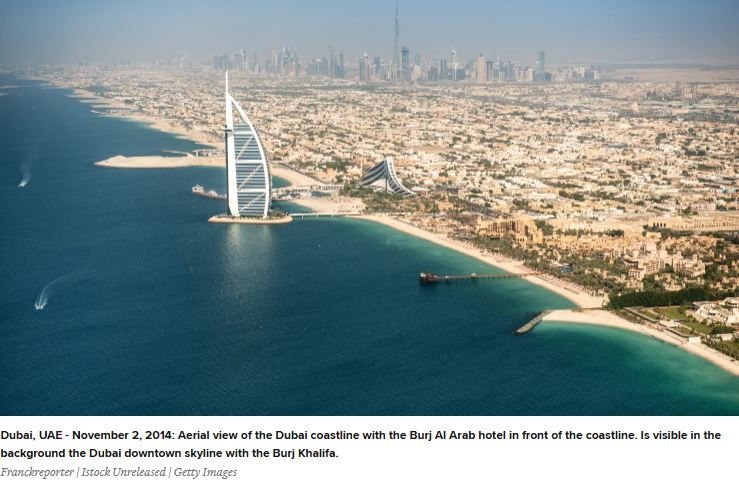
The UAE, particularly Dubai, has long served as a major commercial and financial hub for Iranian businesses. According to the Atlantic Council, Iranian firms and individuals have used networks of companies, traders, and exchange houses in the emirate to circumvent international sanctions and facilitate cross-border financial transactions.
The United States has repeatedly urged Gulf countries to strengthen enforcement against sanctions evasion. In recent years, the U.S. Treasury Department has imposed sanctions on several UAE-based entities accused of facilitating transactions linked to Iran, while American officials have called for stricter oversight of financial networks operating within the country.