Professor Dr. Kenneth Rogoff to Gulan: If the Straits of Hormuz Remain Closed… the Effects on Many Emerging Markets Will Start Becoming Untenable
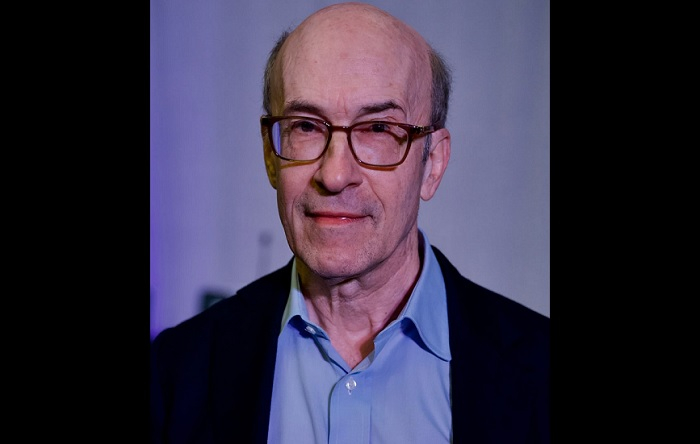
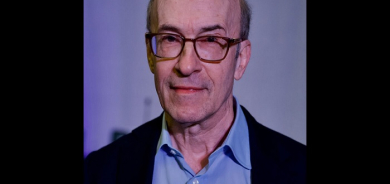
Kenneth Rogoff is Maurits C. Boas Professor at Harvard University, and former chief economist at the IMF. His influential 2009 book with Carmen Reinhart, This Time Is Different: Eight Centuries of Financial Folly, shows the remarkable quantitative similarities across time and countries in the roots and aftermath of debt and financial crises. Rogoff is also known for his pioneering work on central bank independence, and on exchange rates. He is co-author of the widely-used graduate text, Foundations of International Macroeconomics. His 2016 book The Curse of Cash looks at the past, present and future of currency from standardized coinage to crypto-currencies. His monthly syndicated column on global economic issues is published in over 50 countries. Rogoff’s 2025 book Our Dollar, Your Problem: An Insider’s View of Seven Turbulent Decades of Global Finance and the Road Ahead offers a sweeping view of the post-war rise of the dollar, the challenges the rest of the world has in dealing with it, and how this experience can help inform the contours of the evolving new global financial system. Rogoff is an elected member of the National Academy of Sciences and the American Academy of Arts and Sciences. He has long ranked among the top dozen most cited economists, and is an international grandmaster of chess. In an exclusive interview he answered our questions like the following:
Gulan: You draw attention to the centuries-long trends of financial crises in “This Time Is Different”. How much do current geopolitical tensions—especially in strategically important areas like the Strait of Hormuz—run the danger of igniting a crisis that decision-makers might be underestimating or misinterpreting as "different"?
Professor Dr. Kenneth Rogoff: There is no question that the United States had decided “This time is different”, the US military has sophisticated satellite and intelligence operations to bolster is unmatched firepower, and the war in Iran will be different than Iraq, Afghanistan, or Vietnam, all of which ended in painful US retreats. That thesis might yet prove right, and Iran’s hardliners may capitulate under the continuing blockade and the threat of much worse if Iran strikes out again at its neighbors. But right now, neither side can afford to admit defeat without devastating consequences. Meantime, the ongoing hostilities are having brutal affects on the Europe, Asia and especially other Middle Eastern countries
Gulan: You look at the world's dependence on the dollar in “Our Dollar, Your Problem”. Could increased hostilities in energy chokepoints like the Strait of Hormuz strengthen the dollar's position as a safe haven or hasten big countries' attempts to diversify away from it?
Professor Dr. Kenneth Rogoff: It all depends on how things turn out. If the US suffers a strategic defeat, there is little question that dollar dominance will be undermined, and it will encourage China and Europe to take steps to expand the international use of their currencies. On the other hand, a resounding US victory would cause most countries to fear pulling away from the dollar, for now.
Gulan: How can a prolonged energy price shock interact with already high levels of sovereign debt, particularly in emerging nations, to increase systemic financial risks given the possibility of disruptions in oil flows across the Strait of Hormuz?
Professor Dr. Kenneth Rogoff: So far, the economic effects of war, although difficult have been ameliorated by countries’ ability to draw on oil reserves, with over 400 million barrels being drawn down so far. Many countries have also shielded consumers by capping the price of oil but this puts strains on already stretched debt levels. This situation cannot long continue. If the Straits of Hormuz remain closed for another few weeks, oil prices will rise another $30 or $40 dollars a barrel, and the effects on many emerging markets will start becoming untenable, and suddenly there absolutely could be financial crisis in some larger emerging markets (there are already are crisis in many of the lowest income countries.) The market seems to believe that cooler heads will prevail; I am not so sure.
Gulan: Do you believe that the fragmentation of the world's capital markets is being accelerated by growing geopolitical tensions, especially in the Gulf? What effects might this have on financial stability in both developed and developing nations, and how might it alter cross-border capital flows?
Professor Dr. Kenneth Rogoff: It is not just the war in the gulf, but the tariff war, and increasing tension between China and United States. Trade is already being sharply rerouted; China’s exports to the United States have dropped down to levels from 25 years ago. As trade networks are being rerouted, financial networks will eventually follow.
Gulan: How can a Strait of Hormuz crisis change the structure of the global monetary system given the growing use of financial sanctions as a geopolitical tool? Could it encourage more nations to use parallel financial networks or alternative payment methods?
Professor Dr. Kenneth Rogoff: The Iran war, as well as the war in Ukraine, has shown that in today’s world, weaker countries have tools to fight back, and large rich countries such as the United States cannot always force their will, even if they are willing to exert tremendous resources. Parallel networks and crypto networks are already working overtime. It is especially noteworthy that China Premier has now for the first time instructed this financial time to move post-haste towards making the renminbi a full fledged reserve curreny. This does not require having China fully open it capital markets, it can take a big step by fully opening up its treasury bill market. The US did not have fully open capital markets in the 1950s and 1960s. For China, and also for Europe, expanding their financial networds and capacity for doing international trade outside the US dollar network is now a strategic imperative.
Gulan: How do central banks and international organizations strike a compromise between inflation control, financial stability, and debt sustainability in a situation where geopolitical tensions simultaneously affect trade and financial flows—especially when conventional policy options may be limited?
Professor Dr. Kenneth Rogoff: The Iran war, coming on top of the tariff war and the Ukraine war has creating a stagflationary situation where there is upward pressure on inflation and interest rates, making it very challenging to use conventional Keynesian stimulus, since debt service is already costing more, and central banks have to be concerned that if they lower the short-term policy rates they control, it will push up longer term interest rates, which are controlled by the market.