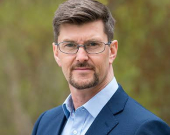
Professor Dr. Michael Mousseau to Gulan: Between enemies economic warfare is always a tool
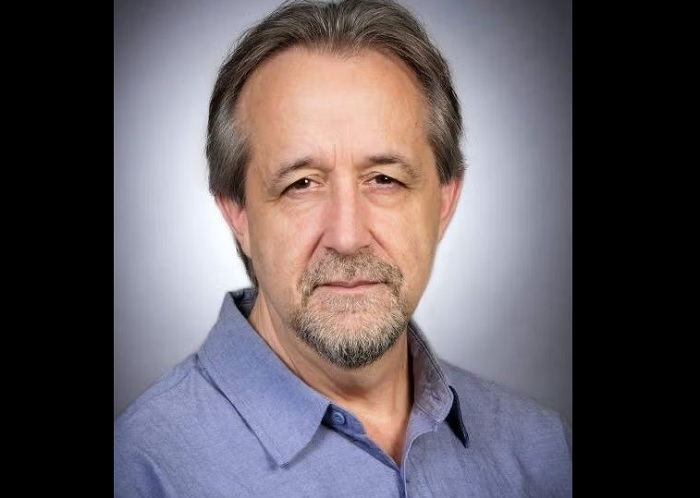
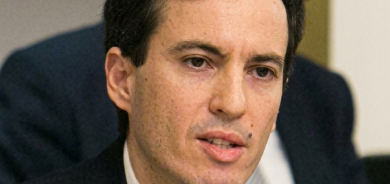
Michael Mousseau is a professor of international relations who specializes on the link between economy, society, and conflict. His work has shown how commerce impacts democracy and patterns of war and peace within and between states. Articles have appeared in Conflict Management and Peace Science (2005, 2018), Democratization (2016), European Journal of International Relations (2003), International Interactions (2002, 2010), International Security (2002, 2003, 2009, 2019), International Studies Quarterly (2003, 2012, 2013), Journal of Conflict Resolution (1998, 2000), the Journal of Human Rights (2022), the Journal of Peace Research (1997, 1999, 2008, 2011), Journal of Strategic Studies (forthcoming), and Structural Change and Economic Dynamics (2023). Mousseau has been a research fellow at the United Nations Studies Program, Yale University (2003); the Belfer Center International Security Program, Harvard University (2005 – 2006); and the Saltzman Institute of War and Peace Studies, Columbia University (2010-2011). His PhD is from Binghamton University (1998). Before coming to UCF in 2013, he was a professor of international relations at Koç University in Istanbul. At UCF, he has been awarded the College of Sciences Excellence in Graduate Teaching Award (2020) and the Excellence in Undergraduate Teaching Award (2025). In an exlusive interview He answered our questions like the following:
Gulan: To what degree is the current geopolitical fragmentation a result of national policy decisions rather than globalization itself, and does this suggest that deglobalization is a misdiagnosed solution, if the failure of globalization is more due to its unequal domestic distribution of benefits than its structure?
Professor Dr. Michael Mousseau: Globalization is a result of a strong preference for trade among market-oriented democracies and the large number of other countries that support this agenda. Three things have stalled the pace of globalization in recent decades, even reversing it somewhat. First, the vigor of globalization reached its peak in the 1990s, as many countries approached the limit of their willingness to open their economies. Second, over the last decade or so, two major powers, China and Russia, have begun to oppose the market-democratic-led global order, though China continues to balance its security concerns with its preference for benefiting from it through its considerable trade surpluses. And third, we have the strange case of Donald Trump being elected president of the U.S., who has directly assaulted globalization with his high and arbitrary tariff regime. Some argue that an unequal distribution of benefits in the U.S. may have contributed to this election. In my view, the Trump phenomenon is a fluke, as trading is deeply rooted in American culture. In addition, American voters demand economic growth, and trade is the surest path to economic growth. Thus, I expect that after Trump leaves office in 2029, the U.S. will revert to its generally pro-globalization foreign policy.
Gulan: In a world where supply chains are increasingly shaped by geopolitical alliances (also known as "friend-shoring"), does economic interdependence still serve as a force for peace, or has it fundamentally changed into a tool of strategic competition?
Professor Dr. Michael Mousseau: I do not believe that economic interdependence serves as a force for peace, or that trade has become a tool of strategic competition. It depends on the country. Some countries use trade as a strategic tool, such as China, Russia, and some oil-exporting states. However, the countries with advanced market-oriented economies, the market democracies, do not use trade as a strategic tool. These countries sometimes sanction states, but not as a tool of dominance but rather to contain states that threaten their neighbors, as do Iran, North Korea, and Russia.
Gulan: What new institutions or mechanisms—possibly involving organizations like the World Trade Organization—could realistically take the place of multinational corporations as stabilizing bridges between rival states if they no longer play this role in reducing geopolitical tensions, or is the decline of such stabilizers an unavoidable aspect of the new global order?
Professor Dr. Michael Mousseau: Multinational corporations can sometimes constrain countries that depend on them, but international governmental organizations (IGOs) cannot constrain rivals. Generally, participation in IGOs reflects alliance with the market-democratic, rules-based world order, and thus non-rivalry. Countries that join this order tend to abide by international institutions to appease the market democracies and to attract investment from them. Countries that reject the rules-based order, such as China, Iran, Russia, and North Korea, may sometimes join selected IGOs and seek foreign direct investment, but they are generally not constrained by these ties because they value their quest for regional and global domination over economic growth. In short, international institutions tend to reflect global alliances rather than the other way around.
Gulan: According to your theory of contract-intensive economies, societies based on impersonal market exchange typically foster peaceful and cooperative external connections. Do you find evidence that strategic mistrust is being fueled by differences in the domestic economic structures of the United States and China in the context of their growing rivalry? Does this suggest that the peace-promoting benefits of globalization are limited?
Professor Dr. Michael Mousseau: Yes, strategic mistrust between the United States and China is fueled by differences in their domestic economic structures. The U.S. is a market democracy, and all market democracies pursue their short-term interests in economic growth, most of the time, because that is what their voters care about most. Leaders of countries with weak markets, in contrast, tend to have expansionary interests because they lack legitimacy at home, and they need foreign threats to justify their internal repression. The Chinese economy has become increasingly commercialized over the past two decades, but it is still far less commercialized than those of the world’s market democracies. In addition, China’s authoritarian government represents the Communist Party of China (CPC), not the Chinese people. The CPC seeks legitimacy with the Chinese people through nationalist and expansionist appeals, as well as through economic growth. To manage this, they have joined China to the world economy, but use their trade ties strategically to benefit their long-term interest in global dominance. In recent years, market democracies have woken up to China’s game and are now wisely decoupling from their various economic dependencies on it. In response, China’s leaders are facing weaker economic growth. At some point, the CPC will have to choose between economic growth and the pursuit of world dominance. Whereas many policymakers in market democracies once believed in the peace-promoting benefits of globalization, many now realize that this may not always be true.
Gulan: Your work highlights how stable, contract-intensive economic systems can underpin peaceful international relations. How do you interpret the use of tariffs, sanctions, and broader economic statecraft during the Trump administration—particularly toward rivals like China—in this context? Do such policies represent a breakdown of the commercial logic that supports peace, or an adaptation of it into a more strategic, coercive form?
Professor Dr. Michael Mousseau: Countries with contract-intensive economies, the market democracies, are at peace with each other and naturally allied in favor of the rules-based world order, which suits their interests in trade and economic growth. The U.S. tariffs on China must be distinguished from U.S. tariffs on almost all other countries. The tariffs on China reflect the growing recognition that China is using its trade ties strategically to pursue global dominance. Thus, U.S. President Biden continued the tariffs on China initiated during the first Trump Administration. Trump’s more recent tariffs on almost all countries of the world are very different and contrary to 250 years of American foreign trade policy. Because trading is deeply rooted in American culture, and because American voters demand economic growth that trade promotes, I expect that most of the Trump tariffs will be reduced as soon as he leaves office in 2029. Sanctions on China, on the other hand, are likely to continue so long as China continues to exhibit expansionist ambitions.
Gulan: In addition to military warfare, we are witnessing the deliberate application of economic pressure in the ongoing battle between Iran, the United States, and Israel, especially through energy markets and disruptions like the Strait of Hormuz. How far does this move toward "economic warfare" support or contradict your hypothesis that trade tends to lessen conflict?
Professor Dr. Michael Mousseau: I do not believe trade lessons conflict. Rather, I have shown that inhabitants of market democracies value economic growth, which leads their leaders to value trade and a rules-based world order that supports the sovereignty of nations. The U.S. and Iran are enemies because the U.S., as the strongest market democracy, takes the lead in protecting the sovereignty of countries threatened by expansionist powers. Iran, with its weak commercial economy but large population, has leaders who lack legitimacy and thus practice repression to stay in power. As is often the case in such countries, leaders justify their repression by invoking foreign enemies, which they must then sustain by stoking trouble in their neighborhoods. Thus, Iran violates the sovereignty of other countries by supporting non-state armed groups within them. In this way, Iran and the U.S. are natural enemies: Iran must stoke regional trouble, and the U.S. must defend the rules-based global order. Between enemies, economic warfare is always a tool. Traditionally, the U.S. has sought to contain Iran. Recently, Trump decided that warring was better. Iran is aware that the U.S. cares about the global economy, so it knows it can gain leverage by blocking the Strait of Hormuz.
Gulan: What does this conflict reveal about the vulnerability of the global economic system, and does it imply that future conflicts will increasingly be fought through economic interdependence rather than conventional military means, given how quickly it has translated into global economic instability—rising oil prices, supply chain disruptions, and financial volatility?
Professor Dr. Michael Mousseau: As the world becomes increasingly integrated through globalization, trade dependency becomes an ever more powerful tool of statecraft. However, the situation in the Strait of Hormuz is somewhat unique: Iran’s leaders know that U.S. leaders care strongly about the global economy, and thus know that their control over the Strait gives them leverage. Most other enemies of the market democracies lack comparable means to affect the global economy and are thus forced to rely more on traditional means. An exception is China, which has developed a strategic advantage in producing rare earths and other products; however, the market democracies are rapidly decoupling strategic dependencies on China.