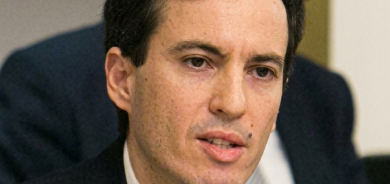
Dr. Michael A. Allen to Gulan: The presence of US troops decreases the likelihood of coups within a country

Michael Allen is a political scientist specializing in conflict, power asymmetry, and international relations methodology. He earned his Ph.D. from Binghamton University and his B.A. from University of Puget Sound. His research, published in leading journals such as American Political Science Review, International Studies Quarterly, Journal of Conflict Resolution, and Foreign Policy Analysis, focuses on international asymmetry in conflict and cooperation. His work explores issues such as war, resistance, alliances, trade, and debt, with particular attention to the impacts and perceptions of overseas military deployments.
Gulan: In your recent analysis on NATO’s internal cohesion, you suggest that U.S. pressure regarding Iran risks straining alliance unity. Do you see this as a temporary political tension, or does it reflect a deeper structural shift in how allies perceive U.S. leadership within NATO?
Dr. Michael A. Allen: There have been deep rifts between NATO members in the past, and those rifts, while not forgotten, did not permanently weaken the institution. The 1956 Suez Canal crisis and the Turkish-Greek conflict in 1974 were periods of substantial cleavages between members. Trump’s continued denigration of the alliance, pursuit of Greenland, and the divide over the war in Iran have jeopardized US leadership of the organization. Members of the alliance are uncertain whether the US will remain a part of the organization, whether it will uphold Article 5 commitments if pressed, and whether it will respect the territorial integrity of its partners (as per the Greenland fallout).
Part of NATO’s success as an alliance derives from the US commitment to it. The US has over-contributed to the alliance politically and financially, enabling it to persist even when other alliances might have fallen apart. The current climate is a departure from over 70 years of history, and the alliance is at its most fragile moment. If the current Administration does not further escalate its demands on NATO, I see a world in which NATO returns to its former commitments. Importantly, NATO thrives on the credibility of its members' commitment to the institution, and restoring that credibility (in the eyes of allies and potential rivals) would take work. Continued escalation can make it irreparable for future administrations.
The upcoming NATO meeting in Ankara, Turkey, will be important to watch to understand both how the US approaches its allies and how European and Canadian allies seek to move beyond current rifts. NATO allies have responded to previous US demands to increase their spending on defense and will continue to seek to maintain deep security integration with the United States despite their recent disputes.
Gulan: Your research on U.S. troop deployments highlights both positive and negative effects within host societies. From your fieldwork and data, what is the most overlooked factor that shapes whether a foreign military presence is ultimately seen as stabilizing or intrusive?
Dr. Michael A. Allen: Our work shows how interpersonal contact between deployed military forces and civilians has a strong influence over how people perceive that deployment. Civilians in countries that host US bases are more likely to interact with US military personnel than they are with any diplomat. Because of this, service members are de facto diplomats while they are deployed to other countries.
This is for good and for bad. Routine interactions with service members, especially positive ones, contribute to support for the US presence. Negative interactions, interpersonal ones, crime, and people behaving badly tend to produce negative views of the US presence. Routine and positive interactions tend to be more common than negative ones during peacetime deployments, which build support. However, when service members are restricted from being off base and interacting with or integrating into communities, opportunities for interaction decrease substantially.
Gulan: You often emphasize asymmetry in international relations. In the context of U.S. deployments, how do weaker or host states subtly shape or constrain the behavior of a much stronger actor like the United States, despite the imbalance in power?
Dr. Michael A. Allen: They do so in a lot of ways. Bases themselves are fixed assets that the US cannot pick up and move, so when the US wants to renew a lease for a base, a weaker state has some leverage in that negotiation. Additionally, while the Status of Forces Agreement spells out the rights the US has to its bases in another country, the use of the base is often an ongoing negotiation. The United Kingdom recently limited the US's use of British bases in Iran, allowing only defensive, not offensive, operations. In 2003, the Turkish Parliament rejected a proposal for the US to use its bases for the 2003 invasion of Iraq.
While weaker states may be weaker across multiple dimensions, they still have sovereignty over their territory and control who has access to it.
Gulan: Recent tensions surrounding Iran, combined with ongoing debates within NATO, raise questions about strategic coherence. From a military and political standpoint, do forward deployments today still function as credible deterrents, or are they increasingly symbolic tools that carry escalation risks without delivering proportional strategic benefit?
Dr. Michael A. Allen: They continue to be among the more credible deterrence tools. A country attacking a US base can carry substantial weight for the US to respond, whereas attacking an allied base may not. Bases are one of the stronger commitments a state can make to an ally, given that its forces are both present and capable of responding to provocation.
Gulan: As alliances become more politically contested and public opinion within member states grows more divided, how should policymakers balance the military logic of deployments with the political reality that legitimacy, both domestically and internationally, can determine their long-term success?
Dr. Michael A. Allen: Our work argues that public support for foreign policy matters affects which minor powers a major power can engage in security cooperation with. Importantly, it is not enough to just have a mission; you need to convince your own population and the populations of the countries you ally with that your mission aligns with their values and how they see the world. Much of foreign policy decision-making during the Cold War was conducted by the political and foreign policy elites in both countries. With the democratization of media and the possibility of anyone creating a video or writing a story, and it going viral, public opinion matters more today than it did in decades past. The idea of winning the “hearts and minds” is a common adage when considering counter-insurgency work, but it is crucial during peacetime as well.
Gulan: In the Kurdistan Region of Iraq, where U.S. military presence intersects with complex internal political divisions, regional rivalries, and shifting public perceptions, how do you assess the long-term impact of such deployments on governance and legitimacy? To what extent might these dynamics also interact with emerging informal economic practices, including the use of alternative financial systems, in shaping both stability and local authority in the region?
Dr. Michael A. Allen: The research on legitimacy and foreign military assistance offers a few areas of insight. In a few ways, it can help. If the presence is building institutions and capability for self-governance, then it can go a long way in making a sustainable social and political environment. One of the things my research finds (https://academic.oup.com/fpa/article-abstract/19/1/orac027/6916934) is that the presence of US troops decreases the likelihood of coups within a country as it builds legitimacy for the governing structures and also decreases the benefits for coup-plotters, as the US would be less likely to support and assist a new government that came to power through a coup.
However, external assistance can also be negative. If a government is entirely propped up by a foreign actor and cannot survive on its own, it will lack legitimacy and face greater challenges.
There is a notion in the literature of a “Resource Curse,” in which governments that derive revenue from non-taxable sources (oil, minerals, etc.) tend to have institutions that do not represent the people. Those that derive their revenue from the people are more likely to have inclusive institutions, as they must be responsive to the people they tax. Foreign assistance can also create a resource curse as well (for example, see: https://link.springer.com/article/10.1007/s10887-008-9032-8).
The extreme version of this is the history of Afghanistan, where many external powers have propped up a government in Kabul but have been unable to create an enduring national government that could survive on its own. The US withdrawal from Afghanistan in 2021 and the rapid takeover by the Taliban showed how reliant the central government was on the US. It lacked the legitimacy and capacity to deter and defeat its internal challenges.
By Kobin Ferhad