US Plans Major Troop Reduction in Germany, Raising Concerns Over European Security
The United States is preparing to significantly reduce its military presence in Germany, with President Donald Trump announcing plans to cut troop numbers “a lot further” than an already approved withdrawal of 5,000 service members.
Speaking to reporters in Florida, Trump said the reduction would go well beyond initial expectations. A spokesperson for the US Department of Defense confirmed that the withdrawal process is expected to be completed within six to twelve months.
The move also includes scrapping a previous plan—developed during the administration of Joe Biden—to deploy a US battalion equipped with long-range Tomahawk missiles to Germany.
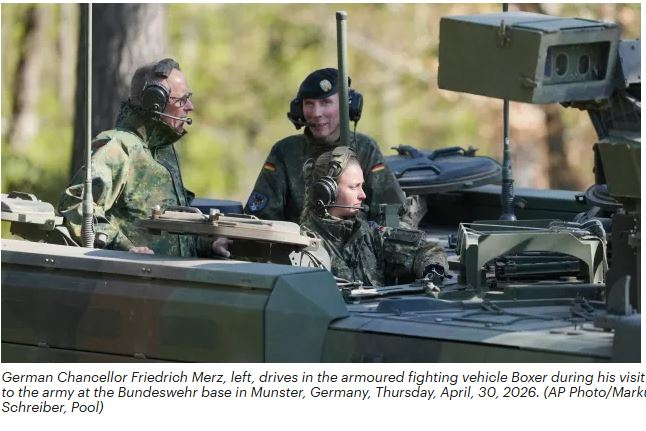
The announcement follows a public disagreement between Trump and German Chancellor Friedrich Merz, who recently criticized Washington’s Middle East strategy and warned that Iran was gaining leverage in negotiations. Trump responded sharply to the remarks.
The United States currently maintains a substantial military footprint in Germany, with more than 50,000 personnel stationed there. Across Europe, the total number of US troops stands at approximately 86,000, according to official figures.
The decision has drawn criticism from senior Republican lawmakers, including Senator Roger Wicker and Representative Mike Rogers. In a joint statement, they warned that the reduction could “undermine deterrence” and send the “wrong signal” to Russian President Vladimir Putin. They also called for greater consultation with Congress before implementing major changes to US military posture in Europe.
German Defense Minister Boris Pistorius said the partial withdrawal was anticipated and emphasized that Europe must assume greater responsibility for its own defense. He noted that Germany is increasing defense spending, accelerating procurement, and investing in military infrastructure.
The US military presence in Germany dates back to the aftermath of World War II and reached its peak during the Cold War. Today, key installations such as Ramstein Air Base, the US European Command in Stuttgart, and medical facilities in Landstuhl continue to play a central role in global US operations.
Military analysts caution that while withdrawing 5,000 troops may not significantly affect combat capabilities, it carries strategic implications. Experts warn that the reduction could weaken the perception of US commitment to NATO and create a short-term security gap that European allies may struggle to fill quickly.
At the same time, some analysts suggest the move could encourage Germany and other European nations to strengthen their own defense capabilities and take on a more prominent role within the NATO alliance.