Ali Askerov to Gulan: Any Analysis That Overlooks Ethnic Dynamics Risks Misunderstanding Iran
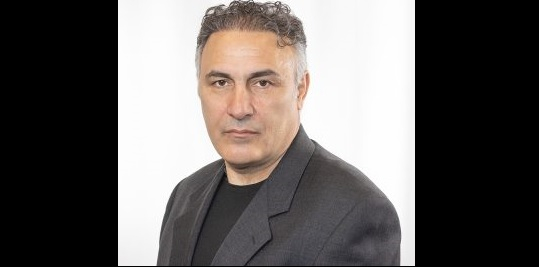
Dr. Ali Askerov has written extensively on topics such as ethnic conflict, terrorism, mediation, peace education, conflict transformation, refugee issues, and structural violence. He is the author or co-author of several books, including The Continuing Struggle for Chechnya (2023), Post-Soviet Conflicts (2020), Contemporary Relations Between Turkey and Russia: From Crisis to Cooperation (2018), and Transformative Change: An Introduction to Peace and Conflict Studies (2015), among others. He has been teaching at the University of North Carolina at Greensboro for the past twelve years.
Gulan: Much of the international narrative surrounding Iran’s unrest continues to frame it as a struggle between an authoritarian state and a largely unified society. Yet your argument suggests a far more fragmented reality beneath the surface. If ethnic division is not peripheral but central, does this fundamentally challenge the way analysts and policymakers have been misreading Iran for years? Are we, in effect, operating with an incomplete map of the country’s internal dynamics?
Dr. Ali Askerov: Iran is a multinational state with many large and small ethnolinguistic minorities that, collectively, significantly outnumber Persians. These groups possess rich, distinct cultures, languages, and traditions that differ markedly from those associated with Persian/Farsi identity. They are indigenous to specific regions of Iran and maintain deep historical roots in those territories. However, this complex reality is not widely reflected in global discourse. In mainstream narratives, Iran and Persia are often used interchangeably, and references to the “Persianate world” tend to privilege one cultural lens while marginalizing others. As a result, non-Persian cultures within Iran, such as Kurdish, Baluchi, and Turkish, among others, remain largely invisible in broader analytical and policy frameworks.
This does not mean that specialists are entirely unaware of Iran’s diversity. Rather, the issue lies in how this knowledge is treated. Ethnic diversity is often acknowledged but not sufficiently integrated into dominant analytical models. In that sense, we are indeed operating with an incomplete map – one that recognizes diversity in principle but fails to treat it as structurally central to understanding unrest, governance, and legitimacy in Iran.
The consequences of this omission are significant. The problems faced by ethnolinguistic minorities are not limited to socio-economic or cultural domains. They also extend into moral, educational, legal, and political spheres. Even historical narratives have been shaped in ways that disproportionately attribute military, literary, artistic, and scientific achievements to Persian identity/culture. This is not merely an academic concern – it reinforces a hierarchy of recognition that affects contemporary politics. While many within Persian communities may accept this narrative, often shaped by decades of state discourse, it remains historically incomplete and requires critical reassessment.
At the same time, it is important to clarify that ethnic division in Iran is not an episodic phenomenon that appears only during moments of crisis or external involvement. It is a structural and enduring feature of the state. However, it becomes more politically visible or activated at certain moments – particularly when internal pressures intensify or when external actors attempt to engage with Iran. In such cases, ethnic dynamics are not created but rather exposed.
Tehran, for its part, has historically relied on Islam as a unifying framework since the revolution of 1979. This has functioned as a broad ideological umbrella capable of bridging differences to some extent. At the same time, elements of Persian cultural dominance have remained embedded within the system. In this sense, Islam serves as a legitimizing and cohesive layer, while Persianism continues to shape cultural and institutional hierarchies beneath it. This dual structure has allowed the state to maintain a degree of cohesion while simultaneously suppressing deeper identity-based tensions.
However, this strategy has limits. It does not resolve underlying grievances, rather it postpones them. Over time, the gap between official narratives and lived realities grows, making tensions more difficult to manage. Correcting the analytical “map” of Iran’s internal dynamics is therefore not only an intellectual task but also a policy necessity. While such a correction may be complex and politically sensitive, it is essential for any meaningful understanding of Iran’s present and future.
Gulan: You argue that ethnic division is a “missing factor” in understanding Iran’s unrest. Given that protests have repeatedly emerged with greater intensity in regions such as Kurdish areas and Sistan-Baluchistan, often accompanied by harsher state responses, why do you think this dimension remains underexplored in global discourse? Is this primarily a gap in analytical frameworks, or does it reflect a deeper political reluctance to engage with the implications of ethnic fragmentation?
Dr. Ali Askerov: To understand this issue, it is useful to distinguish between pre-war and wartime conditions. In pre-war periods, ethnopolitical mobilization in Iran has been more visible, particularly in regions such as Kurdish areas and Sistan-Baluchistan. These regions have experienced repeated protests, and in some cases, the emergence of armed groups challenging the central government. These movements are rooted in longstanding demands for greater autonomy, and in some cases, aspirations for political independence. Whether such movements are labeled as terrorism or national liberation depends largely on interpretive frameworks and political positioning.
During wartime or heightened external tension, however, the visibility of these movements often decreases. This should not be interpreted as a retraction of grievances. Rather, it reflects a combination of factors: intensified state repression, shifting priorities among local populations toward survival, and skepticism toward external intervention. In such contexts, grievances remain structurally intact but are less openly expressed. In other words, wartime conditions suppress mobilization without eliminating its causes.
The underrepresentation of this dimension in global discourse is therefore not simply an analytical oversight. While there may be gaps in research, it is unlikely that policymakers are entirely unaware of these dynamics. Instead, political considerations play a decisive role. States tend to prioritize stability and strategic interests over engaging with complex internal divisions that could have far-reaching and unpredictable consequences.
Ethnic fragmentation, if openly acknowledged and engaged, raises difficult questions about sovereignty, territorial integrity, and long-term regional stability. The international community has already witnessed the consequences of such fragmentation in contexts like Syria, Iraq, Libya, and even parts of Europe. These experiences have generated caution, if not reluctance, to engage deeply with similar dynamics in Iran. From a European perspective, avoiding another large-scale destabilization – with its associated refugee flows and security risks – is a clear priority.
Thus, the limited attention to ethnic division reflects both analytical framing and political choice. It is not entirely absent from knowledge systems, but it is often deliberately de-emphasized. At the same time, it is important to note that any meaningful transformation in Iran is more likely to emerge from internal dynamics than from external intervention, which is often viewed as lacking legitimacy by local populations. Therefore, this dimension remains underexplored not because it is unknown, but because acknowledging it carries significant political and strategic costs.
Gulan: Iran is frequently described as a cohesive state, yet it encompasses a wide range of ethnic communities with distinct historical experiences and grievances. How do the lived realities of Kurds, Baluchis, and Arabs differ from those of the Persian-majority population, particularly in terms of political representation, economic opportunity, and the state’s response to dissent?
Dr. Ali Askerov: Formally, Iran is a nation-state within the Westphalian state system. Substantively, however, it is a multinational state. The challenge lies in the relationship between this diversity and the structure of political power. While the state presents itself as unified, power remains highly centralized and is disproportionately shaped by Persian cultural and linguistic norms.
The fact that Persian is the sole official language is not merely symbolic. It has practical implications for access to education, bureaucracy, employment, and political participation. Non-Persian populations must navigate systems that are not fully aligned with their linguistic and cultural realities. In practice, this can mean facing daily language barriers in administrative settings, limited access to education in one’s native language, and reduced employment opportunities in sectors where linguistic conformity is expected. This creates structural disadvantages that accumulate over time.
Demographically, non-Persian groups – including Azerbaijani Turks, Kurds, Arabs, Baluchis, Turkmens, Qashgais, and others – constitute a substantial portion of the population. While exact figures are debated, it is widely acknowledged that these groups collectively represent a significant, if not majority, share. Their classification as “minorities” reflects political positioning rather than demographic insignificance.
These communities often experience disparities in political representation, economic development, and state response to dissent. The system lacks meaningful power-sharing mechanisms, and federalism – while theoretically capable of accommodating diversity – has not been implemented. A federal structure could preserve territorial integrity while allowing regional autonomy, enabling local governance and cultural preservation. However, such an arrangement has not emerged in Iran’s political development in a true sense.
As a result, mistrust has deepened over time. Identity-based grievances have fueled demands ranging from cultural recognition to autonomy and, in some cases, independence. These dynamics have intensified since the 1979 Revolution, as new forms of dissent have been met with strong state responses, including repression and, at times, executions. Such measures may suppress dissent in the short term but do not resolve underlying tensions.
Gulan: In your broader work on structural violence, you emphasize how inequality is embedded within political systems rather than arising from isolated events. In the Iranian context, how does structural violence manifest along ethnic lines, for example in access to resources, governance, or security provision, and does this make unrest in peripheral regions more persistent and difficult to contain than in major urban centers?
Dr. Ali Askerov: Structural violence in Iran manifests through systematic limitations placed on certain groups’ access to resources, opportunities, and rights. These inequalities are embedded within institutions and are not always visible as direct physical violence, yet they shape life outcomes in profound ways.
Ethnic minorities experience these dynamics unevenly but consistently. Peripheral regions, where these groups are concentrated, tend to exhibit stronger and more persistent unrest. This is not accidental. Social cohesion in these regions is often higher, and community networks provide support for resistance. In contrast, urban centers tend to dilute ethnic identities through cosmopolitan interaction and diverse socio-economic pressures.
Thus, while the state possesses strong coercive capacity, its ability to achieve lasting control in peripheral regions is limited. Repression can contain unrest temporarily, but without addressing structural inequalities, it cannot eliminate it.
Gulan: There appears to be a recurring pattern in which unrest in ethnically diverse regions is both more intense and more heavily securitized. Looking at cases such as Kurdish areas and Sistan-Baluchistan, do these regions function as strategic pressure points within the Iranian state, where local grievances intersect with broader geopolitical concerns, and if so, how does this convergence shape Tehran’s approach to managing dissent?
Dr. Ali Askerov: Yes, these regions function as strategic pressure points where local grievances intersect with broader geopolitical dynamics. They are areas where state control is more contested and therefore more heavily securitized. This convergence leads Tehran to adopt a heavily securitized, preemptive, and often disproportionate approach to dissent in these regions.
External actors may view these regions as potential leverage points. However, their influence is constrained by local skepticism and legitimacy concerns. While external involvement can shape the broader strategic environment, it rarely determines outcomes on the ground.
Internally, Iran’s security apparatus – including the Revolutionary Guards and Basij – plays a significant role. These institutions possess both capacity and autonomy, contributing to a complex and sometimes fragmented approach to managing dissent, usually involving repressive and coercive measures.
Gulan: Focusing specifically on Kurdish regions in Iran, how should we understand their position within the broader landscape of unrest? Given the cross-border Kurdish dimension linking developments in Iraq, Turkey, and Syria, does Kurdish activism inside Iran remain primarily a domestic issue, or does it carry a transnational significance that complicates Tehran’s ability to manage it? In this context, how do you assess the role and position of the Kurdistan Regional Government in Iraq, does Erbil act as a stabilizing actor seeking to contain escalation, or does its geopolitical position inevitably draw it into these dynamics? And in periods of heightened regional tension, does this interconnectedness amplify both the risks and the political potential of Kurdish mobilization?
Dr. Ali Askerov: Kurdish region plays a crucial role within the broader landscape of unrest in Iran. The Kurdish question is both domestic and transnational. Kurdish communities across Iran, Iraq, Turkey, and Syria share cultural ties, but their political trajectories differ. This creates a dual dynamic: cultural unity alongside political fragmentation.
In Iran, Kurdish activism reflects local grievances but is also shaped by regional developments. The Kurdistan Regional Government in Iraq represents a model of partial independence and acts as a stabilizing force, though its capacity is limited by its political constraints.
This interconnectedness amplifies both risks and opportunities. It amplifies risks by enabling cross-border mobilization and the spread of unrest, while also increasing political potential through shared identity and mutual inspiration. It facilitates the spread of ideas and mobilization, while also increasing the geopolitical sensitivity of Kurdish activism. For Tehran, this makes the issue particularly complex and difficult to manage in purely domestic terms.
Taken together, Iran’s situation reflects a combination of strong state capacity and limited structural legitimacy. Ethnic dynamics are not peripheral – they are foundational. Any analysis or policy that overlooks them risks misunderstanding the nature of unrest and the limits of state control.
By Kobin Ferhad