Kurdistan Democratic Party Defends Position on Iraqi Presidential Vote, Calls for Kurdish Unity
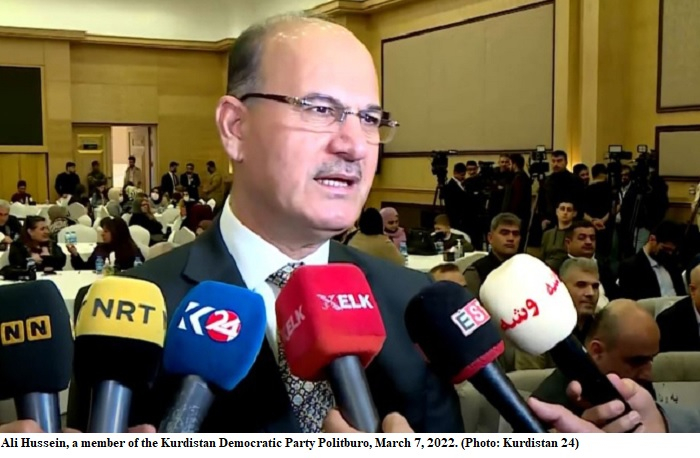
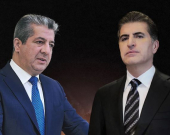
A senior official from the Kurdistan Democratic Party (KDP) on Tuesday clarified the party’s position regarding the recent election of Nizar Amedi as President of Iraq, stating that the party’s objections are based on political principles related to Kurdish representation rather than opposition to the new president or the Patriotic Union of Kurdistan (PUK).
Ali Hussein, a member of the KDP Politburo and head of the Sulaimani–Halabja Organizing Office, addressed the issue during a press remark, following reports of political tensions in Baghdad after the parliamentary vote.
Hussein said the mechanisms used to secure the presidency represented a departure from the political customs established in Iraq after 2003 regarding the distribution of sovereign positions among the country’s main communities.
Responding to reports that KDP representatives had withdrawn from Baghdad after the vote, Hussein denied any formal withdrawal. Instead, he explained that the return of officials to Erbil was part of internal consultations ordered by party leadership.
“We did not withdraw; President Masoud Barzani asked both the parliamentary and governmental factions to return to Erbil for consultation and assessment of the situation,” Hussein said, adding that discussions among party leaders are ongoing.
According to Hussein, the core of the KDP’s objection lies in the established political framework governing Iraq’s top offices. Since 2003, Iraq’s presidency has traditionally been allocated to the Kurds, while the parliamentary speakership is held by Sunni Arabs and the prime ministership by Shiite Arabs.
Hussein argued that each community should internally agree on its candidate before presenting the nominee to the national parliament. In the Kurdish case, he said, Kurdistani parties should jointly determine the presidential candidate.
“Our problem is neither with Nizar Amedi nor with anyone else. We do not even have a problem with the PUK as a political party,” Hussein said, stressing that the issue concerns procedural principles rather than personalities.
He criticized the approach taken by the PUK, arguing that securing the presidency through agreements with Arab political factions without Kurdish consensus could weaken the Kurdistan Region’s negotiating position in Baghdad.
According to Hussein, reliance on external alliances to obtain a position reserved for the Kurdish political component allows other political forces to demand concessions that may affect Kurdish interests.
As an alternative, Hussein suggested that if Kurdish parties failed to reach consensus, Kurdish members of the Iraqi parliament could collectively nominate a candidate rather than allowing a single party to decide.
The KDP official also warned that political fragmentation among Kurdish parties could have broader implications, including administrative disputes in areas such as the disputed province of Kirkuk.
He described Kirkuk as the “heart of Kurdistan” and stressed that Kurdish unity is necessary to address key issues such as the implementation of Article 140 of the Iraqi Constitution, the prevention of renewed Arabization policies, and the protection of Kurdish farmers in disputed territories.
Hussein further linked the lack of Kurdish political unity in Baghdad to security challenges facing the Kurdistan Region, noting that a stronger unified political front could deter external threats.
Looking ahead, he confirmed that the KDP leadership is reviewing its political strategy and relations with other Kurdish parties following the presidential vote.
“Our meetings are continuing to determine our future program and how we will deal with the new situation,” Hussein said, emphasizing that the party’s goal is to safeguard the constitutional position of the Kurdistan Region and the interests of its people.