Artemis II Astronauts Break 54-Year Record for Farthest Human Distance from Earth
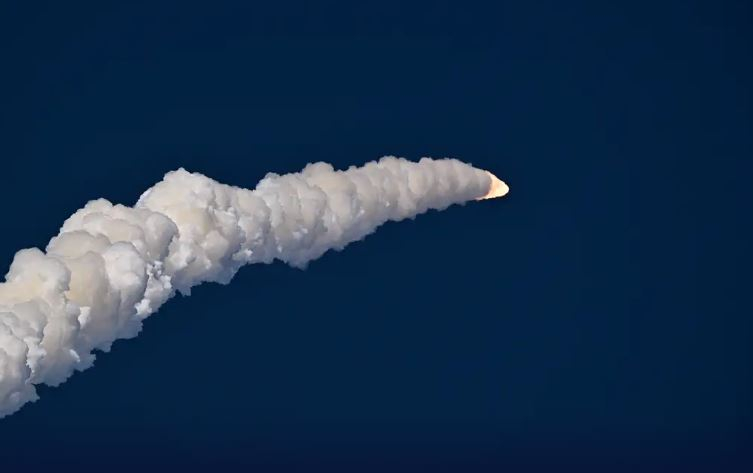
The crew of the Artemis II mission has made history by traveling farther from Earth than any human before, surpassing a record set more than five decades ago during the Apollo 13 mission in April 1970.
According to NASA, the astronauts aboard the Orion spacecraft reached a distance of 252,752 miles (406,764.9 kilometers) from Earth on Monday. This exceeds the previous record of 248,655 miles, established during Apollo 13.
The milestone occurred shortly before the spacecraft began its planned lunar fly-around and observation phase.
Earlier the same day, the Orion capsule entered the Moon’s gravitational sphere of influence, meaning that the spacecraft was being pulled more strongly by the Moon’s gravity than by Earth’s.
During the mission, the spacecraft flew to a point roughly 7,500 kilometers beyond the far side of the Moon, following a trajectory shaped like a figure eight around Earth and the Moon.
LIVE: Watch with us as the Artemis II astronauts make their closest approach to the Moon, traveling farther from Earth than ever before. https://t.co/Zpy7GdTqA8
— NASA (@NASA) April 6, 2026
The Artemis II mission marks the first crewed lunar flyby since 1972, ending a gap of more than 50 years in human journeys to the Moon.
The four-member crew includes U.S. astronauts Victor Glover, Christina Koch, Reid Wiseman, and Canadian astronaut Jeremy Hansen.
The mission also carries historic significance:
Victor Glover became the first person of color to fly around the Moon.
Christina Koch became the first woman to take part in a lunar flyby mission.
While approaching the Moon, astronauts were able to see both Earth and the Moon simultaneously, as well as observe a solar eclipse, where the Sun appeared to disappear behind the Moon from Orion’s perspective.
The crew also documented lunar features during the flyby. One of the most remarkable sights was the Orientale Basin, a massive impact crater. NASA noted that this is the first time the entire basin has been observed directly with the naked human eye.
Canadian astronaut Jeremy Hansen described the view as astonishing.
“It is blowing my mind what you can see with the naked eye from the Moon right now. It is just unbelievable,” Hansen said during a radio transmission.
Astronaut Christina Koch also described an emotional moment while observing the Moon’s surface.
“Something just drew me in suddenly to the lunar landscape and it became real,” she said.
The Artemis II mission represents a major step in humanity’s return to the Moon and forms part of NASA’s broader Artemis program, which aims to land astronauts on the lunar surface again and eventually prepare for missions to Mars.