U.S. Prepares Troop Deployment as Iran Vows to Fight “Until Complete Victory”
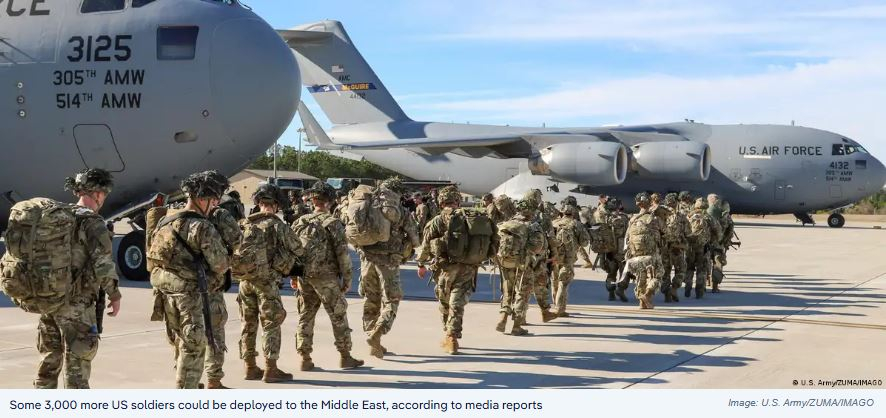
Tensions in the Middle East intensified on Tuesday as the United States prepared to deploy thousands of additional troops to the region while Iran vowed to continue fighting “until complete victory,” signaling a dangerous escalation in the ongoing conflict with Israel.
According to U.S. defense officials, American combat forces expected to be sent to the region may come from the 82nd Airborne Division, one of the United States’ most rapidly deployable units, capable of mobilizing anywhere in the world within 24 hours. The deployment is part of broader preparations by the United States Department of Defense to strengthen its military presence amid rising instability across the Middle East.
Meanwhile, a spokesperson for Iran’s top military command announced that Iranian armed forces would continue the war “until complete victory,” underscoring Tehran’s determination to confront its adversaries despite growing international concern over the conflict.
The statement came after Iran launched missiles and strikes against Israel and several Gulf Arab states on the 25th day of the war, marking one of the most intense exchanges of hostilities since the conflict began.
Overnight, both Iran and Israel continued exchanging fire. The clashes occurred shortly after Donald Trump claimed that negotiations with Iran were underway to resolve the crisis—an assertion that Iranian officials swiftly rejected, denying that any such talks were taking place.
Amid the escalating conflict, global markets reacted sharply. Oil prices surged, with international benchmark Brent Crude rising above $100 per barrel once again. The increase reflects growing fears that the conflict could disrupt shipping routes through the Strait of Hormuz, one of the world’s most critical oil transit chokepoints.
However, Iranian authorities stated that “non-hostile” ships would still be allowed to pass through the strategic waterway, according to a report by the Financial Times, in an apparent attempt to ease global concerns over energy supply disruptions.