IAEA Chief Demands Iran Grant Nuclear Inspectors Access, Rejects Safety Justification
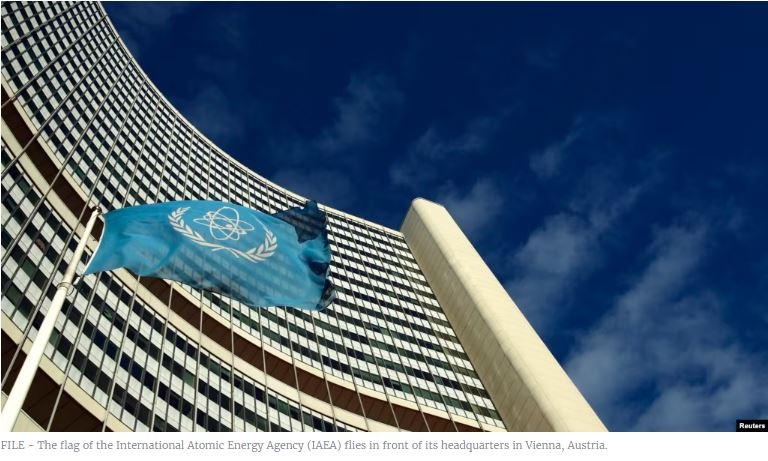
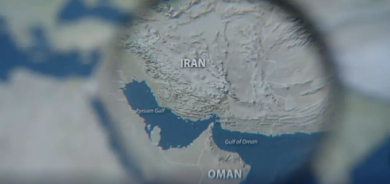
The head of the United Nations' nuclear watchdog has formally insisted that Iran allow international inspectors immediate access to its nuclear facilities, publicly rejecting Tehran’s claim that the sites are unsafe to enter following military strikes earlier this year.
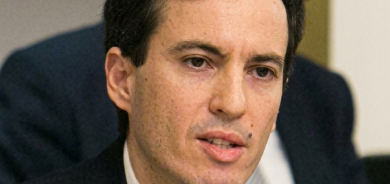
The demand by International Atomic Energy Agency (IAEA) Director General Rafael Grossi, made in a statement to RIA Novosti on Saturday, underscores a deepening rift between Western assertions about the state of Iran’s nuclear program and the on-the-ground verification the agency says it urgently needs.
“This, actually, is part of our dialogue,” Grossi said, addressing Iran’s safety rationale. “Because they say: 'It is unsafe, one cannot get in there.' But in that case, you must admit inspectors so they can confirm that it is indeed impossible to get in there.”
Grossi emphasized that under the Non-Proliferation Treaty (NPT) and Iran’s comprehensive safeguards agreement, the country is legally obligated to facilitate inspections. His push for access comes amid starkly conflicting narratives about the extent of damage to Iran’s nuclear infrastructure after a series of military exchanges six months ago.
The Pentagon has asserted that a U.S. operation resulted in the "complete destruction" of Iran's key nuclear facilities, a claim reinforced by former U.S. President Donald Trump, who said it would take Tehran years to restart its program.
However, Grossi cautioned against assuming Iran's nuclear potential has been neutralized. He highlighted that the country’s program extends far beyond three well-known enrichment, conversion, and reprocessing sites.
“Iran's nuclear program is not limited to this,” Grossi stated. “Iran has a very developed nuclear program with a powerful scientific research component and a multitude of other facilities throughout the country.”
He specifically cited the Bushehr nuclear power plant and ongoing plans, some involving Russian partnership, to build new reactors as evidence that nuclear work continues. “Therefore, work continues in all these directions,” he added, justifying the need for sustained IAEA monitoring.
Iran has directly contradicted the U.S. assessment. Iranian Ambassador to Russia Kazem Jalali stated the bombardments caused only "insignificant damage" to peaceful nuclear facilities and affirmed Tehran’s commitment to continuing its program. Russian Foreign Minister Sergey Lavrov also noted on December 15 that discussions on restoring Iran-IAEA relations were ongoing.
The current standoff is the aftermath of a tense military escalation that began in June. According to the reported timeline, Israel launched an operation on June 13 targeting atomic facilities and other sites. The situation escalated over 12 days, culminating in a U.S. "one-time attack" on Iranian nuclear facilities on June 22. Iran retaliated with missile strikes on the U.S. Al Udeid Base in Qatar on June 23 before signaling a desire to de-escalate.
Despite the cessation of strikes, the verification gap persists. Grossi framed the access demand as a technical necessity, expressing hope that ongoing negotiations would yield progress.