Blast Rocks Idlib as Unprecedented Alawite Protests Sweep Syrian Coast
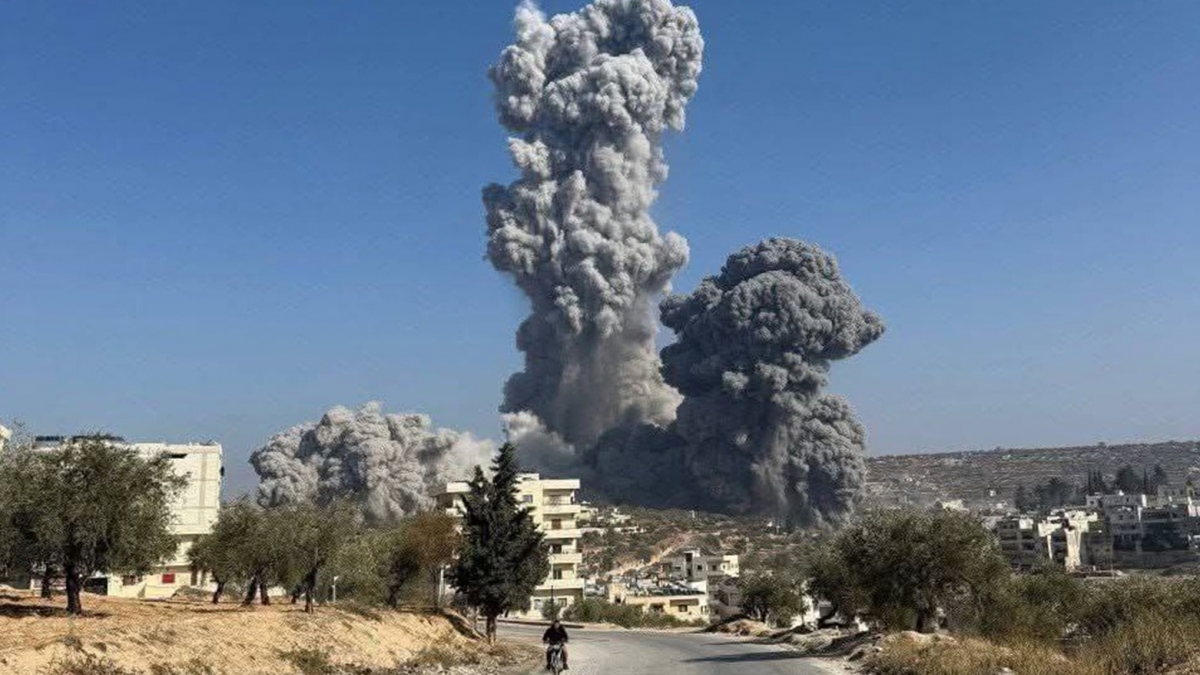
A powerful explosion struck a town in northwestern Syria on Wednesday, wounding several civilians and underscoring the pervasive instability in the country, which is simultaneously witnessing the largest wave of Alawite-led protests in over a decade.
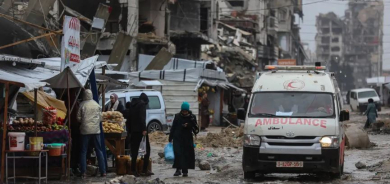
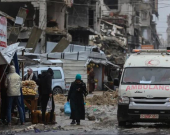
The blast hit the town of Kafr Takharim in the northern Idlib countryside, near a school, prompting a swift security response. Ambulances rushed to the scene, and authorities sealed off the area to investigate the source and responsibility for the explosion.
According to a report from Kurdistan 24, the explosion originated from an ammunition depot belonging to one of the factions operating in the area, which was positioned inside a residential neighborhood. No official comment has been issued regarding the incident.
The explosion occurred against a backdrop of profound political turmoil. Syria's coastal provinces, which are predominantly Alawite, are experiencing a sweeping and unprecedented wave of protests—the largest mobilization in those areas since 2011.
Tens of thousands of Alawites have taken to the streets, driven by a surge of anger over what they describe as escalating violations, sectarian targeting, and deepening marginalization. The demonstrations, spurred by a call from Sheikh Ghazal Ghazal, head of Syria’s Higher Alawite Islamic Council, have spread to at least 42 documented locations across Latakia, Tartous, Baniyas, and parts of Hama and Homs.
The strategic city of Jableh has emerged as the epicenter of the movement. Protesters have gathered at major intersections, with the demonstrations rapidly expanding into surrounding countryside areas.
Demonstrators have been seen carrying banners condemning sectarian killings and discriminatory policies. They are rallying behind Ghazal’s initiative, calling for a federal state, the release of detainees, and an end to ongoing violations.
The Syrian Observatory for Human Rights (SOHR) reported that pro-Sharā’a demonstrations in Jableh and Latakia resulted in clashes, leaving several protesters injured. Participants told the monitor that their goal is not to seize power but to push back against a year of "systemic marginalization and sectarian abuses." They stressed their demand for a law-based federal state that ensures equality rather than fuels division.
The manager of SOHR described the movement to Kurdistan 24 as a "massive, peaceful Alawite uprising unseen in over a decade." He stated that the protests are driven by opposition to what participants view as an "increasingly oppressive temporary authority."
SOHR also noted that Syrian state institutions have begun unusual internal mobilizations, preparing to deploy additional security and military forces to the coast—measures believed to be aimed at suppressing the expanding protests.
Amid the mounting unrest, the Democratic Autonomous Administration of North and East Syria (DAANES) issued a statement on 26 Mijdar backing the "legitimate demands" of the peaceful protesters.
"We express our full support for the Syrian people’s demands for democracy, justice, and equality. Attacking peaceful protesters constitutes a direct assault on internal peace," the DAANES statement read.
The Administration urged the "transitional government in Damascus" to respect the will of demonstrators across the country, stressing that the solution lies in a "democratic, decentralized Syria that ends the era of dictatorship." It concluded by calling for a genuine national dialogue based on the principles of peace, dialogue, and the building of a new decentralized democratic state.