Tehran Symphony to Debut Memorial Symphony for Chemical Attack Victims
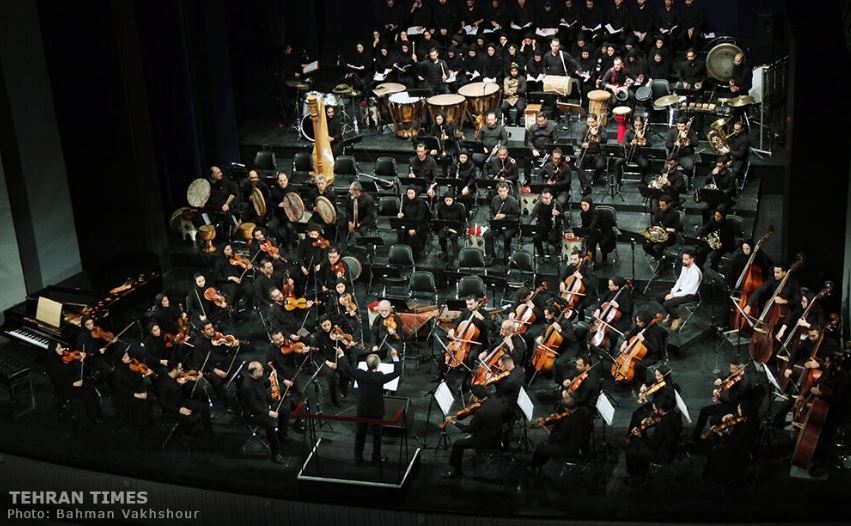
A new symphonic work dedicated to the victims of a chemical attack on the Kurdish town of Sardasht in Iran decades ago is set for its world premiere on Thursday. The piece, titled "The Sardasht Symphony," will be presented at a meeting of the Organization for the Prohibition of Chemical Weapons (OPCW) in The Hague, performed by the Tehran Symphony Orchestra.
The composition commemorates the June 28, 1987, attack on Sardasht, located in western Iran (Rojhelat). During the final phase of the Iran-Iraq War, Iraqi forces under former dictator Saddam Hussein used sulfur mustard agents on the town. The attack killed an estimated 110 to 130 people immediately and left approximately 8,000 others with long-term health effects.
Composer Bahman Qobadi was commissioned three months ago by the Association for the Defense of the Rights of Chemical Victims in Sardasht County to create a musical work that captures the community's experience.
“We can see that the symphony shows that something has happened like an explosion,” Qobadi told Rudaw. “After such a catastrophe, society is ruined. Each person is searching for a dear one.”
He explained that his composition aims to musically depict the chaos and desperate search for loved ones in the aftermath. “I wrote this in the language of music. I tried to deliver this to as many Kurdish listeners and non-Kurdish listeners,” he added.
The symphony incorporates Kurdish folkloric elements to deepen its emotional resonance. Qobadi specifically referenced a later, even deadlier chemical attack on the Kurdish city of Halabja in March 1988, which killed at least 5,000 people.
“This is why I made use of [renowned Kurdish singer] Hassan Zirak’s melody, ‘Today is spring,’ as a paradox,” Qobadi stated. “Today is spring, but what kind of spring?”
For vocalist and recording supervisor Reza Asgarzadeh, the project is deeply personal. He recounted learning of the Sardasht attack's horrors through a close friend who was a Red Cross member responding to the incident.
“I saw a collection of photos through a close friend that ordinary people hadn't seen. From that time, I became aware of the depth of the catastrophe,” Asgarzadeh said.