EU Moves to End Reliance on Chinese Rare Earths, Says Von der Leyen
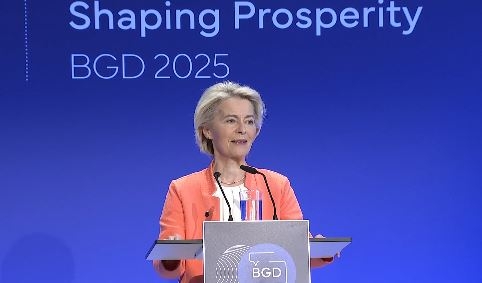
The European Union is actively working to break its dependence on China for rare earth elements, European Commission President Ursula von der Leyen announced on Saturday, citing urgent economic and geopolitical necessities.
Speaking at the Berlin Global Dialogue conference, von der Leyen outlined the bloc's vulnerability in the sector, which has been exposed by recent Chinese export restrictions. Rare earths are critical components in a wide range of modern technologies, including smartphones, electric vehicles, and advanced military equipment.
"Whether on energy or raw materials, defense or digital, Europe has to strive for its independence, and this is our moment to do it," von der Leyen stated.
The push for autonomy comes after China, the world's dominant producer and exporter of rare earths, introduced new license requirements for exports in April, followed by additional curbs this month. These measures, seen as leveraging China's position amid ongoing trade disputes, have disrupted global supply chains.
The European Commission says the restrictions have forced some EU companies to suspend production, inflicting "significant economic damage."
Von der Leyen acknowledged that the EU is engaged in seeking short-term solutions with China. However, she issued a firm warning: "We are ready to use all the instruments in our toolbox to respond if needed."
To address the crisis, the EU is pursuing a multi-pronged strategy focused on securing alternative sources of critical raw materials across short, medium, and long-term horizons.
A key pillar of this strategy is boosting recycling capabilities. Von der Leyen highlighted that some European companies can already recycle "up to 95 percent of critical raw materials and batteries."
Additionally, the plan involves strengthening the EU's internal capacity for the production and post-processing of critical raw materials. The bloc will also seek to establish and deepen strategic partnerships with resource-rich nations such as Ukraine, Australia, Canada, Kazakhstan, Uzbekistan, Chile, and Greenland.