Iraqi Election Campaigns Fill Streets as Nearly 7,800 Candidates Compete
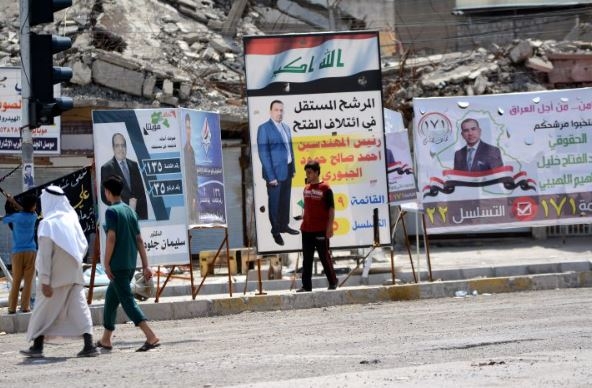
The official campaign period for Iraq’s parliamentary elections commenced on Friday, launching a race where nearly 7,800 candidates will vie for 329 seats in the Council of Representatives.
The streets of Iraqi cities are now lined with posters and political signs as the campaign season runs until 7 a.m. on November 8, according to Imad Jamil, the head of media for Iraq’s Independent High Electoral Commission (IHEC). The cessation of campaigning will come 24 hours before special voting begins.
The electoral process will unfold over two days. Security forces and other special categories of voters will cast their ballots on November 9. The general public will then head to the polls on November 11.
IHEC data reveals a highly competitive electoral landscape. A total of 31 alliances, 38 parties, 23 independent candidates, and 56 quota seat candidates are in the race. Of the 7,768 individual candidates, 5,520 are men and 2,248 are women.
The 329 seats in parliament are divided into 320 general seats and nine reserved for minority quotas.
The commission has designated over 39,000 polling stations for general voting across 8,703 centers. For the special voting day, 4,501 stations in 809 centers will be operational. Additionally, 97 stations in and around camps in the Kurdistan Region will facilitate voting for displaced people.
Despite over 21.4 million eligible voters possessing biometric cards, voter turnout has seen a steady decline since the 2005 election, which saw a 79 percent participation rate. In the last election in 2021, turnout dropped to 43 percent. Special voters for this election number 1,313,980, representing six percent of the electorate.
Within the Kurdistan Region, the races are similarly crowded:
Erbil province: 108 candidates are competing for 16 seats, including four women’s quota seats and one Christian quota seat.
Sulaimani and Halabja provinces: 136 candidates are contesting 18 seats, five of which are reserved for women.
Duhok province: 79 candidates are competing for 12 seats, three for women and one for Christians.
The four Kurdistan Region provinces have 3,068,411 registered voters, accounting for 14.3 percent of Iraq’s total electorate. Baghdad governorate has the largest share of voters with 4,314,866 (20% of the total), while Muthanna province has the fewest with 510,867.
In a move to protect the environment during the heated campaign, the Kurdistan Region’s Board of Environmental Protection and Improvement has issued specific guidelines.
“The environmental balance must be maintained during the election campaign,” said Sanan Abdullah, the board's head. He emphasized that posters must not be placed in public spaces like parks and gardens, noting that “hanging these pictures and posters with nails and glue will have a negative impact on trees and plants.”
A monitoring team will oversee compliance, and violations will be referred to municipalities and the electoral commission for legal action. Penalties for environmental infractions range from 300,000 to 10 million Iraqi dinars (approximately $210 to $7,100), depending on the severity of the violation.