Islamic Leaders Convene in Doha for Emergency Summit, Urge Severing Ties with Israel
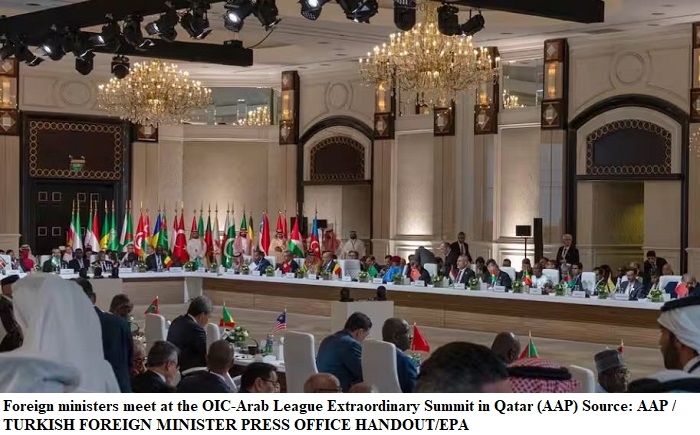
Arab and Islamic leaders gathered in Qatar’s capital on Monday for an emergency summit, responding to an unprecedented Israeli airstrike on its territory that targeted Hamas officials and has sharply escalated regional tensions.
The summit, hosted by Qatar, was called after an Israeli strike hit a location in Doha, a move that has drawn widespread condemnation for targeting the territory of a U.S. ally and a key mediator in the Gaza conflict. The gathering aims to formulate a unified response to what regional leaders are calling Israel’s escalating "expansionism" and "war of extermination."
In strong opening remarks, newly elected Iranian President Masoud Pezeshkian called for Muslim nations to completely isolate Israel diplomatically. "Islamic countries may cut their ties with this fake regime and maintain unity and cohesion as much as possible," Pezeshkian stated before departing for the summit, expressing his hope that the meeting would result in concrete actions.
Qatar’s Prime Minister, Sheikh Mohammed bin Abdulrahman Al Thani, set the tone on Sunday, urging the international community to reject "double standards" and hold Israel accountable. "What is encouraging Israel to continue... is the silence, the inability of the international community to hold it accountable," he declared.
The guest list for the high-stakes meeting includes Iraqi Prime Minister Mohammed Shia al-Sudani, Turkish President Recep Tayyip Erdogan, and Palestinian President Mahmud Abbas. The attendance of Saudi Crown Prince Mohammed bin Salman remained uncertain.
Analysts and officials framed the summit as a critical juncture for the Muslim world. Turkish Foreign Minister Hakan Fidan told Al-Jazeera that Israel’s actions now extend "beyond the scope of the Palestine-Israel conflict," calling them the "biggest problem" of regional expansionism.
Observers believe the primary goal for Gulf states is to pressure the United States to restrain its ally. Elham Fakhro of Harvard’s Middle East Initiative told AFP that leaders are likely seeking "stronger U.S. security guarantees," arguing that Israel’s actions have "undermined U.S. credibility as a security partner."
Karim Bitar, a lecturer at Sciences Po University in Paris, described the gathering as a “litmus test,” with populations across the region expecting “a very important signal not only to Israel but also to the United States.”
The strike has placed the United States in a difficult position. Qatar hosts the largest U.S. military base in the region and has been a central mediator, alongside Egypt and the U.S., in negotiations between Israel and Hamas. The fact that the strike targeted Hamas leaders who were engaged in talks over a U.S.-backed ceasefire plan has severely complicated these efforts.
The Trump administration admitted it was caught off guard by the Israeli operation. Secretary of State Marco Rubio, dispatched to Israel in a show of solidarity, stated, "Obviously we’re not happy about it. The president was not happy about it. Now we need to move forward and figure out what comes next."
Rubio met with Israeli Prime Minister Benjamin Netanyahu on Monday to discuss the aftermath of the strike, Israel’s planned military operations in Gaza, and its controversial proposals regarding the West Bank. He reiterated President Trump’s desire for the war to be "finished with," meaning both the release of hostages and ensuring Hamas is “no longer a threat.”