
Dramatic Water Drop in Mosul Dam Reveals Ancient City and Vast Cemetery in Iraq's Duhok
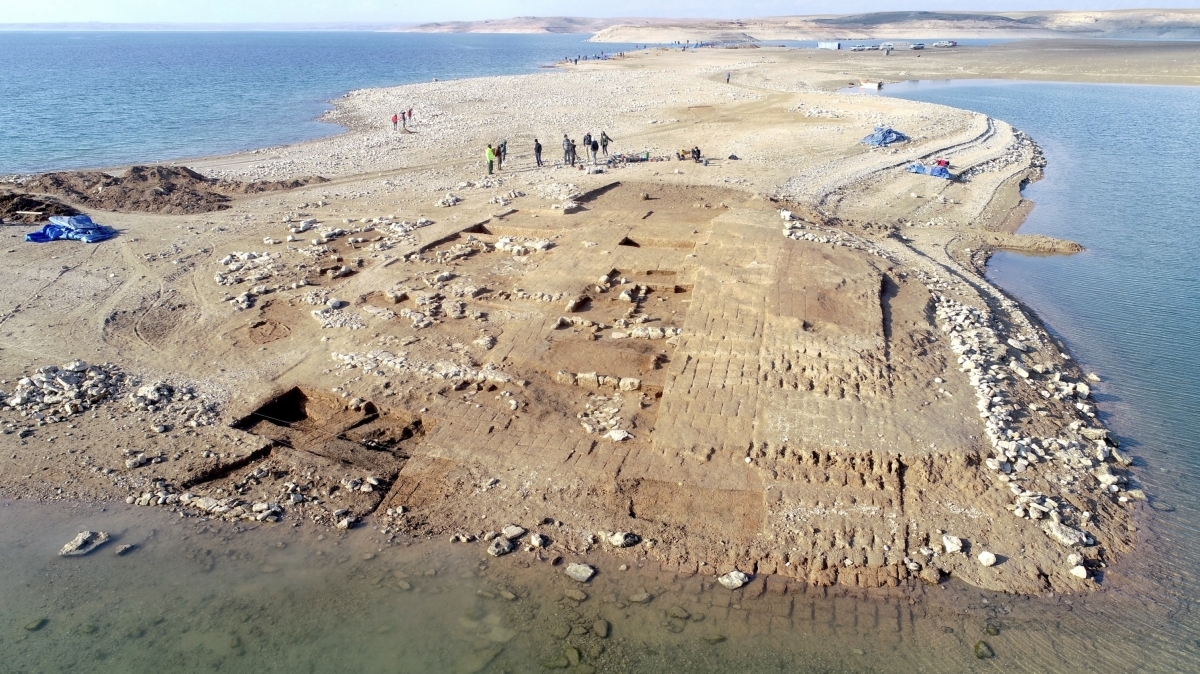
A significant archaeological discovery has emerged from the receding waters of the Mosul Dam, unveiling a submerged ancient city believed to be over 5,000 years old and a sprawling Hellenistic-era cemetery in Iraq's Duhok Governorate.
The General Directorate of Antiquities and Heritage of Duhok announced the findings this week, which became accessible after a severe drop in the dam's water level. The site, located in the old Khanke district overlooking the Mosul Dam lake, offers a rare window into the region's deep and layered history.
Bekas Brifkani, Director of Antiquities and Heritage for the governorate, confirmed the scale of the discovery.
"The General Directorate of Antiquities and Heritage of Duhok Governorate has successfully uncovered a city that thrived more than five millennia ago, alongside the largest cemetery containing Hellenistic clay coffins," Brifkani stated.
While the site was first identified in 2023, extensive excavation work began in earnest only a few days ago as the water level reached its lowest point, allowing archaeologists safe access to the area.
The team is now focused on meticulously excavating the cemetery. "We are currently in the process of carefully separating archaeological pieces from approximately forty graves," Brifkani explained. "These artifacts will then be transported to a specialized museum for further study and preservation."
All excavation efforts are being conducted by archaeologists and experts from the Directorate of Antiquities, with substantial support from the Duhok Governorate.
The discovery is of immense historical importance. The ancient city could provide invaluable insights into a early civilization that flourished in Mesopotamia, while the large cemetery, with its distinctive clay coffins dating back to around 300 BC, sheds light on the extent of Hellenistic influence and burial practices in the region following the conquests of Alexander the Great.