
US Military Launches Secretive X-37B Spaceplane on SpaceX Rocket
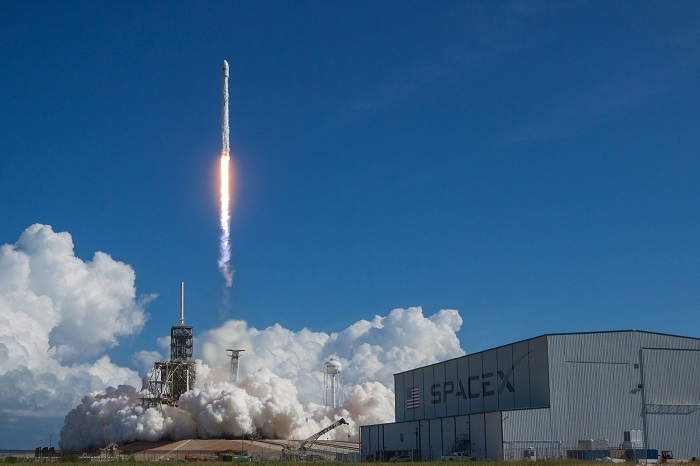
A SpaceX Falcon 9 rocket launched Thursday night, carrying a classified U.S. military spaceplane on a mission to test advanced new technologies in orbit.
The payload, an X-37B Orbital Test Vehicle, successfully reached orbit in the program's eighth mission. The uncrewed, autonomous mini-shuttle was launched from NASA's Kennedy Space Center at Cape Canaveral, Florida.
The X-37B, designed and built by Boeing, is operated by the U.S. Space Force for extended orbital missions to test technology and conduct experiments. While many of its activities are classified, the Space Force has revealed that this mission, known as USSF-52, will focus on cutting-edge systems.
"These operational demonstrations and experiments comprise next-generation technologies, including laser communications and the highest-performing quantum inertial sensor ever tested in space," the service stated in a July announcement.
The laser communications experiment aims to develop faster, more secure methods for transmitting data from space. The quantum inertial sensor is a key technology for a new form of navigation that does not rely on GPS satellites, which are vulnerable to jamming and attack in conflict scenarios.
"Mission 8 will contribute to improving the resilience, efficiency and security of US space-based communications architectures," the Space Force added.
It is unclear how long this particular spaceplane will remain in orbit. The previous mission lasted a record 908 days before the vehicle returned to Earth and landed at NASA's Kennedy Space Center in November 2022.
The reusable spaceplanes are powered by solar panels and measure 30 feet (nine meters) long with a 15-foot wingspan. They first launched in 2010, and their ability to spend years in orbit before returning to Earth for a runway landing has made them a unique and closely watched asset for the U.S. military.
More photos from tonight’s Falcon 9 launch of the X-37B Orbital Test Vehicle’s eighth mission to orbit pic.twitter.com/qURZEEqRQn
— SpaceX (@SpaceX) August 22, 2025