Mass Grave of Kurdish Villagers Executed During Saddam’s Anfal Campaign Exhumed in Amedi
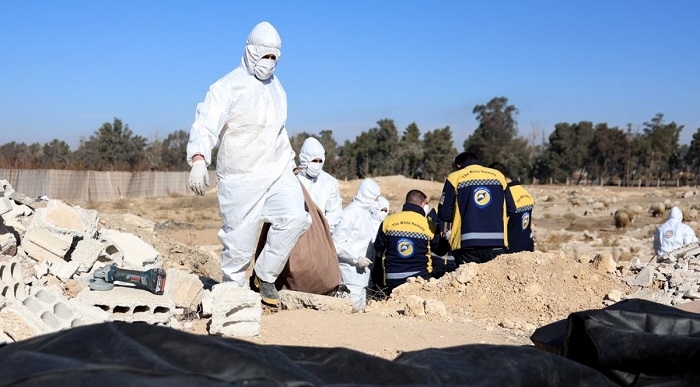
The remains of seven Kurdish villagers executed during Saddam Hussein’s brutal Anfal campaign have been exhumed from a mass grave in the village of Mergati in Amedi district, the Kurdistan Regional Government (KRG) announced on Thursday.
The victims, all adult men from Mergati, were killed by firing squad in 1988 and buried in a remote area, according to Aram Nuri, director of mass graves at the KRG’s Ministry of Martyrs and Anfal Affairs. The men were dressed in traditional Kurdish clothing at the time of their execution.
Their remains will now be transferred to the forensic medicine department in Duhok for DNA testing before being returned to their village for a proper burial.
Nuri told Kurdistan24 that the seven individuals were executed during the Anfal campaign, a genocidal operation carried out by Saddam’s Ba’ath regime against Iraq’s Kurdish population.
"In 1988, during the Anfal process against the Kurds by the Ba’ath regime, these seven individuals were executed by firing squad in a desolate area and then buried," Nuri said.
He outlined the ministry’s two-stage process:
Exhumation and Forensic Examination – The remains are being sent to Duhok’s forensic department for DNA testing to confirm identities.
Return and Reburial – Once identified, the victims will be returned to Mergati for burial, and a monument will be erected in their honor.
The Anfal Genocide
The Anfal campaign (1986–1989) targeted Kurdish civilians through mass executions, chemical attacks, forced displacement, and the destruction of villages. The most notorious atrocity was the Halabja chemical attack in March 1988, which killed around 5,000 civilians in a single day.
Overall, more than 100,000 Kurds were systematically killed, and over 4,500 villages were destroyed. The Iraqi Supreme Court and international human rights organizations have recognized the campaign as genocide.
KRG officials estimate that the total number of genocide victims across Iraq exceeds 215,000.
KRG Minister of Martyrs and Anfal Affairs Abdullah Haji Mahmoud has previously urged Baghdad to cooperate in identifying and repatriating victims’ remains. The KRG has submitted detailed records of damages and victim data to the federal government.
The exhumation in Mergati is part of ongoing efforts to uncover mass graves, provide closure for victims’ families, and preserve the historical record of Saddam’s atrocities.
"This is not just about burying the dead—it’s about justice, recognition, and ensuring such crimes are never repeated," Nuri said.