Ilan Pappé: Historians Are Essential Now to Expose the Roots of Violence and Counter Israeli Propaganda
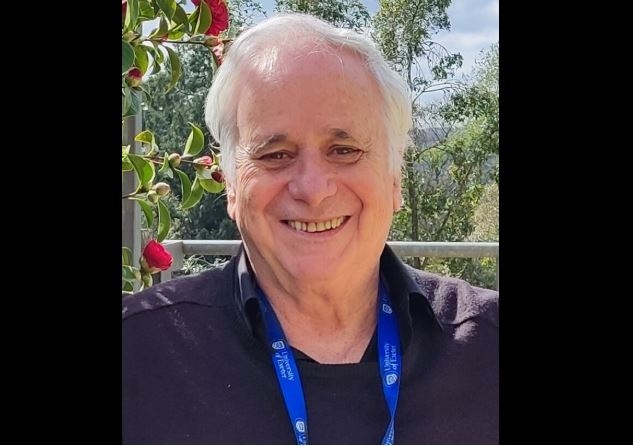
Ilan Pappé is a prominent Israeli historian and professor at the University of Exeter, where he directs the European Centre for Palestine Studies. Known for his critical work on the history of Israel and Palestine, he is the author of influential books such as The Ethnic Cleansing of Palestine and Ten Myths About Israel. Prof. Pappé is widely recognized for his revisionist approach to Israeli historiography and his advocacy for Palestinian rights.
Gulan: As someone who has long framed Zionism as a settler-colonial project, how would you assess Israel’s current military actions in Gaza in relation to the historical patterns of settler violence elsewhere in the world? Are we witnessing a culmination or a turning point?
Professor Ilan Pappé: The main impulse of a settler colonial project is the elimination of the native. Elimination takes different forms: from ethnic cleansing to genocide. The Zionist movement employed mainly ethnic cleansing as the best means of removing the indigenous Palestinian population. The most important attempt was in 1948 when Israel expelled half of Palestine’s population and took over nearly 80% of historical Palestine. But that meant that still half of the Palestinians people remained in Palestine. The problem more acute when Israel occupied the rest of historical Palestine in 1967 and incorporated almost the same number of Palestinians it had expelled in 1948.
The DNA of Zionism and Israel has not changed. All its government believed that Israel needs to stretch over as much of historical Palestine as possible with a few Palestinians in it as possible. The successive Israeli governments until November 2022 asserted that incremental ethnic cleansing, and what can be called incremental genocide in Gaza, was the right strategy to complete the incomplete job of 1948.
The political elite that came to power in November 2022 did not share this approach and look for more drastic actions and the Hamas attack in October 2023 provided it the pretext for implementing such a more radical policy. Radical here meant replacing ethnic cleansing with a full genocidal policy that I am afraid might be extended to the West Bank.
Gulan: In your view, what role has the Oslo Accords played in entrenching the Israeli occupation over the past three decades? Were there missed opportunities — or was it structurally flawed from the start?
Professor Ilan Pappé: The main role was that is financed some of the heavy expenditure that occupation requires. Secondly, it provided an international framework (through the PA, and areas A, B and C) for indirect rule under the guise of a peace process. It is no wonder that after Oslo the Jewish settlements increased, freedom of movement was severely affected and the daily abuses of the people intensified.
Gulan: Given the increasing normalization between Israel and Arab states — even amid widespread outrage over the Gaza war — how do you interpret this political contradiction? What does it reveal about the current Arab order?
Professor Ilan Pappé: Well, it shows the deep gap between some Arab regimes and their people. The economic and strategic wish of countries to be within the pro-American camp is not necessarily shared by the societies themselves, and unless there will be fear among regimes that such policies might risk their legitimacy or even existence, this trend will continue.
Gulan: There’s a growing generational divide among Jews in the diaspora, particularly in the U.S. and UK, regarding support for Israel. How significant is this shift in the broader struggle for Palestinian liberation?
Professor Ilan Pappé: This is very significant. Israel needs the legitimacy Jewish communities abroad provides it. If the number of the young Jews that dissociate themselves form Zionism, and even join the solidarity movement with the Palestinians, will grow, it would increase Israel international isolation and would leave her with fewer allies and with serious cracks in the immunity shield for its policy towards the Palestinians.
Gulan: You've written about the "ethnic cleansing" of 1948. Why do you think that history remains so fiercely resisted or erased in mainstream Western discourse — and what can be done to confront that denialism effectively?
Professor Ilan Pappé: The denial in the West is because of its complicity in the ethnic cleansing of 1948. The politicians and journalists were aware of the crime but decided this was a small injustice that was meant to rectify a bigger injustice. With time they realized that this was a small injustice, and their position encouraged Israel to continue with the ethnic cleansing ever since. At least the academia in many Western countries is now challenging this denialism, but it is prevalent in the political and media discourse. The best way to deal with is to teach and research it properly within the academia and that could include the school textbooks and curricula so that the next generation of politicians and journalists would not continue the denialism.
Gulan: How do you respond to critics who argue that historical analysis such as yours, while morally urgent, does not translate into actionable political strategy for the Palestinian cause today?
Professor Ilan Pappé: History is not a political strategy for the future, but a very clear part of the Palestinian strategy is to challenge the existing historical narratives that play a crucial role in sustain the Western lack of support for the just Palestinian struggle for liberation. So this is part of the solidarity we show, but proving evidence and clear analysis, that change the shield of immunity Israel enjoys in its policies towards the Palestinians.
Gulan: Considering your own trajectory — from Israeli academia to global intellectual activism — how do you view the changing role of historians in shaping policy and public consciousness in times of crisis?
Professor Ilan Pappé: I think this is not linear. It is cyclic. There are period where historians may seem totally irrelevant to the most pressing issues in our time and there are moments in which they seem quite valuable. This particular moment in one in which historians are needed. This because the Israeli propaganda insisted that the Hamas attack on 7 October had no historical context, and when the secretary general of the UN insisted it had, Israel asked that he would be sacked.
Therefore, the historical context historians can provide became an important theme in the struggle against the Israeli propaganda. It is crucial to know this history in order to distinguish between the symptoms of violence (7 October 2023 and the genocide) and the origins of the violence, in order to consider ways out of it in the future.
Gulan: Looking ahead, do you see any credible pathways — diplomatic, popular, or legal — that could break the current cycle of violence and impunity? Or are we entering a prolonged phase of open apartheid with no near exit?
Professor Ilan Pappé: Given the imbalance on the ground, the only way is through regional and international intervention. Very much as there was a need for such an intervention to end the apartheid system in South Africa. You ask rightly will I happen, I do believe it will. The worry that this process form the outside will take time, while the destruction on the ground move faster. So the question is will it be possible to narrow the gap between the two spaces.