“Europe Has No Leverage Over Iran”: Rouzbeh Parsi on Nationalism, Statehood, and the Kurdish Question
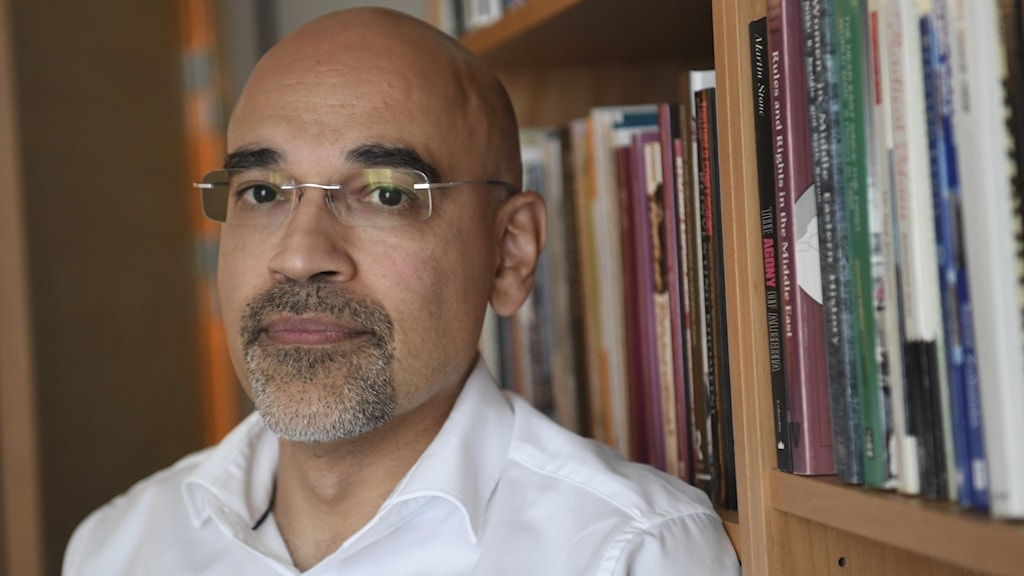
Professor Rouzbeh Parsi is a scholar of Iranian foreign policy, nationalism, and international relations, with extensive experience working with European institutions. In this interview, he reflects on the erosion of Europe’s influence over Iran, the strategic logic driving Tehran’s foreign policy, and the broader questions of Kurdish nationalism, statehood, and minority rights in the Middle East.
Gulan: You have written extensively on Iranian foreign policy and Iran’s relations with Europe. How would you characterize the current state of Iran–Europe relations today, particularly in light of tensions over the nuclear file, regional conflicts, and human rights? Does Europe still have meaningful leverage over Tehran?
Rouzbeh Parsi: Europe has no leverage over Iran as things stand today. The last vestige of influence was the threat of invoking the so-called snapback mechanism, which the E3 did in August 2025. This reintroduced the UN Security Council sanctions that the JCPOA had previously suspended.
The EU’s relationship with Iran is now extremely strained, not only because of the conflict over Tehran’s nuclear enrichment program, but also due to Iran’s support for Russia in its war against Ukraine. This latter issue is of greater and more immediate concern for the European Union.
Gulan: From the perspective of Iranian domestic politics, how do internal power dynamics shape Iran’s approach toward Europe? To what extent is foreign policy driven by ideology versus regime survival?
Parsi: Europe as a point of contention among different factions within the Iranian political elite has become largely irrelevant. Their primary concerns today are the threat posed by Trump and Israel, and their own domestic lack of legitimacy. Europe does not meaningfully factor into either of these challenges.
Gulan: In your academic work, you have engaged deeply with nationalism and modernity. How do you view Kurdish nationalism within the framework of nation-building, given the absence of a Kurdish state?
Parsi: Kurdish nationalism follows the same general pattern as all nationalisms. It is a modern phenomenon that emerges in response to centralization and the construction of imperial or state identities.
As you note, the Kurds have yet to acquire all the trappings of a modern nation-state. This highlights an important issue of sequencing. In most cases, it is the state that ultimately creates the nation through its institutional power. We therefore need to differentiate between nationalism as an ideological framework and the realization of a nation-state as an institutional project.
The Kurds exist today within several different states, each with varying degrees of success. A sense of shared Kurdish identity exists, but it is not tied to a single Kurdish state. As a result, Kurdish society as a whole has not had to fully confront what creating a nation-state of its own would entail. Kurds are no more homogeneous than any other group that has undertaken this path, which is precisely why the distinction between nationalism and nation-state matters.
Gulan: You often emphasize the role of intellectuals in shaping national identity. How successful have Kurdish intellectuals been in transforming Kurdish identity into a modern national identity?
Parsi: While this is a complex issue, nationalism and identity are always formed in relation to others. Identity is shaped both by those one seeks to include within a shared ethos and by those from whom one distinguishes oneself in order to claim uniqueness.
In the Kurdish case, intellectuals may respond either in particularistic ways, such as experiences specific to Kurds in Turkey, or in more universal terms, addressing Kurds as a whole. The latter may make greater ideological sense, but the former is often more sociologically grounded.
Gulan: How do you distinguish between state-sponsored nationalism and Kurdish nationalism as a liberation movement operating under sustained pressure?
Parsi: All nationalisms begin in the phase that Kurdish nationalism currently occupies. The crucial difference is that competing national projects have already achieved institutional form.
This reality produces two possible, and not mutually exclusive, responses. One is the attempt to carve out territory despite immense resistance from existing states. The other is to conceptualize identity as less dependent on statehood or geography, asking how one can be Kurdish without a state. This second path allows for greater internal diversity, since there is no Kurdish state to impose a single definition of Kurdishness.
Gulan: Is the nation-state still the primary mechanism for preserving national identity in today’s international system? Why do stateless nations continue to view statehood as essential?
Parsi: From a legal perspective, the international system is built on states, not peoples or individuals. That said, international humanitarian law and the UN system do recognize that individuals possess rights regardless of state affiliation.
The problem is that states remain the primary institutional structures through which rights are either realized or violated. In that sense, an intense focus on achieving statehood is understandable. However, there is an underlying assumption that needs to be questioned: would a Kurdish state necessarily be less authoritarian?
Such a state would certainly support Kurdish identity more than the states in which Kurds currently live, but one must still ask whether creating a state is the least costly way of securing basic rights and cultural recognition.
Gulan: Does the suppression of national identities pose a greater threat to peace than national independence movements themselves?
Parsi: Suppressing people on the basis of cultural or religious identity is undoubtedly destabilizing and dangerous. Had states such as Iran, Iraq, and Turkey pursued more inclusive nation-building projects, the Kurdish question might not have become such a persistent and destructive issue.
Most Middle Eastern states would be less violent and authoritarian if they acknowledged the heterogeneity of their populations and treated it as a strength. That said, history also shows that granting every group its own state does not automatically lead to stability or peace.
Gulan: Could decentralization or federalism realistically replace full independence for the Kurds?
Parsi: I would like to believe that there are better ways of empowering minorities such as the Kurds within existing states. Full independence would, by definition, involve civil war.
Greater decentralization could serve as a more realistic first confidence-building measure, potentially leading toward federal arrangements if conditions improve.
Gulan: Why do some genocides receive global recognition while others, such as Anfal and Halabja, remain marginalized?
Parsi: This is a very difficult question. The short and rather merciless answer is that contingency and happenstance matter as much as deliberate political decisions.
The Anfal campaign and the chemical bombing of Halabja took place during a war in which many Western countries viewed Iraq as the lesser of two evils. The Iranian Revolution was perceived as the greater threat to regional stability, which significantly shaped political priorities at the time.
Gulan: What long-term impact does genocide have on Kurdish nationalism and relations with central states?
Parsi: It would be surprising if such trauma did not have a lasting effect. At the same time, one of the most difficult tasks after collective trauma is to avoid letting it define every future decision.
The state is inevitable and unavoidable, but it does not have to take the form of an exclusionary nation-state. All states and nations are historically and culturally heterogeneous. This reality needs to be accepted as normal, not treated as an exception.
Gulan: How can the Kurds more effectively internationalize their cause beyond humanitarian sympathy?
Parsi: I am not convinced that the international system or global community is the primary path forward. Ultimately, external actors will not decide the fate of states in the region.
Meaningful progress can only come through negotiation, cooperation, and compromise with the existing state and societal institutions in which Kurds live.