Jordan’s King Abdullah II Meets U.S. Secretary of State Marco Rubio in Washington
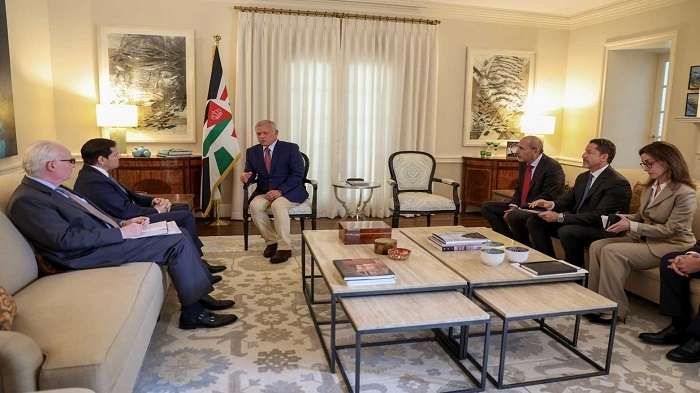
Jordan’s King Abdullah II met with U.S. Secretary of State Marco Rubio in Washington on Monday, marking his second visit to the U.S. capital since Donald Trump began his second presidential term. The discussions focused on bilateral relations, regional stability, and the ongoing crisis in Gaza.
The meeting underscored the long-standing alliance between the U.S. and Jordan, with both sides emphasizing cooperation on counterterrorism, regional security, and economic development. According to a U.S. readout, Rubio expressed appreciation for Jordan’s role in promoting stability in the Middle East.
King Abdullah reiterated the importance of U.S. involvement in the region, calling it "pivotal" for peace efforts. However, the Jordanian leader also pressed for an immediate ceasefire in Gaza and increased humanitarian aid to the besieged enclave. He further warned against unilateral actions in the West Bank and violations at Jerusalem’s holy sites, stressing the need for a two-state solution.
The talks come ahead of President Trump’s scheduled visit to Saudi Arabia, Qatar, and the United Arab Emirates (UAE) next week. Originally planned as his first foreign trip of his second term—mirroring his 2017 visit to Riyadh—the trip was delayed due to Trump’s attendance at the funeral of Pope Francis last week.
The flurry of high-level U.S. engagements with Middle Eastern allies suggests a broader strategy to reinforce partnerships ahead of Trump’s Gulf tour. Recent meetings include:
Saudi Foreign Minister Prince Faisal bin Farhan’s April 9 discussion with Rubio.
U.S. Defense Secretary Pete Hegseth’s call with Egypt’s defense chief on April 8.
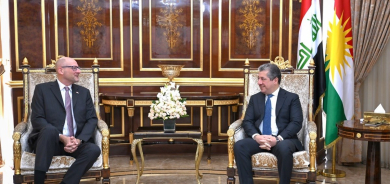
Kurdistan Regional Government (KRG) Prime Minister Masrour Barzani’s April 11 talks with Rubio.
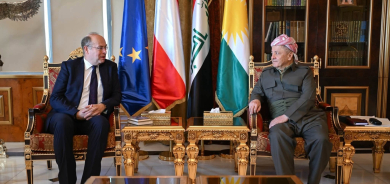
The KRG has emerged as a key U.S. partner in the region, with Prime Minister Barzani maintaining strong ties with Gulf leaders. His February meeting with UAE President Sheikh Mohammed bin Zayed in Dubai and King Abdullah’s recent discussions with KRG President Nechirvan Barzani highlight the growing coordination among U.S.-aligned Middle Eastern states.
As Trump prepares for his Gulf trip, the administration appears to be consolidating alliances to address regional challenges, including Iran’s influence and the Israel-Palestine conflict. Jordan’s firm stance on Gaza and the West Bank signals both cooperation and divergence with U.S. policies, setting the stage for further diplomatic engagements in the coming weeks.