
Ancient Accounting Tablet Reveals 3,500-Year-Old Furniture Order in Turkey
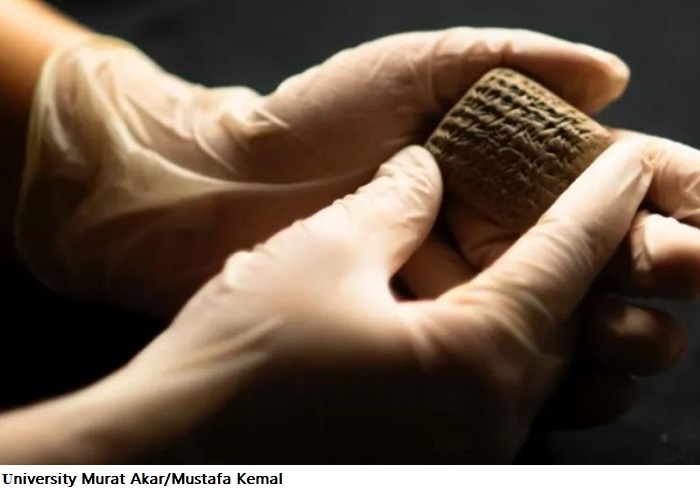
Archaeologists uncover a cuneiform tablet detailing a large-scale furniture transaction in the Bronze Age city of Alalakh.
A tiny clay tablet inscribed with cuneiform script has shed new light on the bustling trade and administrative practices of the ancient city of Alalakh, dating back to the 15th century BCE. Discovered during restoration work at the Tell Atchana archaeological site in southern Turkey, the tablet records an order for more than 200 wooden tables, chairs, and stools—an extraordinary glimpse into Bronze Age commerce.
A Window into Ancient Business
The tablet, measuring just four centimeters square, was found near Alalakh’s city gates by a team led by Murat Akar, an archaeology professor at Mustafa Kemal University. Despite being over 3,500 years old, the artifact is remarkably well-preserved, with only minor surface scratches.
Alalakh, once the capital of the forgotten Kingdom of Mukish, was a thriving trade and administrative hub due to its strategic location near modern-day Antakya. The newly uncovered tablet is believed to be an administrative record, detailing either a work order for furniture production or a receipt for a large delivery.
“We don’t yet know if the furniture was coming or going—whether it’s a request for craftsmen to make these items or proof of a completed transaction,” said Jacob Lauinger, an Assyriology professor at Johns Hopkins University, who is deciphering the tablet.
A Mystery of Scale: Why So Much Furniture?
The sheer quantity of furniture listed—over 200 pieces—has puzzled researchers. One theory is that the tablet represents a single large order rather than accumulated smaller requests.
“Was this for a royal wedding? A religious festival? Or was Alalakh exporting furniture to other regions?” Lauinger speculated. The answer could reshape our understanding of the city’s economic role in the Late Bronze Age.
A Legacy of Discovery
This find follows a long history of excavations at Tell Atchana, which began in the 1930s under British archaeologist Sir Leonard Woolley. Woolley previously uncovered a trove of cuneiform tablets in a fortress near the city gates, suggesting the newly discovered tablet may belong to the same administrative archive.
The excavation site suffered damage in the devastating February 2023 earthquakes that struck southern Turkey and northern Syria, prompting renewed restoration efforts—and this remarkable discovery.
A 28-Gram Key to History
Turkish Minister of Culture and Tourism Mehmet Ersoy hailed the tablet as a crucial artifact for understanding Bronze Age economies. “This 28-gram clay tablet offers a new perspective on the economic and political systems of the past,” he said.
As researchers continue decoding the tablet, the ancient city of Alalakh may soon reveal even more secrets about daily life, trade, and governance millennia ago.