Kurdish Leaders Criticize Baghdad on 37th Anniversary of Halabja Chemical Attack
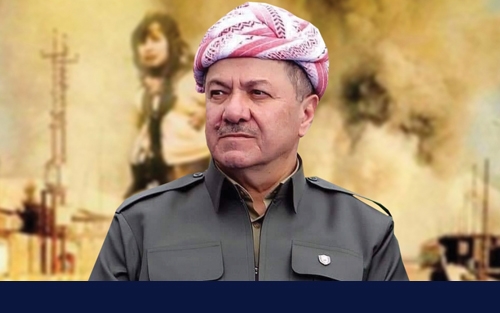
Kurdish leaders have condemned the Iraqi federal government for failing to compensate victims and officially recognize Halabja as a province, as the region marked the 37th anniversary of the deadly chemical attack that killed over 5,000 people.
Masoud Barzani, leader of the Kurdistan Democratic Party (KDP), asserted that the Iraqi state bears full responsibility for the attack and its aftermath. "The wound and pain of the crime of bombing Halabja with chemical weapons will remain forever engraved in the conscience and hearts of all Kurdistanis," he said in a statement. Barzani emphasized that the attack was a crime against humanity and that its effects are still deeply felt today.
زام و ئازاری تاوانی كیمیابارانكردنی هەڵەبجە بۆ هەتایە لە ناخ و دڵی هەموو كوردستانییەكدا دەمێنێتەوە و لەیاد ناکرێت. بەرپرسیارێتیی ئەو تاوانە دژ بە مرۆڤایەتییە و ئەنجام و ئاسەوارەكانی، تا قەرەبووكردنەی کەسوکاری قوربانیان، لەسەر شانی دەوڵەتی عێراقە. لە سی و حەفت ساڵەی کارەساتی…
— Masoud Barzani (@masoud_barzani) March 16, 2025
Nechirvan Barzani, President of the Kurdistan Region, described the attack as part of a broader genocidal campaign against the Kurdish people. "If true justice existed, this tragedy alone would be enough to recognize all the legitimate rights of the Kurdish people," he said. The president urged the Iraqi government to fulfill its "legal and moral responsibilities" toward the victims, including providing compensation and improving services for survivors. He also called on the international community to ensure that such crimes are never repeated.
له يادى پڕ له ئازارى كارهساتى كيميابارانكردنى ههڵهبجهدا، سهرى ڕێز و نهوازش بۆ گیانی زیاتر له پێنج ههزار شههیدی ههڵهبجه دادهنهوێنین و به شكۆوه یادی ههموو شههیدانی كوردستان دهكهینهوه كه لهپێناو ئازادیدا گيانيان بهخت كرد. سڵاو و ڕێز بۆ بنهماڵه و كهسوكاری…
— Nechirvan Barzani (@IKRPresident) March 16, 2025
Kurdistan Region Prime Minister Masrour Barzani criticized the Iraqi federal government for failing to address Halabja’s needs. "It is deeply regrettable that on this painful occasion, the federal government has failed to fulfill its constitutional and legal responsibilities in delivering justice and compensation to the families of the victims and martyrs of Halabja and the Anfal campaign," he stated. The prime minister also criticized the Iraqi Parliament for delaying the finalization of Halabja’s status as a province, urging swift action to formally recognize its sacrifices.
Today, we commemorate the Halabja chemical attack as we honor all of our martyrs. I salute the sacrifice the people of Halabja have endured.
— Masrour Barzani (@masrourbarzani) March 16, 2025
After 37 years, the federal government has not fulfilled its constitutional duty to provide reparations for Halabja and Anfal victims. pic.twitter.com/PXxhIVIoKn
On March 16, 1988, warplanes of Saddam Hussein’s Baath regime dropped chemical bombs on Halabja, a town in the Kurdistan Region near the Iranian border, in one of the deadliest chemical attacks on civilians in history. Over 5,000 people were killed instantly, and thousands more suffered severe injuries, many of whom continue to struggle with chronic illnesses.
While figures such as Ali Hassan al-Majid, known as "Chemical Ali," were executed for their roles in the attack, Kurdish leaders argue that justice remains incomplete. The Halabja chemical attack was part of a larger campaign of repression against the Kurds, including the execution of thousands of Barzanis in 1983 and the Anfal campaign of 1988, in which an estimated 180,000 Kurds were killed.
Commemorative events took place across Halabja on Sunday, with survivors and officials gathering to honor the victims. The Halabja Victims Society and local authorities organized memorials, recognizing both those who perished and those still suffering from the long-term effects of the attack.
Despite its historical significance, Halabja remains in administrative limbo. It was recognized as Iraq’s 19th province in principle in 2014, but the legal procedures required to finalize this status remain incomplete. Kurdish leaders have long accused Baghdad of neglecting the province and failing to provide adequate support for its people.
"The Kurdistan Region, with its constitutional and federal status, is the product of the struggle and sacrifices of the martyrs," Nechirvan Barzani said. "Honoring the victims of Halabja and all Kurdistan’s martyrs requires unity and cooperation to safeguard the rights of the Kurdish people."