Syrian Foreign Minister’s Visit to Iraq Sparks Protests in Basra Amid Rising Tensions
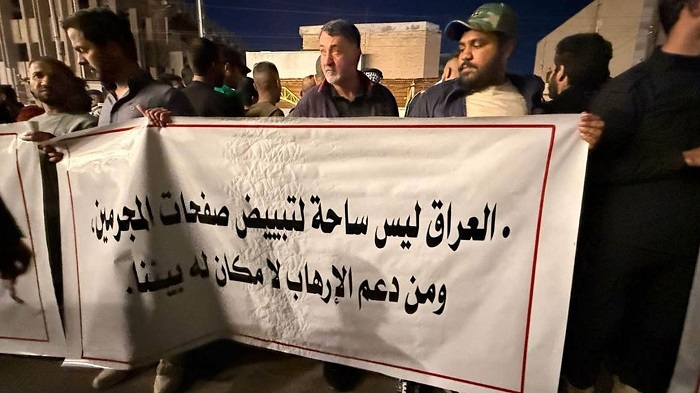
The unannounced visit of Syrian Foreign Minister Asaad al-Shaibani to Iraq on Friday sparked protests in the southern city of Basra, with demonstrators voicing strong opposition to his meetings with Iraqi officials. The visit comes amid heightened tensions in Syria following a surge in sectarian violence and the controversial introduction of a new constitutional declaration, which has deepened divisions within the war-torn country.
Protesters gathered outside the Iraqi Foreign Ministry’s Consular Department office in Basra’s Jazair district, chanting slogans against al-Shaibani’s visit and carrying banners that read, “Iraq cannot become a station for whitewashing the faces of terrorists.” The demonstration reflects widespread concerns among Iraqis over their government’s diplomatic engagement with Syria’s transitional leadership, which many view as illegitimate.
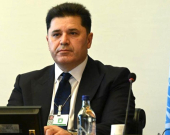
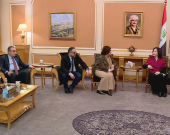
Al-Shaibani arrived in Baghdad earlier in the day for an official visit that had not been publicly disclosed. During his trip, he met with Iraqi Prime Minister Mohammed Shia al-Sudani, Parliament Speaker Mahmoud Mashhadani, and Foreign Minister Fuad Hussein. Following the meetings, al-Shaibani and Hussein held a joint press conference, emphasizing the importance of regional cooperation and strengthening ties between Baghdad and Damascus.
Escalating Violence in Syria
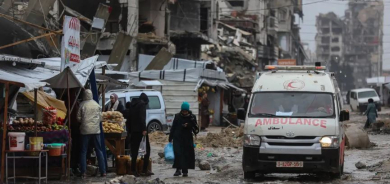
The protests in Basra coincided with reports of escalating violence in Syria’s coastal regions, where the Syrian Observatory for Human Rights (SOHR) documented massacres that claimed at least 1,500 civilian lives, most of whom were from the Alawite minority. According to SOHR, many victims were executed in their homes or agricultural fields, with security forces and allied militias accused of carrying out systematic killings.
“These were not random acts of violence but systematic executions,” said SOHR Director Rami Abdulrahman, who warned that the death toll could rise further as investigations continue.
The violence was initially triggered by the arrest of a wanted individual in an Alawite-majority village in Latakia province, sparking clashes between pro-Assad militias and security forces. In response, Syria’s transitional presidency announced the formation of an investigative committee to examine human rights violations and determine accountability.
The United Nations Security Council condemned the violence, urging Syria’s transitional government to protect all communities regardless of religious or ethnic affiliation. “The widespread atrocities since March 6, particularly the mass killings of civilians in Alawite-majority areas, are deeply alarming and require immediate intervention,” read a UN statement on Friday.
Controversial Constitutional Declaration
Adding to the turmoil, Syria’s newly introduced constitutional declaration has further divided the country. The document, which enshrines Islamic law as the primary source of legislation and upholds a centralized power structure, has been criticized as exclusionary and undemocratic. Protests erupted in regions like Amuda, where demonstrators rejected the declaration, holding banners that read, “Syria is a country of many nationalities, ethnicities, sects, and religions,” and “The Kurdish people in Syria are indigenous to their land.”
The Kurdish National Council in Syria (KNCS) and the Democratic Autonomous Administration of North and East Syria (DAANES) have accused the transitional government of marginalizing minorities. “The declaration ignored Syria’s pluralistic nature and its identity as a multi-ethnic and multi-religious state,” the KNCS stated.
The Druze community has also expressed concerns, with some leaders visiting the Israeli-occupied Golan Heights in a symbolic move reflecting fears over their religious and cultural autonomy in Syria’s new political landscape.
Iraq’s Delicate Balancing Act
Al-Shaibani’s visit to Iraq highlights Baghdad’s complex relationship with its western neighbor. While the Iraqi government seeks to maintain diplomatic engagement with Syria, the protests in Basra underscore significant domestic opposition to any perceived normalization with Damascus.
Iraqi authorities have yet to comment on the protests, but the backlash reveals the political divisions surrounding Iraq’s approach to Syria. As the conflict in Syria continues to unfold, the Iraqi government faces a delicate balancing act—engaging with regional partners while addressing domestic concerns over security, foreign policy, and the broader implications of Syria’s internal turmoil.
The controversy surrounding al-Shaibani’s visit underscores the intricate web of Middle Eastern diplomacy, where shifting alliances, historical grievances, and unresolved conflicts continue to shape international relations. Whether further protests will emerge or the Iraqi government will clarify its stance on Syria’s transitional government remains to be seen, but the visit has already reignited debates over Iraq’s role in the region’s complex political landscape.