US reiterates call on Turkey to honor cease-fire with SDF
“This has been conveyed to Turkey both publicly and privately on numerous occasions,” she stressed.
Ortagus’ statement reinforced the Pentagon’s message on Thursday: “We expect Turkey to adhere to the October 2019 Joint U.S.-Turkish Statement negotiated by Vice President Pence and President Erdogan, in which Turkey committed to ceasing active offensive military operations in northeast Syria.”
Ortagus described the lengths to which the US went to halt Turkey’s military operations then. Until now, it had appeared that the agreement had arisen from the lengthy discussions—five hours—that the US team, led by Vice President Mike Pence, had in Ankara with Turkish President Recep Tayyip Erdogan and his team.
However, as Ortagus explained, the US employed economic pressure as well, and US President Donald Trump spoke directly with Erdogan.
As she stated, “Following the Turkish incursion in October 2019, the United States, under President Trump’s direct leadership, imposed sanctions and conveyed direct Presidential communications and public messaging to drive home both our long standing opposition to any incursion into northeast Syria and, more importantly, encourage a rapid change (emphasis added) in Turkish behavior to end their offensive military operations.”
“These responses led to the statement agreed on October 17 which has kept stable front lines,” Ortagus said.
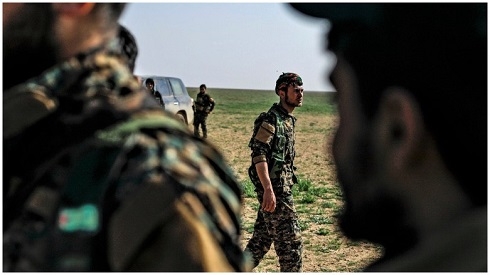
Last Friday and, again, on Wednesday, Erdogan threatened the Kurdish-led Syrian Democratic Forces (SDF.) The SDF has been the main partner in Syria of the US-led Coalition against ISIS. Yet Erdogan, nonetheless, threatened them with another cross-border attack.
Erdogan’s threats were made all the more ominous, because they occurred against a backdrop of intensified shelling by Turkey and its proxy forces.
Yet the US expects “Turkey to live up to its commitments under the October 17 Joint Statement, including to refrain from any further offensive operations in northeast Syria,” Ortagus affirmed.
“Any new offensive would further undermine regional stability and provide malign actors with opportunities to exploit this instability for their own purposes,” she concluded.
Impact of Earthquake in the Aegean Sea?
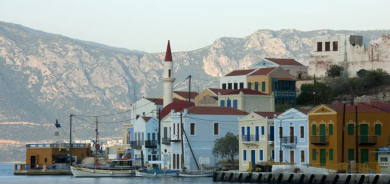
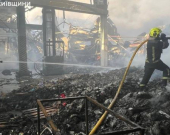
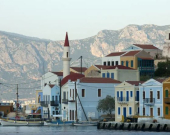
Shortly after noon on Friday, a 7.0 magnitude earthquake struck in the northern Aegean Sea, off the Turkish coast, causing significant damage to the coastal city of Izmir, Turkey’s third-largest city. The earthquake was followed by a mini tsunami, adding flood waters to the initial damage.
Although Greece experienced some damage, Turkey suffered much more: at least 24 people were killed in the country and at least 20 buildings were destroyed in the city of Izmir alone.
Many parties have expressed their sympathy, including the Kurdistan Regional Government, whose Prime Minister, Masrour Barzani, offered “condolences to everyone affected by the devastating earthquake in the Aegean Sea today” and prayers “for a swift recovery of those injured.”
Two states with which Turkey has been at sharp odds recently expressed similar sentiments. The Prime Minister of Greece offered condolences, while the French Interior Minister offered humanitarian assistance in addition to his country’s condolences.
So, too, did Mazloum Abdi, the commander of the SDF, who tweeted in Turkish, “On behalf of our people, we wish God's mercy to those who lost their lives in the Izmir earthquake and speedy healing to those injured.”
Might these developments moderate the posture of wide-ranging belligerence that Erdogan has recently assumed, including against Syria’s Kurds?
Kurdistan 24 posed this question to Dr. Aykan Erdemir. An acute observer of Turkish affairs, Erdemir is a former Turkish parliamentarian and now Senior Director of the Turkey Program at Washington’s Foundation for the Defense of Democracies.
Erdemir suggested there would likely be little change. He noted that after an even bigger earthquake in 1999, Greece offered assistance to Turkey and that led to a “warming of ties.”
The positive message of the Greek Prime Minister that followed Friday’s earthquake was “reminiscent of the 1999 spirit,” Erdemir said. “But it is doubtful whether the latest earthquake will result in Turkey deescalating tensions with Greece or any other neighbor.”
“Erdogan’s current political strategy is built on continuous escalation in foreign and security policy, and he would have no interest in losing momentum,” Erdemir continued. “It would, therefore, be unrealistic to expect any respite from the Erdogan government’s military and proxy campaigns in the Eastern Mediterranean and in the Middle East.”