Iran to stop ‘some’ oil sales amid United Nations nuclear inspectors visit
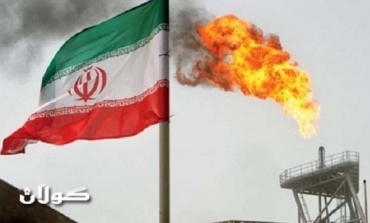
“Soon we will cut exporting oil to some countries,” Rostam Qasemi was quoted by IRNA as saying.
A bill was due to be debated by Iranian lawmakers on Sunday that could have cut off oil supplies to the EU in days. The move would have hit ailing European economies before the EU-wide ban on took effect.
But Iranian MPs postponed discussing the measure.
“No such draft bill has yet been drawn up and nothing has been submitted to the parliament. What exists is a notion by the deputies which is being seriously pursued to bring it to a conclusive end,” Emad Hosseini, spokesman for parliament’s Energy Committee, told Mehr.
Iranian officials say sanctions have had no impact on the country.
“Iranian oil has its own market, even if we cut our exports to Europe,” oil minister Qasemi said.
Another lawmaker, Mohammad Karim Abedi, said the bill would oblige the government to cut Iran’s oil supplies to the European Union for five to 15 years, the semi-official Fars news agency reported.
Earlier on Sunday, officials from the United Nations atomic watchdog began a visit to Iran to discuss Tehran’s suspect nuclear drive.
The three-day International Atomic Energy Agency (IAEA) mission is to address evidence suggesting Iran’s activities include nuclear weapons research.
The visit was seen as a rare opportunity to maybe alleviate a building international showdown over Iran’s nuclear program that has seen a ratcheting up of sanctions and talk of possible Israeli military action.
“In particular we hope that Iran will engage with us on the possible military dimensions of Iran’s nuclear programme,” Herman Nackaerts, the IAEA’s chief inspector leading the delegation, told reporters in Vienna as he left.
“We are looking forward to the start of a dialogue, a dialogue that is overdue since very long.”
Iran’s parliamentary speaker, Ali Larijani, called the visit a “test” for the U.N. agency, according to the website of the official IRIB state broadcaster.
If the IAEA officials were “professional,” then “the path for cooperation will open up,” he said.
“But if they deviate and become a tool (of the West), then the Islamic republic will be forced to reflect and consider a new framework” for cooperation, Larijani added.
Iran, which maintains its programme is exclusively for peaceful purposes, is increasingly furious at Western measures aimed at making it halt uranium enrichment.
It has defiantly stepped up enrichment at a new bomb-proof bunker in Fordo near the Shiite holy city of Qom.
It has also reacted fiercely to new sanctions targeting its oil and finance sectors, notably the European Union’s announcement of a ban on all Iranian oil imports within the next five months.
But Iranian lawmakers on Sunday delayed taking action on a proposed bill to immediately cut oil exports to Europe in retaliation for the EU embargo.
“No bill has been designed nor has it come to the parliament,” energy commission spokesman Emad Hosseini told Mehr news agency, adding that he hoped negotiations on preparing the bill would be finalised before Friday.
German Foreign Minister Guido Westerwelle told Welt am Sonntag newspaper the EU was resolute on preventing Iran “acquiring an atomic weapon.”
“We will find ways in the EU to compensate for delivery stoppages” of oil, he said.
Iran, OPEC’s second-biggest producer, has repeatedly brandished threats to use oil as a weapon if it is backed up against the wall.
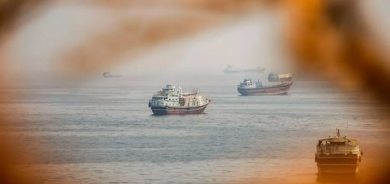
Officials have warned they could even close the Strait of Hormuz, a chokepoint at the entrance to the Gulf, in a move analysts say could send oil prices soaring by 50 percent.
Saudi Arabia has promised to make up for any shortfall should Iranian oil be curbed, but it too depends on the strait.
The United States, which has called any attempt to close the strait a “red line” not to be crossed, is reportedly planning to send a large floating base for commando teams to the Middle East.
It already has two aircraft carrier groups in and near the Gulf, and has broadened arms deals to Saudi Arabia and the United Arab Emirates.
Against that backdrop of threat and counter-threat, attention is focused on what the IAEA talks might yield.
It was not known, however, whether the delegation would visit any of the sites mentioned in a November IAEA report suggesting Iran had worked on developing nuclear weapons.
The official IRNA news agency reported the mission would go to Fordo, but there was no IAEA confirmation.
IAEA chief Yukiya Amano on Friday reiterated the agency had “information that indicates that Iran has engaged in activities relevant to the development of a nuclear explosive device.”
He called on Tehran to show “substantial cooperation.”
Iran has alleged IAEA bias and kept the watchdog at arm’s length, even as it has pledged cooperation.
Iran has signaled a willingness to resume talks with world powers but has yet to reply to a letter sent three months ago by EU foreign policy chief Catherine Ashton offering a return to talks.
That reply would come “soon,” Foreign Minister Ali Akbar Salehi said, IRNA reported on Sunday.
Observers note that while Iran is feeling the impact of Western sanctions, it shows no sign of halting its nuclear activities.
“Sanctions have not eliminated Iran’s capacity or desire to continue developing its nuclear program,” said Dina Esfandiary, analyst with the International Institute for Strategic Studies in London.
(Reuters)