General Ben Hodges to GULAN: The United States Has to Earn the Trust of Its Partners
By Kobin Ferhad
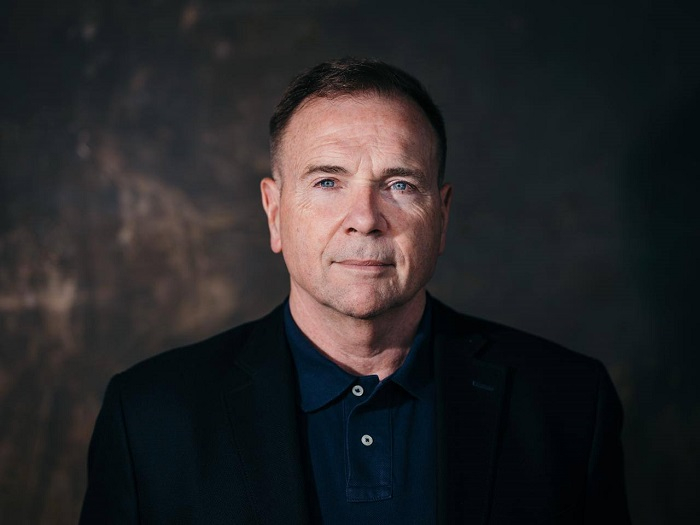
In an exclusive interview with GULAN Weekly Magazine, retired United States Army Lieutenant General Ben Hodges discusses the war between the United States and Iran, the security of Iraq and the Kurdistan Region, the risk of an ISIS resurgence, the logistical strain created by restricted access through the Strait of Hormuz, and the implications for NATO’s southern flank and European security.
Drawing on nearly four decades of military service and senior command experience in Europe, Iraq, Afghanistan and NATO, Hodges argues that military power cannot compensate for unclear political objectives or weakened alliances. He says Washington must define its strategic interests, rebuild trust with its partners, and strengthen the diplomatic, intelligence and logistical foundations of American power.
About General Ben Hodges
Lieutenant General Frederick Ben Hodges, United States Army retired, is a former Commanding General of United States Army Europe and the inaugural Commander of NATO Allied Land Command. Across a 37 year Army career, he completed three combat tours in the Middle East and six overseas assignments, serving in some of the most consequential American and NATO commands of the post Cold War era.
A graduate of the United States Military Academy at West Point, Hodges commanded infantry units at company, battalion and brigade level. During Operation Iraqi Freedom, he commanded the 1st Brigade Combat Team of the 101st Airborne Division. He later served as Chief of Operations for Multi National Corps Iraq and as Director of Operations for Regional Command South in Afghanistan.
As Commanding General of United States Army Europe from 2014 to 2017, Hodges led American land forces on the continent during a major transformation in European security following Russia’s seizure of Crimea. His career has made him a prominent voice on NATO deterrence, military mobility, logistics, alliance strategy and the defence of Europe.
Following his retirement from the United States Army, Hodges has continued to advise and write on transatlantic security. He has served as NATO Senior Mentor for Logistics and is a Distinguished Fellow with GLOBSEC. He is also coauthor, with General John R. Allen and Julian Lindley French, of Future War and the Defence of Europe, published by Oxford University Press.
The Strategic Objective Of The War
GULAN: Nearly six months into the war between the United States and Iran, Washington has widened its economic sanctions while negotiations continue over maritime access through the Strait of Hormuz. What should be the realistic strategic end state for the United States now, and how can Washington avoid becoming trapped in a prolonged war of attrition?
GENERAL BEN HODGES: I think we already are trapped in this long war of attrition, unfortunately. Tomorrow, I think, marks six months since it started, and none of the major objectives has been accomplished. I do not see any obvious way out of this for the United States or the Trump administration other than to start over, basically: go back, clearly identify the objectives, rebuild the relationships with allies that we used to have, and then seek ways to isolate Iran and put pressure on the regime.
But that would require the administration to do things either that it will never do, cannot do, or does not want to do. For example, I have always believed that helping Ukraine defeat Russia was the best way to isolate Iran, because Russia is one of Iran's very few real friends. If Russia is defeated, then it becomes very difficult for Iran. On the other hand, I think China is not going to allow Iran to fail, even economically.
The United States strategy really has to take all these things into account. The war against Iran is not in isolation. It is connected to Russia's war against Ukraine, and it is connected to the competition with China. The administration, I think, either has to recalibrate its strategy, be honest with the American people, and also get support from Congress, or it has to acknowledge that we failed and back out, accept that Iran will retain control of the Strait, perhaps with Oman, and relook our presence in the Middle East.
GULAN: At what point does a prolonged pressure campaign begin to weaken American deterrence rather than strengthen it?
GENERAL BEN HODGES: It already is. The limits of American power have been shown. Even with our excellent Navy and Air Force, special operators, and intelligence capabilities, we have reached the point, and these were the words of Admiral Cooper, where just bombing the hell out of Iran is no longer going to change the behaviour of the regime.
This is not new. We have always known that military power alone cannot accomplish whatever the end state is. This administration tried to do it without allies, except asking for them after the fact. Our inability to protect even our own bases and our friends in the region has demonstrated some limits of our capabilities in this region.
Protecting The Kurdistan Region
GULAN: The Kurdistan Region has endured repeated missile and drone attacks during this conflict, including the attack that targeted the office of the Kurdistan Regional Government's Prime Minister on 17 August. With United States forces reportedly on track to complete their withdrawal from Iraq by 30 September, what immediate air and missile defence, intelligence, and security arrangements are needed to strengthen the protection of the Kurdistan Region after their departure?
GENERAL BEN HODGES: I think it depends on the threat. There is no magic amount of something. It depends on the perception of the threats, or the analysis of the threat, and on the priorities of what has to be protected. Nobody, the United States, Russia, China, nobody can protect everything. The norm is to prioritise what must be protected. What do you want to protect, and where do you take risks?
You also have to have a system of systems. It is not just individual systems, Patriot, for example, or NASAMS. It requires layers, because the threats will be different. You have drones, different types of drones, ballistic missiles, rockets, aircraft, and helicopters, and you need different weapons to deal with the different types of systems.
Then, of course, you have to practise. You have to train this. This is not something you pull out of a box and then it works. It is very challenging, so you have to practise it as well.
GULAN: Considering the recent attacks, should Washington reconsider the timing or conditions of its military withdrawal from Iraq?
GENERAL BEN HODGES: I think the administration really does need to rethink its strategy for the region. That starts with: What are our strategic interests? What do we want it to look like? Why is it important or not important? And, indeed, how much military do you need? How much can you do with economic assistance or influence, diplomatic influence, and by working with other partners in the region?
I think the administration probably is, I saw this earlier this week, looking at reassessing what we have in the region and what is needed, because clearly what is there now has not been able to accomplish one of the main tasks, which was to contain Iran.
Iraq, Armed Groups, And The Lessons Of 2005 And 2006
GULAN: During 2005 and 2006, you served as Director of Operations, or CJ3, for Multi National Corps Iraq. Iraq has now set 30 September as a deadline for disarming nonstate armed groups. What is the most important lesson from your experience in Iraq for bringing weapons under legitimate state authority without creating a security vacuum that ISIS or other armed groups could exploit?
GENERAL BEN HODGES: That is a heck of a question. Thank you. I think part of it is going to be trust. How do you build trust? Why do you have armed groups? It is because either people think they need them to protect themselves or their interests, or they are trying to influence or dominate a particular area. This is where a government has to be able to replace that with trust and a system that protects everybody's interests. It is easier said than done, but that is going to be the key.
Then there has to be some professionalism. I know that in some parts of the world everybody has an AK 47. Everybody has RPGs, et cetera. There have to be disciplined, well trained, well educated, well paid police forces, as well as the military, if you want to be able to assert the authority of the duly elected government.
We invested a lot of time in trying to help establish Iraqi police and an Iraqi military that were appropriate for a democratically elected government. But we never could quite get to the point where they could act without the influence of tribal leadership or religious leadership outside the authority of the state. That is a critical part of it.
GULAN: There is still considerable concern about an ISIS resurgence. Which intelligence, surveillance, or counterterrorism capabilities must remain available after the withdrawal of American forces to make sure that does not happen?
GENERAL BEN HODGES: Human intelligence is almost always the best. In something like this, you need intelligence services that are working with all local authorities, local police, border forces, et cetera, and with the business world, so that you know who is who out there. You also need to be able to understand what ISIS is trying to do, understand its networks, and know where it gets its resources and finances. These are the kinds of things that I think would be important to protecting against a resurgence of ISIS.
The Logistical Lessons Of The Conflict
GULAN: As NATO Senior Mentor for Logistics, what have the past six months revealed about the ability of American and allied forces to sustain operations when passage through the Strait of Hormuz is restricted and regional bases and critical infrastructure are under attack? Which weaknesses require the most urgent attention, whether air and missile defence, ammunition stockpiles, the dispersal of forces, or alternative supply routes?
GENERAL BEN HODGES: Of course, the number one imperative of logistics is anticipation: being able to anticipate what your requirements are going to be and being able to anticipate the unforeseen, so seeing things that nobody thought would happen. The best logistics decisions are able to build in some redundancy and some excess capacity, if you will, because you are always going to lose some of your logistics in war, but you still have to keep going. So you have to build that into the planning and the resourcing.
Secondly, you have to protect your rear. You have to protect your lines of communication. You have to protect the bases from which you draw or receive support. That means protection against missile attacks, rocket and drone attacks, sabotage, and cyberattacks. You cannot just park something out in the desert and assume that the enemy will not be able to hit it, because since the beginning of warfare thousands of years ago, destroying the other side's logistics was always a way to cripple them. That has to be addressed.
But I am going to go back to your earlier point about the importance of a clearly identified strategic objective. You have to identify that first. What is it you are going to try to accomplish? Then you figure out how you are going to do it, and then you get the necessary resources. We saw here that this was not done adequately.
It also reminds us of the importance of having allies and how much the United States depends on allies. We cannot defend America from Texas, North Carolina, or Virginia. You have to be forward deployed, which means you need friends forward and you need logistics forward. The bases we have in Europe, the Middle East, and the Pacific are all important for America's ability to defend its interests and project power. These have to be protected.
GULAN: Which countries or locations could provide the most useful alternatives to the large and increasingly vulnerable military bases in the Gulf?
GENERAL BEN HODGES: I do not know that you have too many choices. Once you leave the Gulf region, they are depending on Diego Garcia or places that are much farther away, or else you have to fly over contested territory. I do not have a good answer here beyond what they have.
If we are going to be serious, if it is so important to the United States that we retain a presence in the Middle East, then that means you have to have a well protected foundation from which to operate, one that can protect against missile, rocket, and drone attacks, cyberattacks, and sabotage, and also one where you are not trapped. The Iranians are talking about how they are going to control the Strait, and then no military ships would be allowed through there. That is a problem for the navies of several countries in the region, plus the United States.
Military Pressure And Civilian Protection
GULAN: The conflict and the accompanying economic pressure have affected shipping, energy supplies, civilian infrastructure, and daily life across the region. How should military planners and policymakers maintain effective pressure on Iran while protecting civilian populations and preserving political support among regional partners?
GENERAL BEN HODGES: I do not know how much intelligence we have inside Iran anymore. I think understanding the dynamics inside Iranian society and the government is essential. I think we thought we knew, but we found out that we really did not.
Obviously, Israel has penetrated Iran significantly, but there is a challenge when you are dealing with Israel because, under the current government, you have to assume that Prime Minister Netanyahu also has strategic objectives that may not necessarily align with those of the United States. Having a better understanding of what the heck is going on in and around Iran would have to be a priority. That is not just through intelligence services, but also through diplomats.
I do not know that, under this administration, we have continued to strengthen our diplomatic relationships with professional diplomats who speak the languages and understand the culture in the region. I do not know that we have invested enough in that regard. They can understand how the economies work in the region and where the money goes.
We need to understand better what China is doing to support Iran and what Russia is doing to support Iran, and figure out how to stop that. If you do not stop that, then it does not matter how many missiles we launch at Iranian targets.
GULAN: What happens to American influence if governments and populations in the region begin to view the conflict as indefinite or excessively costly?
GENERAL BEN HODGES: It is not good, but I go back to what I said earlier: What are our interests? Is it in our interest just to have a presence there or influence? Influence to do what? We have been dealing with the region for many decades in different ways. I am old enough to remember when religious extremists in Iran and the Ayatollah took our embassy back in 1979. Iran has been an enemy of the United States ever since then.
But that does not mean that we cannot eventually get to a different place with the Iranian people, who have suffered under this regime. Obviously, we have tried sanctions for decades. We have tried isolation, and it has not worked. We have to decide what it is we really want to accomplish, what our expectations are, and whether we are willing to do what is necessary to achieve that.
You are right: if this just continues, I think countries and people who live there, Iran's neighbours, can see: Is it to their benefit to come to some sort of agreement with Iran, or do they stick with the United States, especially if they are not sure that the United States is as dependable as we all thought it was? I hope they do stick with the United States, but the United States has to earn that. We cannot take it for granted.
Nato, Turkiye, And The Southern Flank
GULAN: In March, NATO forces intercepted ballistic missiles fired from Iran toward Turkiye, after which the Alliance increased its ballistic missile defence posture. What permanent changes should NATO now make to defend its southern flank, and what specific role should Turkiye play in that strategy?
GENERAL BEN HODGES: All of us have got to increase our capability for ballistic missile defence. The Russians have demonstrated, as has North Korea, that they have this capability and do not care how many civilians they kill. We have to think about what is needed.
I am a believer in the old military adage that it is better to kill the archer rather than just intercept all of his arrows. In other words, if you can destroy or neutralise the place from which ballistic missiles are being launched, or the factory where they are produced, by whatever means, that is better than being really, really good at intercepting some percentage of missiles or drones. You have to look at it in a comprehensive way.
GULAN: What are the most serious remaining gaps in NATO's ability to detect and intercept missiles approaching from the south?
GENERAL BEN HODGES: Everything I just said. There is not enough, and people have not taken it seriously. There are still too many people who cannot believe that somebody would actually launch a missile at a port in Greece, Italy, or Germany. They are still not ready to believe it, because it is expensive. None of this is cheap.
I think it is probably going to take some incidents where bases, seaports, or airports are hit. Here in Germany, people are still talking about this drone in Leipzig that was carrying explosives, and there are still people debating: Do we really know it was Russia? There is an unwillingness to acknowledge what you see happening right in front of you, because if you do, then you have to do something about it. The Russians and others are willing to exploit that naivety.
GULAN: Does uncertainty about NATO's potential response weaken its deterrence?
GENERAL BEN HODGES: Yes. The secret sauce of NATO has always been that the nations were committed to each other. Even though we have always had huge political and economic debates with each other since the beginning of NATO, there was never a question that the United States would be a part of the defence or the response in, say, Germany and other countries.
Now this seems to be in question, whether or not the United States can be depended on. I believe we can, but the fact that there is a perception otherwise is very dangerous, because the Russians may make a terrible miscalculation.
Balancing Europe And The Middle East
GULAN: In Future War and the Defence of Europe, which you coauthored, you examined Europe's ability to respond to an increasingly demanding security environment. With the war in Ukraine continuing and the Middle East conflict placing competing demands on air defence, intelligence, strategic transport, and naval capabilities, how should Washington divide scarce military resources between Europe and the Middle East, and what greater responsibilities must European allies now be prepared to assume?
GENERAL BEN HODGES: This is all about clearly identifying your strategic interests and allocating the resources necessary to protect those interests. It also highlights the importance of having allies, because nobody, including the United States, has enough to do everything alone.
We need allies because we need other capabilities. We need the access that we get. We need the bases. We also need the intelligence. About half of the intelligence the United States government uses comes from allies, not American satellites. This is why it is so important to have relationships with allies and why what the Trump administration is doing now is so dangerous: treating every relationship with a nation as a transaction instead of being part of a network of allies who may disagree with each other, and where some may not do their fair share, but that nonetheless was always to our benefit.
I think this has to be fixed. That is a huge priority in my view. But you also have to have strong, resilient societies that understand what is at stake. They trust their governments, which means governments have to speak to their populations as if they are adults. Society has to buy into overall security, the way they do in Finland, for example, and increasingly in Estonia and some other Eastern European countries.
The third and final thing is that, obviously, you have to be able to feed yourself. You have to have, as much as possible, no dependence on others for your energy. And you have to protect your networks from cyberattacks. These are the kinds of things you need: strong societies that are part of alliances working together.