Professor. Dr. Mark S. Manger to Gulan: The EU’s key lesson is that historical enmities can be overcome
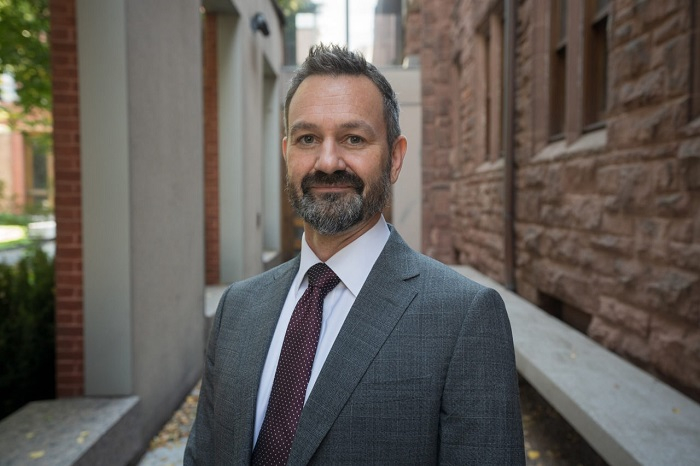
Mark S. Manger is a Professor at the Munk School of Global Affairs & Public Policy specializing in Political Economy. His research interests include the interaction between international capital flows and the domestic political economy. His previous research has mainly focused on the determinants of trade agreement formation, on the political interests that shape such agreements. He uses formal theory, econometrics and machine learning techniques. In an exclusive interview, he answered our questions as follows:
Gulan: A more dispersed and multipolar structure is gradually replacing the liberal international order of the post-Cold War era. What role should middle powers like Japan play in maintaining international cooperation while adjusting to a more competitive geopolitical climate, in your opinion, and how is this shift changing global governance?
Professor. Dr. Mark S. Manger: Traditionally middle powers like Japan have put particular emphasis on multilateral institutions like the United Nations and the WTO. Unfortunately the major powers, that is the United States, China, and Russia and India, have largely withdrawn their support and it has become increasingly more difficult to mount any action through multilateral institutions. The WTO as the institution responsible for maintaining the “rule of law” in international trade relations is almost in a hiatus. That presents serious policy challenges for middle powers. Perhaps the way forward is as Canadian Prime Minister Mark Kearney proposed: a coalition of the willing of middle powers. At the same time far too many of these middle powers find themselves dependent on a country like the US or China, which limits their freedom of action.
Gulan: Despite being the epicenter of the world's economic activity, East Asia does not have the same degree of institutional integration as Europe. What, in your opinion, accounts for this unique regionalism model? Will political integration continue to lag behind economic interdependence, or do you think East Asia will see greater institutional and political collaboration in the ensuing decades?
Professor. Dr. Mark S. Manger: In part this is for historical reasons such as the legacy of World War II. The lesson in Europe was after two devastating wars that Europe itself should never again be the theatre of a world war. This coincided with the threat from the Soviet Union. By contrast World War II in the Pacific was four three naval battles in the United States and most of the ground campaign against Japan took place in China. The specifics of the post-World War II settlement in Japan also for the longest time ruled out a reconciliation with South Korea. I somewhat doubt that we will ever see something similar to the European Union emerging in East Asia but going back to your earlier question, I think it is not impossible that the ASEAN countries, for example, move closer together precisely because of their position as middle powers.
Gulan: The relationship between commerce, investment, and political institutions has been the subject of your research. How do you envision the link between economic efficiency and strategic autonomy changing, especially for Japan and other advanced Asian nations, as geopolitical competitiveness, economic security, and industrial policy increasingly impact global supply chains?
Professor. Dr. Mark S. Manger: Clearly countries will put much more emphasis on strategic autonomy. Japan, for example, has committed significant public funds towards developing a processing infrastructure for so-called rare earths, which are not actually rare in their raw form but are rather difficult to process and often create environmental challenges. China has also openly been using its centrality in the processing of rare earths as a chokehold on the global economy and used it to retaliate against the tariffs of the United States for example.
Gulan: Fundamental distinctions in political culture, institutions, and history are frequently highlighted in comparisons between East Asian regionalism and the European Union. When it comes to tackling modern issues like technology competitiveness, demographic shifts, economic resiliency, and geopolitical ambiguity, what lessons, if any, can each region learn from the other?
Professor. Dr. Mark S. Manger: Perhaps the most important lesson from the European Union is that historical enmities can be overcome at least among democracies. That Japan and South Korea are still not on good terms over their past is a stark contrast to, for example, the relationship between Germany and France or even Germany and the Netherlands. At the same time East Asia charts a very different course when it comes to dealing with its even more severe demographic challenges by, for example, being very selective in its immigration policy. East Asian countries also have traditionally been much more effective in harnessing public funds for industrial policy than the European Union, which has far too often thrown money at what could be called sunset industries.
Gulan: China's quick ascent has drastically changed the balance of power in both the region and the world. When it comes to security, technical rivalry, and the viability of the rules-based international order, how should Japan and other Asian democracies strike a balance with their economic interdependence on China?
Professor. Dr. Mark S. Manger: For all these East Asian and Southeast Asian countries, China is now simultaneously the biggest trade partner and one of the biggest security concerns. Much depends primarily on how China deals with the situation itself. However despite of the impressive rise of the Chinese economy, it should not be forgotten that China itself is highly dependent on natural resource imports, faces massive demographic challenges, at the same time as not creating enough jobs for its young people, which is a true economic policy conundrum.
Gulan: The fragility of international trade and energy lines has been brought to light by recent tensions surrounding the Strait of Hormuz. How do you evaluate the geopolitical and economic ramifications of ongoing instability in the Strait of Hormuz for nations like South Korea, China, and Japan, considering East Asia's reliance on Middle Eastern energy?
Professor. Dr. Mark S. Manger: For these East Asian countries this is a major issue. We need to keep in mind that the United States is actually an oil exporter and only indirectly affected insofar as oil prices globally affect gasoline prices in the United States, but to the extent that the US would even be willing to suspend such a market mechanism, it would not be catastrophic. The situation is very different for South Korea, China, and Japan. They are directly reliant on not only oil coming through the Strait of Hormuz but also on important industrial inputs like helium. Japan finds itself in a particularly challenging situation because it has such high public debt and a very slow-growing economy. An oil shock that leads to an inflation shock in Japan creates enormous difficulties for the Bank of Japan because if it increases interest rates too quickly and too much to deal with the inflation, it risks the solvency of the Japanese government. If the Bank of Japan decides to see this oil shock as a transient thing and let the inflation work its way through the economic system, Japanese people who are already hard done by increases in prices and the falling yen will be even more affected.
Gulan: The combination of geopolitical rivalry, artificial intelligence, climate change, demographic shifts, and economic revolution will probably define the international order over the next 20 years. Which of these factors do you think will have the biggest influence on global governance going forward, and what institutional changes will be required to maintain the efficacy of international cooperation in a world growing more complicated and multipolar?
Professor. Dr. Mark S. Manger: Climate change is much less on the agenda now given that the costs of addressing it have become politically unpopular. But we have done very little to address it. It is going to have the biggest impact in the next few decades. As severe climate events are on the rise, many parts of the world, including the Middle East, will face summer temperatures that border on what human life can support. At the same time countries like Russia and Canada will be beneficiaries because their growing seasons are actually getting longer. We don't know yet whether countries will actually address these challenges through multilateral cooperation or in unilateral fashion. If the latter is going to be the future then I would see countries like China that are capable of quite concerted action as of necessity be more able to address the challenges of climate change than, for example, the United States.