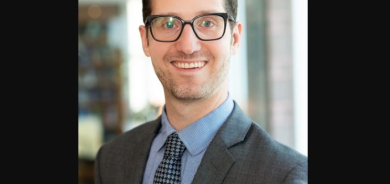
Dr. Stefan Meister to Gulan: We Are Heading Towards a New European Security Order Without the United States
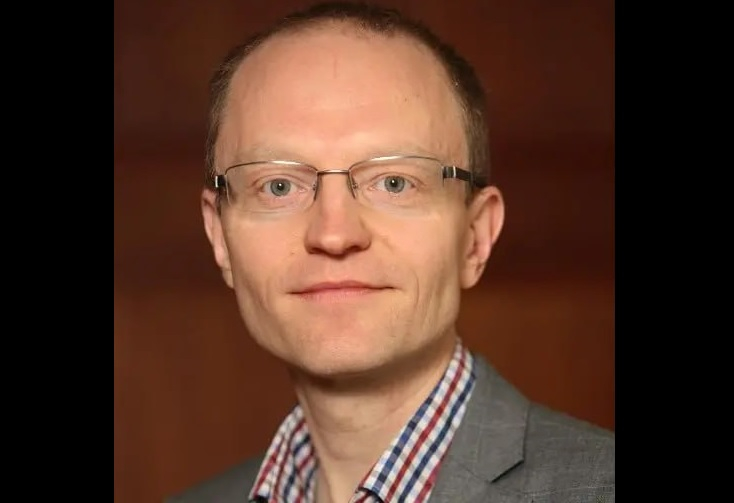
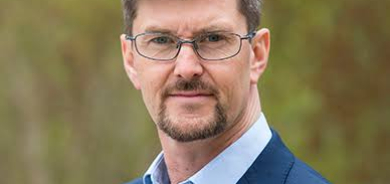
Dr. Stefan Meister is Head of the Robert Bosch Center for Central and Eastern Europe, Russia and Central Asia at the German Council on Foreign Relations (DGAP). He is an expert on Russian domestic and foreign policy, EU–Russia and German–Russian relations, energy policy, and post-Soviet conflicts, particularly in the South Caucasus. He has also worked with the European Council on Foreign Relations and served as an OSCE election observer in post-Soviet countries. His research focuses broadly on Russia, European security, and Germany’s foreign and Russia policy.
Russia, Ukraine, European Security, Germany, and the Changing International Order
Russia's Strategic Position in Ukraine
Gulan: More than four years after the full-scale invasion, Russia has sustained enormous military, economic, and diplomatic costs, yet it continues to pursue its objectives in Ukraine. From your perspective, how should we evaluate Russia's current position? Has the war strengthened Moscow's influence and strategic leverage, or has it exposed deeper weaknesses in Russia's military capacity, economy, and relations with its neighbours?
Dr. Stefan Meister: I think we can see two trends. If we consider the main reason for this war in Ukraine, I would argue that it was an attempt to stop the collapse of the Russian Empire. For Russia, the aim was to preserve its former empire, where from Moscows understanding Ukraine is central. What it has achieved, however, is the opposite: it has accelerated the collapse of the Russian Empire.
Russia is losing influence across the entire former Soviet region, including the South Caucasus, Central Asia, and Eastern Europe. It is also losing influence globally. If we look at Syria, the Middle East or Venezuela, for instance, we see a weakened Russia. In Europe, it is isolated. It has lost a very attractive market for its gas and oil, as well as its main economic partners.
At the same time, we can see how Russia has adapted during this war. It has adjusted to drone warfare with Iran's support, increased its production of military equipment, and expanded its army. Therefore, oOn one hand, Russian military power has revealed its limitations. It is not capable of winning a war against Ukraine, which is a much smaller country. Ukraine certainly receives support from Europe and the United States, but Russia is still unable to take the whole country in any sense. On the other hand, Russia has adapted to modern warfare and is quite capable of waging other wars elsewhere in the world including hybrid warfare. It is therefore a mixed picture.
Gulan: What, then, do you consider the most likely outcome of this war, both from the European standpoint and from the Russian standpoint?
Dr. Stefan Meister: From my analytical point of view, I do not think this war will end anytime soon. There is an interest among the Russian elites in keeping the war going. Russia now has a war economy, with resources being distributed to the security forces and the military, and those actors also have an interest in keeping the war running. I do not think Putin will make any compromises regarding Ukraine. From the Russian perspective, therefore, I see neither the interest nor the ability to end the war.
From a European perspective, there is an interest in ending the war because it is quite costly for us. However, I do not see Europeans investing in Ukraine in a way that would be a game changer and fundamentally alter the war. Europeans are also not capable of doing so because they lack both the military power and the industrial base.
I would therefore expect the war to continue. We may see a lower-intensity conflict war for some time because the current war is too costly, but I do not see it ending in the foreseeable future. The two conflict parties currently lack the will and the interest to end it. Ukraine will not give up territory or make compromises that would satisfy Russia, because it will not bring peace. For that reason, I do not see any momentum for ending the war.
The Future of European Security
Gulan: The war has transformed the security outlook of Europe, particularly for states in Eastern Europe that now see Russia as a direct and long-term threat. NATO has expanded, defence spending has risen, and European governments are reassessing their dependence on the United States. Are we witnessing the emergence of a fundamentally new European security order? What are likely to be its central features once the war in Ukraine eventually ends?
Dr. Stefan Meister: I think we are heading towards a new European security order without the United States, or with a much smaller American role. We will see a more European NATO, in which NATO's European wing will become more decisive, or perhaps entirely decisive, for the alliance and for European security.
Ukraine will play a much bigger role in European security. It now has the second-largest army in Europe and is capable of conducting modern warfare, including drone warfare. I therefore think it will become a major actor in European security.
For me, the main question concerns Russia's role in European security. I do not think there can be peace in Europe without Russia, so at some point we will need to reintegrate a different Russia into Europe. In my opinion, this is a long-term project, and it also requires political change within Russia. That change will come at some point; I am very sure of that, because with the current leadership Russia has no future. Until then, however, European security will be organised largely against Russia, with deterrence, a highly militarised Europe, and policies that increasingly support Russia's own transformation. I do not see the United States remaining a major actor in European security over the medium term.
A Ceasefire or a Lasting Settlement?
Gulan: There are increasing calls for diplomacy, but Ukraine and Russia remain far apart on questions of territory, sovereignty, security guarantees, and the future status of occupied areas. In your view, what would need to happen for negotiations to produce a durable political settlement rather than simply a temporary ceasefire? Is there a real danger that a frozen conflict could leave Europe facing another major war in the future?
Dr. Stefan Meister: This may be the most complex question. We have already discussed extensively, in Europe and among Russia, Ukraine, and the United States, how to end this war. I think the main precondition for a ceasefire is serious security guarantees for Ukraine. Ukraine needs to feel that, even if it gives up some of its territories, it will be protected by third countries that are genuinely willing to defend it and deter another Russian attack.
We have to understand that, for Russia, this is not simply about Eastern Ukraine, Donbas region, or other parts of Ukraine. It is about Russia's role in European security and, more broadly, its global role. This is how Russia views Ukraine, and its objective concerns the whole country. From the Russian perspective, Russia is only an empire with Ukraine, not merely with parts of Ukraine. Russia would therefore have to be compelled to accept control over only parts of the country. In my opinion, that would be very difficult because it runs against Russia's self-understanding as a major power. This is why serious security guarantees are necessary.
At the same time, I do not think Russia is capable of controlling the whole of Ukraine. It is too weak. It does not have enough soldiers or military equipment to control the entire country, and Ukrainian nation-building is fundamentally anti-Russian. Russia would have to control a country in which perhaps 80 to 85more than 90 per cent of society is anti-Russian. I do not think that is possible.
Ukraine therefore needs security guarantees from external actors and needs to be armed in a way, that it can protect itself. I do not see the United States providing those guarantees and equipment, so Europe must be capable of acting as a security guarantor. I would also argue that Turkey could play a bigger role in European security. It has a large army, military industry and will become more important to Black Sea and European securitybeyond in the future. I do not understand why there is not greater engagement with Turkey on these issues, because it is already a major security actor in this region.
I am sceptical that China will play such a role. Europe and its neighbours will therefore have to provide the security guarantees, integrate Ukraine into European security and uphold the stability of the resulting security order. But, as I said earlier, I do not think there can be a solution without eventually reintegrating Russia into European security. We need a long-term vision that includes a different Russia. Russia itself must change, but lasting peace will only be possible through a different relationship with Russia and a different Russia.
Germany's Role After the Zeitenwende
Gulan: Germany's response to the war has marked an important departure from its previous approach towards Russia, energy dependence, and defence policy. Yet Berlin continues to face domestic political divisions and difficult questions about how far it should go in assuming military and strategic responsibility in Europe. How has the war changed Germany's position in the international order? Do you believe Germany is prepared to become a more decisive security actor in Europe?
Dr. Stefan Meister: What we are discussing concerns Germany's post-Second World War identity. After the war, Germany became a pacifist country. It profoundly reconsidered its own history and its role in Europe and the world. The entire German political system, which was largely constructed by the United States after the Second World War, was designed to prevent Germany from becoming a hegemon again. The federal system and the party system work against German dominance in Europe and beyond because the whole system was built in that way.
For the first time since the end of the Cold War, German elites now understand that Russia is the main threat to German and European security. From a German perspective, this is a major change. We are seeing rearmament, although I would not call it remilitarisation because the mindset required for militarisation does not exist. Alongside Poland, Germany is now making one of the largest investments in its army and military in Europe. It will become one of NATO's largest armies and, within the next decade, one of the alliance's major actors, partly because of its geographic location but also because of its economic power..
We also have to understand that support within German society is limited for this policy and that society is divided over this rearmament. Neither the political class nor society as a whole has the will for Germany to play a bigger role in Europe and the world. Germany also has no ambition to become a major global player. It is a middle power, primarily an economic power.
I agree that Germany's rearmament will have a major impact and may change the country as a security actor. But society itself must change. Germany needs a mental and strategic transformation if it is genuinely to lead on security in Europe and beyond. I do not see that at the moment. I do not see either the society or the elites prepared to lead on security issues, conflicts, or other matters beyond Ukraine.
Gulan: Given the reduced role the United States appears to be seeking in Europe, could Germany's national identity change sufficiently for it to become a major power and guarantee European security in place of the United States, or do you consider that unlikely?
Dr. Stefan Meister: I am very sceptical. As I said, Germany lacks a strategic culture and a strategic mindset, particularly on security. There is also no social societal consensus about moving the country in this direction. Its bureaucratic and political systems place strong constraints on leadership and on becoming a military power. This would therefore be a long-term project.
One can imagine a scenario in which Germany becomes more militarised and if more right-wing, nationalist elites come to power, producing such a change. But consider the right-wing party we now have, Alternative for Germany. It is strongly anti-migration, anti-American to some extent, anti-Ukrainian, and very nationalistic, yet its foreign-policy concept is weak and not genuinely developed. Its agenda focuses heavily on anti-Islamism, migration, and an inward-looking policy rather than an outward-looking one.
At present, I do not see elites who would drive a political course aimed at making Germany a major security power in Europe and the world. I therefore do not see that trajectory developing at the moment but cannot excluded in the longer term..
The Future of Russia-West Relations
Gulan: The conflict has created the most serious rupture between Russia and the West since the Cold War, with sanctions, military build-up, and deep mutual distrust now shaping the relationship. Looking beyond the immediate war, is it realistic to expect any meaningful rebuilding of relations between Russia and Europe? What changes would be required on both sides before dialogue could move beyond crisis management?
Dr. Stefan Meister: As I said, I think there is no alternative to reintegrating Russia, although this is a long-term project. Since the war began, I have argued in both the German and European contexts public that we must rethink our Russia policy and develop a long-term approach towards the country that considers how to reintegrate it.
This requires profound regime change within Russia. In a sense, Russia needs to lose the war and lose its empire in order to become a "normal country". In the academic sphere during the 1990s, we debated the idea of Russia as a normal country, meaning a country that is no longer an empire. I think that change has to occur, and it will occurhappen. Every empire has collapsed: the British Empire, the French Empire, the Roman Empire, and the Ottoman Empire. They all collapsed in one way or another. I think this is what is now happening to Russia and the Russian Empire, and the war in Ukraine has accelerated that process.
Over the long term, Europe needs to work towards accelerating and supporting the collapse of the Russian Empire. This would also support regime and societal change within Russia. It is a very difficult and dangerous process that will create many conflicts in Europe and on Russian borders, but I think it has to happen.
In a sense, Russia needs to lose the war in Ukraine, perhaps not in the same way that Germany lost the Second World War. But Germany's defeat was the beginning of its transformation from an empire and an aggressive power to a normal country. I do not mean that Russia must suffer a total defeat, but there must be some form of defeat, perhaps a different kind of defeatwhich shows the limits of Russian military power and its moral bankruptcy. Then there will be an opportunity for renewal and for reconfiguring relations between Ukraine and Russia as well as Europe and Russia.
This is a generational challenge and a generational question. It will not happen within the next 10 or 15 years and may take even longer. My long-term vision, however, is the reintegration of a different Russia into Europe as a normal country.
The Middle East Crisis and Its Wider Geopolitical Consequences
Gulan: The ongoing conflict involving Iran, Israel, and the United States, together with the disruption of shipping through the Strait of Hormuz, has created a new level of uncertainty across the Middle East. How do you assess the broader geopolitical consequences of this crisis? Could it produce a lasting shift in the regional balance of power, relations between the Gulf states and Iran, and the role of European countries in Middle Eastern security?
Dr. Stefan Meister: I should first say that I am not a Middle East expert, so this is not my primary area of focusresearch. I am careful about discussing issues on which I am not an in-depth expert. I can only share my perspective, which comes primarily from my work on Russia and Europe.
What is clear to me is that we saw a partial withdrawal of the United States from the Middle East under President Obama, followed by a reconfiguration of the region that also involved Israel's role. This has changed again under Donald Trump, with a kind of a partly American return to the Middle East. However, I do not think the United States has the same fundamental strategic interest in the region that it once had. Its interest is mainly connected to Asia-Pacific region, China and China's role there. The United States no longer needs the region's resources in the way it did in the past, so I do not see it playing the same role it played 20 years ago.
I think the Gulf states learned from the war involving by Israel and the United States against Iran that they can no longer trust or rely on the United States in the same way. The entire region is transforming towards a new order in which we may see different kinds of transactional alliances.
What Israel has done with the United States will make its present situation very difficult to overcome. Israel is now dominating and reordering the region, but it has lost any kind of credibility there. If this continues, I think we will see an ongoing major conflict involving Israel. Israel has changed the rules of the game in the Middle East, and I expect new alliances among the countries of the region also against this Israeli policy.
The major questions concern where Syria is heading and where Iran is heading. Iran has been weakened, but it has not lost the war. It has also gained a degree of new power and bargaining leverage. I think the principal shift will occur among the Gulf states, which will seek different alliances, as we are now seeing with Turkey and Pakistan. This reconfiguration may further weaken the American US role in the region, and I am fairly sure that it will. It may also increase China's role.
I am less certain about Russia. I do not think Russia can offer the region's countries enough to become a major actor there over the medium or long term, although it can still play some role in supporting some specific groups. But also Russia is very carefully in provoking Israel too much. Another question concerns how powerful Turkey can become. Turkey also faces economic and military limitations and is largely overstretched. I therefore expect a more transactional policy and different forms of alliance within the region.
European countries currently have no ambition to play a major role in the Middle East. Europe has lost considerable trust because of its support for Israel and its absence in relation to Iran and Gaza. If Europe wants to play a role, it must regain that trust, rebuild relationships, and invest in the region. I think European interest in Middle Eastern resources will grow because of the continuing crisis with Russia. Yet Europe remains weak, inward-looking, and focused mainly on Russia and Ukraine. It has limited resources and limited political ambition to play a major role in the Middle East.
Europe needs to redevelop or reconfigure its relations with Turkey. It should also play a larger role on Iran and Gaza. This is in Europe's interest because Europe also pays a price for this war against Teheran and its wider consequences. In the short and medium term, I do not see Europe being genuinely capable of acting as a major player. Over the medium and long term, however, I see no alternative to Europe expanding its role in the region, developing its relationships, and rethinking its relations with Israel. That process has already begun. I therefore expect Europe to become a bigger actor in the region over the medium and long term.
The Kurdistan Region in a Time of Regional Escalation
Gulan: For the Kurdistan Region, these developments carry direct political, security, and economic consequences. Its geographic proximity to Iran, its partnership with Western countries, its relationship with Baghdad, and its dependence on regional energy and trade routes place it in a particularly sensitive position. How would you evaluate the Kurdistan Region's current situation amid this wider escalation? What should Kurdish leaders prioritise to preserve stability, protect the region's interests, and prevent the Kurdistan Region from becoming drawn into a conflict between much larger powers?
Dr. Stefan Meister: Here, too, we can see a huge loss of trust between the Kurdish regions and the United States, and to some extent Europe. Yet this region and its people are, in a sense, natural partners of Europe in terms of resources, people, religions, and interests. Because Europe is absent as a major security and geopolitical power, however, there is also an absence of policy towards these regions and their people.
The same applies to Syria and Iraq. Iraq is crucial to this entire reconfigurationreordering, and I think the Kurdish people will play a major role in that process. Many years ago, there were plans to improve energy and resource cooperation with the region, but these plans were not sufficiently developed. I see a great deal of potential, but I do not currently see European politicians or European policy developing the relationship with this region more strategically.
Nevertheless, there is a logic to Europe becoming a player in its wider neighbourhood over the medium term. This area is part of the wider European neighbourhood, including the Kurdish areas in Turkey and Syria and the Kurdistan Region in Iraq. In any reconfiguration of Europe's policy towards Turkey, this region also needs to be included.
At the moment, I am somewhat sceptical because Europe lacks the vision, ability, and will to do this. Over the medium and long term, however, I think there must be a change. There is a natural basis for cooperation and for bringing these regions closer to Europe, including through the people from these communities who already live in Europe. They form a significant minority in several European countries, especially Germany.
There is a human dimension that should not be underestimated. At present, it is not being used and is often viewed as a problem rather than an asset. In my opinion, that has to change. There is enormous potential. It will take time, but there is a strategic logic, based on resources and human connections, for developing these relationships.
By Kobin Ferhad