Professor Pål Kolstø to Gulan: The Major Task in the World Today Is to Make States Democratic, Not Ethnically or Nationally Homogeneous
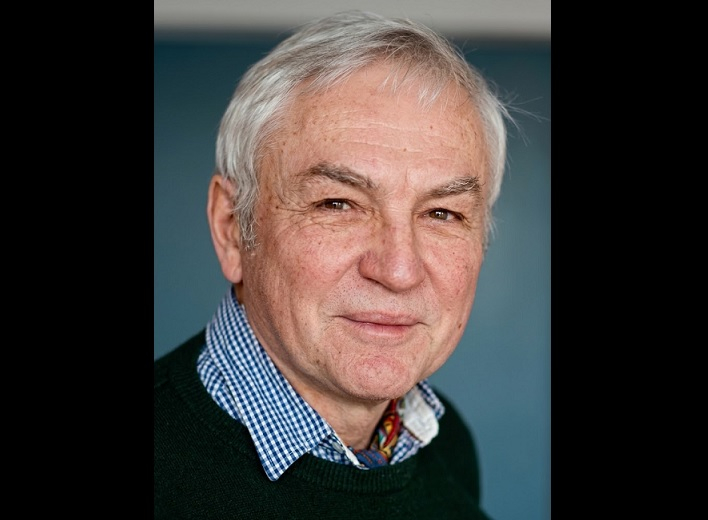
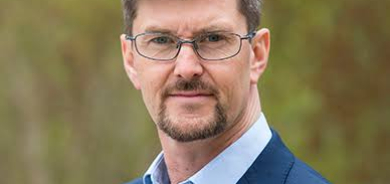
Professor Pål Kolstø: Pål Kolstø is Professor Emeritus of Russian and Post-Soviet Studies at the University of Oslo and holds the degree of Dr. Philos. He is a distinguished scholar of nationalism, nation-building, ethnic relations, political identity and religion, with particular expertise in Russia, the former Soviet republics and the Western Balkans. His research has examined how states, political leaders, religious institutions and ethnic movements construct collective identities and mobilise nationalism, including in contested and de facto states. Over more than three decades, Professor Kolstø has authored and edited numerous influential works, including Political Construction Sites: Nation-Building in Russia and the Post-Soviet States, The New Russian Nationalism, Russia Before and After Crimea, Strategic Uses of Nationalism and Ethnic Conflict, and Heretical Orthodoxy: Lev Tolstoi and the Russian Orthodox Church. His recent publications include Family, Sex, and Faith: The Biopolitics of the Russian Orthodox Church and the co-edited volume Political Legitimacy and Traditional Values in Putin’s Russia, both published in 2025.
Kurdish Nationalism and the Challenges of Nation-Building for a Stateless Nation
The Importance of Nationalism for a Stateless Nation
GULAN: As a scholar who has conducted extensive research on theories of nationalism, how do you view Kurdish nationalism in the context of the Kurds as a stateless nation in the Middle East? Are the definition and function of nationalism different for stateless peoples compared with nations that possess their own states?
PROFESSOR PÅL KOLSTØ: Let me start by saying that I am not an expert on Kurdish nationalism, or of Kurds in general. However, I do believe that Kurdish nationalism is indeed in some respect a unique case: it is as far as I understand the largest group of people that identify as a “nation” in which (a large part of the population) aspire for having their own state, without having achieved it.
Nationalism can be and has been defined in very different ways. But whichever definition you choose, it ought to be formulated in such a way such as nationalism is defined uniformly across all cases. In other words, in order to be a good definition it ought to cover both stateless nations and nations with their ‘own’ state. That being said, nationalism will of course affect life among the people who belong to that nation very differently in various situations.
GULAN: In light of your research on de facto states, to what extent do you believe that preserving nationalist sentiment is necessary for maintaining Kurdish national identity in the absence of an independent state?
PROFESSOR PÅL KOLSTØ: “National identity” and “nationalist sentiment” are just two different ways of expressing the same phenomenon. National identity is not a thing which exists “out there” but it is in the perception/the minds/the feelings of people.
In the absence of separate statehood, national identity may be nourished by many of the same factors as in titular nations in nation states, such as common language, common mores, common religion atcetera. In the Kurdish case, as far as I understand, you speak several languages that are rather different from each other, and also, you would not exclude anybody from membership in the nation for not being a Muslim. So in your case, as in so many other historical cases, I believe -- following Ernest Renan -- the most important factor sustaining common nationhood is historical memories, in particular memories of wrongs committed against the nation by others. In other words, common victimhood. Of course, victimhood is also a sentiment based on stories people tell about themselves which may be more or less based on facts. Even peoples whose members have committed more atrocities against others than others have committed against them, can nourish a self-understanding as victims. (Since Russia is my field of expertise I might point to Russians as one such group). But of course, it helps if these stories are based on actual history. In the Kurdish case there is an abundance of such cases. Halabja is only the best-known example.
GULAN: Nationalism can serve as a force for unity, but it can also create or deepen internal divisions. In the Kurdish context, how can nationalism be directed toward strengthening unity rather than contributing to further fragmentation?
PROFESSOR PÅL KOLSTØ: As the British nationalism-expert John Hutchinson has emphasized in his book Nations as zones of conflict, all nations have strong internal divisions and disagreements among themselves, but in his view, such disagreements, and even strong conflicts, are not necessarily destructive. They can also be a force for good if they are handled well. Hutchinson points to the French case where they have a strong Catholic as well as a strong republican/Jacobean traditions which even can relate to the same symbols, such as Jean d’Arc.
In the case of Iraqi Kurds, I understand that there have been serious feuds between the Talabani clan and the Barzani clan (both of which also dominate in one particular region). I have been told that they have even been on the brink of civil war. So I guess my suggestions to try and answer your question is to institute democratic procedures which can make it possible to if not to solve, then at least to mitigate tensions in society without having recourse to violence, and to channel resources in society into building a prosperous society where wealth is distributed among as many as possible. As the English say, “When poverty comes in at the door, love flies out the window.”
The Division of the Kurds Across Four States and Their Experience of Oppression
GULAN: The Kurds are divided across four different nation-states dominated by Turkish, Arab, and Persian national identities. They have historically faced, and continue to face, repression and restrictions on their language. Drawing on the post-Soviet and Balkan experiences, how does this form of territorial division and cultural erasure shape Kurdish nationalist discourse?
PROFESSOR PÅL KOLSTØ: I do not know enough about this to give an informed answer. But I can say that when I in the 1990s did research on the Russian communities outside Russia within the former Soviet Union I was struck but the lack of knowledge, even among the leaders of the local Russian diaspora communities, about the situation of the ethnic brethren in the other post-Soviet states, including for instance Russians in Latvia and Estonia, who one would suppose faced many of the same challenges and problems and could benefit from collaboration.
GULAN: You have studied the relationship between patron states and local political dynamics. In a situation where the Kurds are surrounded by states that have acted with hostility toward them and restricted their language and culture, how can they protect themselves politically without sacrificing their national identity?
PROFESSOR PÅL KOLSTØ: I'm not quite sure what you mean when you write about “patron states” in a Kurdish context. Do you mean the United States for instance? Again, without being an expert on the Middle East I have been left with the impression that outside powers rather cynically have exploited the Kurdish desire for separate statehood to let them fight their wars for them: against the Ottomans in the First World War, against Saddam Hussain, and then against IS. If the United States and or other western states are supposed to be “the patron states” of the Kurds, then we can conclude that patron states have a sad tendency to set their own interests before client interests (not that this should surprise us).
GULAN: Restrictions on language and policies of forced assimilation by dominant states frequently provoke strong reactions from oppressed peoples. From the perspective of the history of ideas, to what extent have sustained pressures on Kurdish language and culture pushed the Kurdish movement toward more radical or more resilient forms of political mobilisation?
PROFESSOR PÅL KOLSTØ: I agree with you that radical mobilization is not the same as resilient mobilization, in many situations radical mobilization will be counterproductive. Many researchers believe they can detect a curvilinear pattern: if a minority lives in a democratic state with little pressure on them to assimilate then mobilization is low, but also if suppression in the state is very harsh, mobilization is very difficult. The highest level of mobilization will be in semi-authoritarian states where rights are denied but resistance is still possible.
In the contemporary world, language is indeed one of the most important markers of ethnic identity, and when a group is denied the possibility to use their own language that in many situations engender strong pushback. But linguistic assimilation is indeed a possibility at both ends of this spectrum (voluntary assimilation in democratic states and forced assimilation in authoritarian states). In his book Identity in Formation David Laitin has many interesting reflections on these dynamics. I would like to stress, however, normatively speaking, that voluntary assimilation is not only an option but in many situations both natural and legitimate (To use Ernest Gellner’s metaphor: Ruritanians become Megalomanians) in order to succeed in society. And other members of the linguistic community should not try to hinder assimilation of their co-ethnics into mainstream culture in the country in which they are living.
Achieving Success in the Nation-Building Process
GULAN: You have conducted important research on symbolic nation-building in the Balkans. How can Kurds in the Kurdistan Region and other parts of Kurdistan use national symbols, language, and a shared understanding of history to strengthen the nation-building process?
PROFESSOR PÅL KOLSTØ: The focus on my research was on nation-building in nation-states: how one can include minorities and make them feel that they belong to the (state-defined) nation. You are asking about something else: how to develop a common identity within an ethnic group which does not have a state of its own and is divided among several other states. So the parallel question would be: how can the state leaders in the four states where the Kurds are living design symbols that include the Kurds and other non-titulars into the state?
As far as I understand, the white part of the Pakistani flag is intended to symbolize the non-Muslims in an almost compactly Muslim state. This I very much sympathize with but this also shows the limits of symbolism: this gesture certainly has not given non-Muslims in Pakistan the protection they ought to have, neither physical protection nor protection of their identity.
The most important thing state leaders can do to achieve the inclusion of minorities in the state nation would be not on the symbolic level but on the level of rights.
GULAN: One of the greatest challenges facing de facto states and autonomous regions concerns legitimacy and institution-building. How decisive are democratic institutions and good governance for the success of Kurdish nation-building?
PROFESSOR PÅL KOLSTØ: I assume that you are referring to the Kurdish-controlled territory in northern Iraq as a de facto state. For a long time I hesitated to call it that because I operated with a very narrow, formalistic definition of a de facto state: they had to have proclaimed independence under international law. Now I have changed my mind and I think a strong and determined drive for full political independence can be expressed also in other ways, such as the Iraqi Kurds have done.
In September 2017 Kurdistan organized a referendum on independence which was supported by an overwhelming majority of the population (more than 90%), but under intense pressure from the parent state Iraq and international pressure they backed down from declaring independence. The will of the Kurdistan population is therefore unmistakable. The current situation – being a constitutionally recognised federal region with its own parliament, government, and security institutions -- may well be the optimal outcome -- not only for Kurdistan but for all of most de facto states -- provided that the constitutional rights are respected by the parent state.
With regard to how democratic institutions and good governance in de facto states can affect the chances of achieving their goal of an independent, internationally recognized nation-state, most of scholarly discussions have concerned Kosovo. In particular, Nina Caspersen has written interesting stuff about that. After the 1999 Kosovo war, when this Yugoslav region achieved de facto independence from Serbia, Western leaders declared that the Kosovo protostate would be granted diplomatic recognition when they had reached a certain standard of good governance and democracy. That encouraged state builders in other de facto states, also in the former Soviet Union, to strengthen their efforts for building democratic institutions and good governance. However, when Kosovo was nevertheless diplomatically recognized by most western states without having reached the target benchmarks for democratic institutions and good governance, other de facto state leaders became less interested in pursuing these goals. Unfortunately. So the short answer to your question, I believe, would be that in today's world democratic institutions and good governance are not decisive for the success of nation-building. But still, many de facto states are indeed more democratic than the parent state which they have unilaterally seceded from (Somaliland versus Somalia, Nagorno Karabakh versus Azerbaijan, Taiwan versus People's Republic of China.)
GULAN: Your recent research has examined the interaction between religion and national identity, including in Russia. In a region such as the Middle East, where religion can become a source of division, how can Kurdish nation-building promote coexistence among its religiously and denominationally diverse communities?
PROFESSOR PÅL KOLSTØ: By instituting full religious freedom. But what is the best model for religious freedom in a country? This is a moot question and I am not prepared to give an answer on that.
GULAN: As a final question, considering recent global geopolitical transformations, particularly following the war in Ukraine and changes in the international balance of power, what do you consider the greatest opportunity and the greatest challenge currently facing the Kurdish nation-building project?
PROFESSOR PÅL KOLSTØ: Your question can be interpreted in many different ways. If you mean building a common Kurdish, internationally recognized nation state comprising all Kurds in the four states they live now, I don't think that's going to happen in my lifetime. If you mean to develop the Kurdish autonomous region in northern Iraq into an internationally recognized national state, the chances may be somewhat better but still extremely slim. Finally, if you mean building a cultural Kurdish nation without a state, by encouraging and strengthening identity links between the four parts of the Kurdish ethnic group, that is obviously a more realistic option but still probably an uphill struggle due to the strong resistance of the state authorities in the four states against this. As a non-expert I thought I had detected a paradox: of the four states in question the putatively most democratic of them, Turkey, was the only one which denies the existence of an Kurdish ethnicity (calling them “mountain Turks”). But here I am shaky ground and this is not something I know much about. And after I wrote these lines, I found out that Freedom House gives Iraq a better score on its democracy index than Turkey, probably for a good reason.
To end on a personal, normative note (and to answer a question you have not posed): I believe the Kurds should be entitled to have their own nation-state primarily because you were promised that after World War One, and promises ought to be kept. But since 100 years of struggle show that it's not going to happen it is probably better to settle for the next best, which is territorial-cultural autonomy within the four states. The narrow gate of achieving national statehood is for all practical purposes closed. The major task in the world today is to make states democratic not ethnically or nationally homogeneous.
By Kobin Ferhad