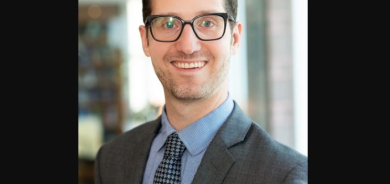
Professor Dr. Miles Kahler to Gulan: Stable multipolarity based on conventional spheres of influence is unlikely
The institutions and regulations that have supported global governance for decades are facing significant difficulties at a time when geopolitical rivalry, economic fragmentation, technological competition, and escalating strategic tensions are altering international relations. The emergence of new powers, the expanding power of non-state actors, economic coercion, sanctions, protectionism, and rivalry for vital resources and technology are all putting the post-Cold War liberal international order to the test. The limitations of governance based only on national institutions are also being shown by international challenges, such as pandemics, climate change, artificial intelligence, and cyber threats.
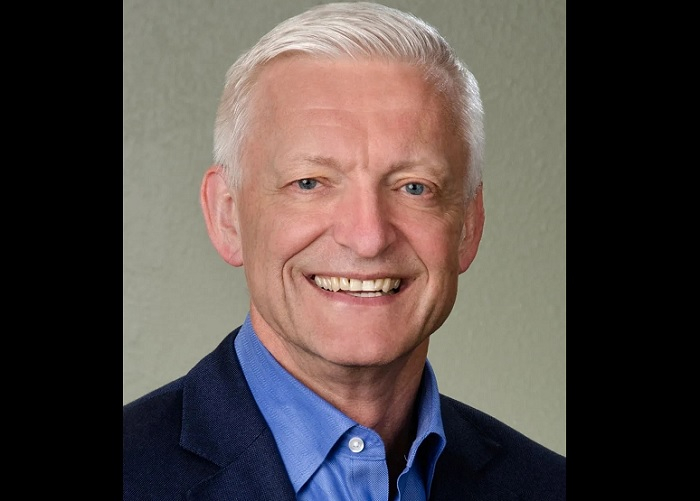
Miles Kahler, Distinguished Professor Emeritus at the American University’s School of International Service and a Nonresident Scholar at the Carnegie Endowment for International Peace, is a renowned expert on international politics and international political economy. In this interview, he discusses these changes and their consequences for the direction of global governance. His research on new actors, transnational networks, institutional change, and harmful foreign influence provides an essential foundation for comprehending the redistribution of power among governments, markets, international organizations, and global networks.
Kahler talks on how new players are changing global governance, whether the rules-based international order is crumbling or changing into a more decentralized structure, and what changes are required in organizations like the IMF, World Bank, and G20. He also takes into account the ability of current institutions to react to interrelated global crises, as well as the future of the international financial system in the face of economic coercion, protectionism, and sanctions. The discussion delves deeper into the relationship between geopolitical conflict, energy security, global markets, and international economic governance in light of the ongoing instability in the Gulf and the strategic significance of the Strait of Hormuz. Lastly, Kahler considers whether stable multipolarity, fragmented regionalism, or protracted great-power rivalry are likely to emerge in the upcoming decades. He also considers the role that international political economy can play in maintaining global wealth and collaboration.
Gulan: Geopolitical rivalry, economic fragmentation, and technological competition are putting growing pressure on the liberal international order that emerged after the Cold War. Is the rules-based international order itself gradually eroding, or is global governance evolving into a more decentralized and networked system?
Professor Dr. Miles Kahler: The challenges posed to the existing international order by the major powers (U.S., China, Russia) have attracted the most attention, particularly U.S. disengagement and hostility under the second Trump administration. Most concerning are threats to fundamental pillars of the post-1945 order, such as territorial integrity (Russia's invasion of Ukraine, Trump's threats to Greenland and Panama). Despite these serious threats, governments in much of the rest of the world continue to support the existing order and act according to its prevailing rules and norms. Networks of nonstate actors (NGOs, private corporations and others) provide additional support.
Gulan: The rise of new actors and networks in global governance has been the subject of your research. How is the conventional power of the nation-state being reinterpreted, and what does this mean for democratic accountability, as multinational firms, internet platforms, sovereign wealth funds, and transnational civil society gain more clout?
Professor Dr. Miles Kahler: New actors may signify an increase in accountability and inclusion in global governance: for example, civil society organizations that monitor international institutions, multinational corporations (MNCs), and their own national governments. However, the influence of some actors, such as MNCs and sovereign wealth funds, may reduce transparency in policymaking and exclude other stakeholders from global governance. Even international NGOs may over-represent the countries of North America and Europe, where their governing bodies and major contributors are located.
Gulan: Although many contend that organizations like the IMF, World Bank, and G20 have not adequately adjusted to this change in power, emerging economies have emerged as crucial players in global economic governance. Which institutional changes are most urgently required to improve the effectiveness and representation of global economic governance?
Professor Dr. Miles Kahler: Changes in the weighted voting systems of the IMF and the World Bank have received attention, since they are slow to reflect the rise of new economic powers. Although those changes in "chairs and shares" are important, they are unlikely to enhance the influence of countries, such as those in Africa, which reflect a growing global population share rather than economic weight. In the G20, Africa was represented by one country, South Africa, until the African Union joined in 2023. Changes that provide more equitable representation can enhance the legitimacy and effectiveness of international institutions, but effectiveness also depends on other factors, such as decision rules. For example, consensus decision-making in the WTO has hindered its effectiveness.
Gulan: Growing protectionism, economic coercion, sanctions, and conflicting currency policies put unprecedented strain on international monetary and financial cooperation. How stable is the current international financial structure, and might these developments hasten the formation of a more disjointed global monetary system?
Professor Dr. Miles Kahler: In the view of most experts, the US dollar will remain at the center of the international monetary order, since it currently has no realistic competitors. US capital markets and dollar-based securities remain liquid and attractive assets for central banks and private firms. The over-use of economic sanctions by the U.S. has led to efforts to develop alternative payments systems, but, so far, those have not taken off internationally. Whether current levels of international cooperation among the major economic powers could deal with a future financial crisis on the scale of 2008-09, is uncertain, however.
Gulan: You have written a great deal about institutional change and complex governance. Do current international institutions have the potential to effectively respond to crises that transcend national borders, such as pandemics, climate change, artificial intelligence, and cyber dangers, or do we need radically new models of global governance?
Professor Dr. Miles Kahler: Despite growing rivalry, I have argued that the major powers--US, China, Russia, EU--can still cooperate to avoid the worst international outcomes, such as nuclear war. I am less certain that they can collaborate in response to future crises that are less familiar and more uncertain. The global response to the COVID-19 pandemic and the lengthy negotiations over the WHO Pandemic Agreement were undermined by failure on the part of China and the US to cooperate. The current US administration has withdrawn from the WHO and is unlikely to accept any international restraints on the development of artificial intelligence. The rapid development of AI makes it difficult for governments to assess risks and calculate national advantage. In these new domains, I am not optimistic that international cooperation would sustain an effective institutional response.
Gulan: The Strait of Hormuz is still one of the most strategically significant maritime chokepoints in the world, and ongoing hostilities raise questions about financial stability, global supply lines, and energy security. How might protracted Gulf instability affect global economic governance from the standpoint of international political economy, especially for East Asian emerging economies that rely heavily on energy? Do you think the current international institutions are capable of handling such intertwined geopolitical and economic shocks?
Professor Dr. Miles Kahler: International and regional institutions have been absent from the current crisis in the Middle East, as they have been in the past. The region has very few institutions of its own, and those that exist, such as the Gulf Cooperation Council, have been undermined by conflict among its members. Even the BRICS group, recently expanded to include Iran and the UAE, was unable to develop a common position on the current war. If the states of the region are unable to forge a minimal degree of cooperation on such a basic question as passage through the Strait of Hormuz, institutions from outside the region, backed by the major powers, are unlikely to have much impact. So far, the US has demonstrated its inability to impose a solution; China does not seem interested in the role of peacemaker.
Gulan: Do you think the international order will shift toward stable multipolarity, fragmented regionalism, or protracted strategic struggle among great powers over the next 20 years? What part can international political economy play in keeping global collaboration and prosperity from being undermined by geopolitical rivalry?
Professor Dr. Miles Kahler: Stable multipolarity based on conventional spheres of influence is unlikely. Unless domestic politics in the US and China change, continued rivalry and limited cooperation among the major powers are likely to persist. "Continued global cooperation and prosperity" will depend on maintaining economic openness–with more attention to equitable provision of prosperity–and on cooperation among regional and plurilateral groups of countries. To avoid fragmentation and conflict, however, those islands of cooperation must be shaped by global rules and norms.