Paul Triolo to Gulan: The Only Two That Really Matter at the Cutting Edge Are Access to Compute and Smart Personnel/Talent
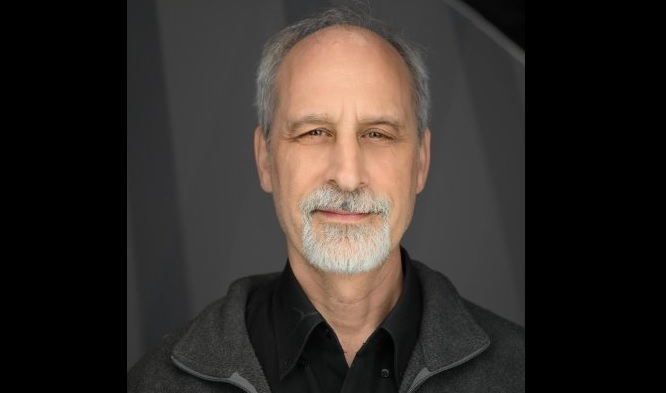
Paul Triolo is a Partner and Technology Policy Lead at DGA-Albright Stonebridge Group in Washington, D.C. A leading expert on global technology policy, he advises major companies on artificial intelligence, semiconductors, export controls, and China’s technology sector. He previously led Eurasia Group’s Geo-Technology practice and spent more than 25 years in senior U.S. government positions analyzing China’s emergence as a technological power.
Gulan: Much of the public conversation around artificial intelligence focuses on foundation models like ChatGPT or DeepSeek. However, your work has consistently emphasized that AI leadership depends just as much on the underlying infrastructure—from advanced semiconductors and cloud computing to the massive data centers that power these systems. As countries race to expand their AI capabilities, are data centers becoming the new strategic assets of the AI era, much like oil or semiconductor manufacturing have been in previous decades?
Paul Triolo: Data centers specifically designed to support AI inference at scale and advanced training are critical assets for countries as companies expand the use of AI across enterprises in particular. However, with high speed fiber optic cables linking data centers around the world, for example in the Middle East, to markets where AI applications will be deployed, it will also be possible for companies to access AI inference in other places, depending on the workload and the requirements for things like latency. AI data centers are being used continuously and the AI hardware requires significantly more power and stable power, meaning that countries with reliable cheap power sources will be able to build more data centers that companies can run competitively.
Gulan: The United States has tightened export controls on advanced AI chips, particularly those produced by companies like NVIDIA, with the goal of slowing China's AI progress. Yet China has continued to develop increasingly competitive AI models while investing heavily in domestic computing infrastructure. From your perspective, have these restrictions fundamentally changed China's long-term AI trajectory, or have they instead accelerated Beijing's push toward technological self-reliance?
Paul Triolo: Four years after the most stringent US export controls were enacted, targeting advanced AI hardware and semiconductor manufacturing tool exports to China, they have demonstrably failed to slow the ability of Chinese companies to train advanced AI models. In turns out to be very difficult to control the export of AI hardware everywhere in the world, and there are still no restrictions on Chinese company’s ability to use restricted AI hardware outside China. At the same time, the controls have galvanized both the semiconductor industry in China in terms of manufacturing, and led to an explosion of AI hardware design firms. At this point it is safe to say that the biggest impact of the US controls is to jump start and accelerate the progress of Chinese companies’ ability to innovate, while also drawing down major Chinese export controls on rare earths and magnets. We have not yet seen the full effect of these controls, but they are likely to be severe, if the US and China cannot work out a way to step back from weaponizing critical industrial inputs.
Gulan: There is often a tendency to measure AI leadership by whichever company releases the most capable model. Yet the competition appears to be increasingly shaped by access to computing power, electricity, engineering talent, high-quality data, and long-term industrial policy. Looking ahead over the next decade, which of these factors do you believe will ultimately determine global AI leadership, and are governments paying enough attention to the right priorities?
Paul Triolo: There are many factors that impact AI leadership, but the only two that really matter at the cutting edge are access to compute and smart personnel/talent. Everything else is important but not for advances at the cutting edge. But for deployment, meaning inference for AI applications, other factors become more important, such as access to cheap energy, and here a country like China has some major advantages. But there will be many winners in the AI era, as no one country will dominate global deployments of AI and eventually AI will be part of almost every industrial and consumer application.
Gulan: Artificial intelligence is advancing at an extraordinary pace, while governments are adopting very different regulatory approaches. The European Union has introduced comprehensive AI legislation, the United States has largely prioritized innovation-driven policies, and China has pursued a state-led model combining regulation with strategic investment. In such a fragmented landscape, do you believe meaningful international cooperation on AI governance remains achievable, particularly on issues such as safety, technical standards, and responsible deployment?
Paul Triolo: Recent events, such as the loss of control at OpenAI and to a lesser degree Anthropic of AI applications, along with the release of Anthropic’s Mythos, which has the ability to detect vulnerabilities in all software and can also be used as part of offensive cyber operations, highlight the need for governments to determine the conditions under which advanced models can be released for public use. But governments are well behind the curve in understanding the technology and putting in place long term structures to manage AI development at the cutting edge. Both the US and China are now working to develop better government structures to manage AI and will meet in September to discuss the role governments should play in the governance of frontier AI models. Before there can be any international agreement on these issues, both the US and China will need to put in place a preliminary system of guardrails for model release. Because of the Anthropic and OpenAI events, this process is now of much more urgency than it was even 6 months ago, and there will be a lot of progress on AI safety and particularly defining the government’s role in frontier model release over the next 6 months to a year.
Gulan: Generative AI has dominated global attention over the past few years, but many experts argue that the next wave of innovation may come from AI agents, robotics, scientific discovery, autonomous systems, and increasingly capable reasoning models. Looking ahead, which emerging AI developments do you believe are most likely to reshape the global economy and international affairs over the next decade, and which aspects of today's AI debate do you think are receiving more attention than they deserve?
Paul Triolo: We are well beyond the age to generative AI and chatbots. As the OpenAI case has demonstrated, the more important applications of AI are all now in the agentic realm, where models coupled with hardnesses, also know as orchestration, and the ability to call various other software tools, and execute long-term projects is a real game changer. Currently we do not yet have the scaffolding ready around agentic deployments, in terms of things like identification, meaning on whose behalf the agent is operating, things like access to payments and other systems which have traditionally required a lot of authentication, etc. but we are rapidly moving in the direction of establishing standards and operating procedures for agentic platforms. Now we are still worrying about things like AI model bias, hallucinations, etc and eventually no one will be talking about these as the models become better, and the agentic platforms we use become indispensable and include lots of checks and balances like other software and processes that we commonly use.
Gulan: Much of the global AI conversation centers on leading powers such as the United States and China, but regions like the Kurdistan Region are equally interested in understanding how they can benefit from this technological transformation. From your perspective, what practical steps should governments, universities, and the private sector in regions like ours begin taking today to responsibly adopt AI, develop local talent, and ensure that AI contributes to economic growth, education, healthcare, and public services rather than simply becoming another technology that is imported and consumed?
Paul Triolo: Education first about how to responsibly use AI should be part of any standard education starting early in the education process. Kurdistan should study from best practices being adopted in the US, China, and the European Union along these lines. Countries like Kurdistan should also develop a cadre of very AI savvy personnel to help manage some sovereign AI deployments for government and other sensitive applications, carefully partnering with global AI leaders for both infrastructure development such as AI data centers, and sovereign AI model and agentic deployments that would be run on secure government controlled data center infrastructure. The government of Kurdistan should also support and subsidize initially access to AI inference for smaller and medium sized business so that they can begin to develop the ability to leverage AI for improved productivity, new applications, and better serving customers. Kurdistan should have a longer term plan and vision for supporting the development AI in the country, working with universities and other educational institutions to ensure that the country produces an AI literate work force that will also enable smaller countries such as Kurdistan to have a voice in the broader AI governance debate globally.By Kobin Ferhad