Dr. Haidar Khezri to Gulan: The Most Significant Threats Facing Kurdish Today Are Increasingly Internal Rather Than External
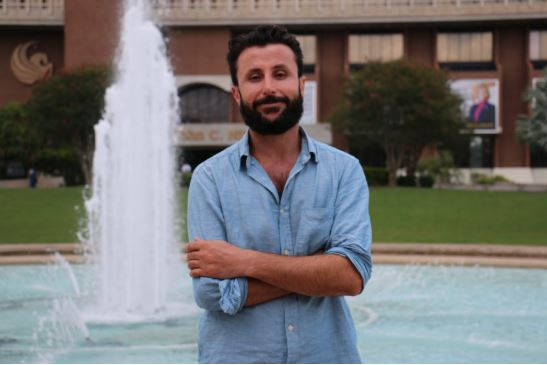
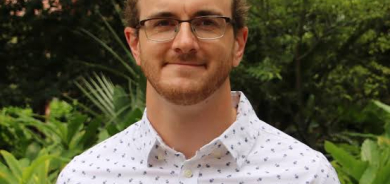
Dr. Haidar Khezri is Associate Professor in the Department of Modern Languages and Literatures at the University of Central Florida and affiliated faculty with the Kurdish Political Studies Program in the School of Politics, Security, and International Affairs. He designed the first Central Kurdish curriculum for North American universities and led the effort to introduce Kurdish for the first time into U.S. public high schools through the Metropolitan Nashville Public Schools. He is the author of Central Kurdish: An Elementary Textbook (CeLCAR, Indiana University, 2023) and co-editor of The Oxford Handbook of Kurdish Linguistics (Oxford University Press, 2026). He is currently working on several research projects on Kurdish language, literature, and culture.
Gulan: Through your work in Kurdish studies and your experience within American academic institutions, how do you assess the way political and academic circles in the United States understand current developments in the Middle East, particularly questions of governance, national identity, and regional change? Within this evolving American understanding of the region, how visible are Kurdish perspectives and political aspirations?
Dr. Haidar Khezri: American scholarship on the Middle East has become increasingly attentive to questions of governance, identity, and social transformation, moving beyond earlier state-centered and security-oriented frameworks. Scholars today are more likely to examine transnational networks, minority communities, and the complexities of multilingual and multicultural societies. Nevertheless, Kurdish perspectives remain comparatively underrepresented. While the Kurdish question receives attention in relation to regional conflicts, counterterrorism, or the politics of Iraq and Syria, Kurdish intellectual history, literature, language, and political thought are still insufficiently integrated into mainstream Middle Eastern studies. Greater visibility requires recognizing the Kurds not merely as geopolitical actors but as a people with a rich literary tradition, distinctive historical experience, and enduring contributions to the cultural and political history of the region.
Gulan: As a specialist in comparative literature, how do you explain the ability of the Kurdish language to remain alive and resilient in the absence of a central political authority or state, particularly in the face of the region’s dominant languages, including Arabic, Persian, and Turkish? What internal forces have contributed to its survival?
Dr. Haidar Khezri: The resilience of Kurdish demonstrates that languages do not survive solely through state institutions but also through strong cultural ecosystems. For centuries, Kurdish was preserved through oral poetry, religious scholarship, folklore, music, and local literary traditions that connected language to everyday life. Family transmission, community and village networks, and the prestige of poets and storytellers ensured continuity across generations. Kurdish identity has historically been rooted in language and literature rather than political institutions, allowing communities to maintain linguistic continuity despite repeated campaigns of assimilation. The survival of Kurdish is therefore best understood as the product of cultural memory, social solidarity, and literary creativity rather than state patronage.
Gulan: Historically, have the Kurdish language’s multiple dialects and the absence of a unified standard language been a source of weakness? Or, on the contrary, have they enriched the language and helped protect it against efforts to erase it?
Dr. Haidar Khezri: The diversity of Kurdish dialects has been both a challenge and a source of strength. The absence of a unified standard has complicated education, publishing, and language planning across different political borders. At the same time, this diversity reflects the language's remarkable adaptability and historical depth. Different dialects have produced their own literary traditions, preserving local vocabularies, oral genres, and cultural expressions. Ironically, linguistic diversity also made complete assimilation more difficult, since suppression in one region did not eliminate Kurdish elsewhere. Rather than viewing dialectal diversity as a weakness, it should be regarded as a cultural resource, while efforts toward greater mutual intelligibility and educational coordination can strengthen the language without erasing its internal richness.
Gulan: Most scholars of nationalism associate the concept with the institution of the nation state. How would you define “stateless Kurdish nationalism,” and how has this model developed without the traditional instruments of a state, such as media, formal education, and an army?
Dr. Haidar Khezri: Stateless Kurdish nationalism is a form of collective identity rooted primarily in shared language, culture, historical memory, and literary tradition rather than sovereign political institutions. Unlike classical European nationalism, which often developed alongside centralized states, Kurdish nationalism emerged under conditions of political fragmentation. In the absence of a unified state, literature, poetry, oral traditions, religious institutions, intellectual networks, and later satellite television, publishing, and digital media became alternative institutions of nation-building. Kurdish nationalism illustrates that nations can be imagined and sustained through cultural production and shared historical consciousness, even without the conventional instruments of state power.
Gulan: Considering your expertise in literature, to what extent have classical and contemporary Kurdish literary texts created a foundation for cultural nationalism in which language serves as a substitute for political borders?
Dr. Haidar Khezri: Kurdish literature has long functioned as a symbolic homeland that transcends political boundaries. Classical poets established Kurdish as a literary language capable of expressing philosophy, spirituality, ethics, and aesthetics, while modern writers expanded its role in articulating questions of identity, displacement, and political aspiration. Across different regions of Kurdistan, literature has connected communities separated by international and colonial borders, allowing language itself to become a shared cultural territory. In this sense, Kurdish literary tradition demonstrates that cultural continuity can precede and even substitute for political sovereignty, providing a durable foundation for national consciousness.
Gulan: In the age of globalization and modern technology, what do you consider the most serious threats facing the Kurdish language within Kurdistan? Are these threats primarily internal, such as the marginalization of Kurdish in private education and the labor market, or are they mainly external?
Dr. Haidar Khezri: The most significant threats facing Kurdish today are increasingly internal rather than external. While state-led assimilation policies continue to pose serious challenges in several parts of Kurdistan, the Kurdistan Region of Iraq presents a different concern: many families increasingly associate educational and economic success with dominant regional languages or English, resulting in diminished investment in advanced Kurdish literacy. The issue is therefore not multilingualism itself, which is both inevitable and beneficial, but the declining prestige of Kurdish in higher education, scientific research, and professional life. A language flourishes only when it is regarded as a viable medium for education, scholarship, public administration, and economic opportunity, rather than being confined to the home or the cultural sphere.
Gulan: Across the different parts of Kurdistan, the Kurdish language faces two forms of threat. On the one hand, it is affected by the assimilation policies of the ruling states. On the other hand, particularly in the Kurdistan Region of Iraq, it is increasingly neglected because of the dominance of foreign languages, especially English, in the education sector. How do these two challenges affect the future of the Kurdish language?
Dr. Haidar Khezri: These two challenges represent different but equally serious pressures. Assimilation policies seek to restrict the public use of Kurdish through legal, educational, or administrative means, whereas the growing dominance of English often results from market incentives and educational choices. Although their motivations differ, both can reduce the social prestige and functional domains of Kurdish. The long-term solution is not to oppose multilingualism but to establish a balanced language policy in which Kurdish remains the principal language of cultural life, public administration, and academic production while citizens also acquire proficiency in international languages. Strong multilingual societies preserve their national language while embracing global communication.
Gulan: Based on your experience working with international organizations such as the American Council on the Teaching of Foreign Languages, or ACTFL, to what extent can the formal recognition of Kurdish within academic and international institutions serve as a safeguard for the language inside Kurdistan?
Dr. Haidar Khezri: International recognition strengthens a language by increasing its institutional legitimacy and global visibility. When Kurdish is included within organizations such as ACTFL, university curricula, proficiency standards, teacher training, and language assessment frameworks, it gains academic prestige that extends beyond its immediate speech communities. Such recognition encourages the production of textbooks, dictionaries, digital resources, and scholarly research while creating opportunities for international collaboration. Although external recognition cannot replace effective language policies within Kurdistan itself, it provides valuable institutional support that reinforces the language's long-term vitality.
Gulan: How have Kurdish oral literature and folklore, including beyt, heyran, lawik, and traditional chants, served as guardians of the Kurdish language during periods when the Kurds lacked formal institutions for writing and education?
Dr. Haidar Khezri: For centuries, oral literature functioned as the primary archive of Kurdish cultural memory. Genres such as beyt, heyran, lawik, epic narratives, and traditional songs preserved vocabulary, historical memory, ethical values, and collective identity at times when formal education in Kurdish was either limited or prohibited. These oral traditions were not simply artistic performances but living institutions through which linguistic knowledge passed from one generation to another. Their rhythmic and musical qualities also made them especially effective vehicles for memorization, ensuring that the language survived despite political instability and institutional absence.
Gulan: When examining the history of written Kurdish literature, particularly the works of Ehmedê Xanî and Melayê Cizîrî, language appears not merely as a means of expression but also as a political instrument for affirming Kurdish existence. How do you interpret this national dimension of classical Kurdish literature?
Dr. Haidar Khezri: Classical Kurdish literature transformed the Kurdish language into a vehicle of intellectual and cultural self-definition. Writers such as Ehmedê Xanî and Melayê Cizîrî demonstrated that Kurdish could sustain sophisticated philosophical, mystical, and literary expression equal to neighboring literary traditions. Their works implicitly challenged assumptions that cultural prestige belonged exclusively to Arabic or Persian. In particular, Xanî connected literary production with collective identity, arguing that the flourishing of Kurdish language and learning was inseparable from the dignity of the Kurdish people. Their legacy continues to shape Kurdish cultural nationalism by affirming that language itself is a form of historical and political existence.
Gulan: To address the linguistic decline currently caused by the media environment and social media platforms, how can Kurdish literature and folklore be used again to strengthen the linguistic identity of the younger generation?
Dr. Haidar Khezri: The preservation of Kurdish in the digital age requires adapting literary heritage to contemporary forms of communication rather than treating it solely as a historical legacy. Classical poetry, folktales, and oral traditions should be incorporated into digital platforms through podcasts, audiobooks, animated storytelling, short videos, graphic novels, and educational applications that appeal to younger audiences. Schools and universities should also encourage creative engagement with literary heritage through translation, performance, and creative writing rather than rote memorization. When literature becomes part of everyday digital culture, it can reinforce linguistic identity while demonstrating that Kurdish is not only the language of the past but also a language capable of shaping the future.
By Kobin Ferhad